Olivier Horiot
Olivier Horiot is a grower-producer in Les Riceys, at the southern end of Champagne's Côte des Bar. His work is unusual not simply because the estate grows all seven permitted Champagne varieties, but because the portfolio crosses all three appellations…
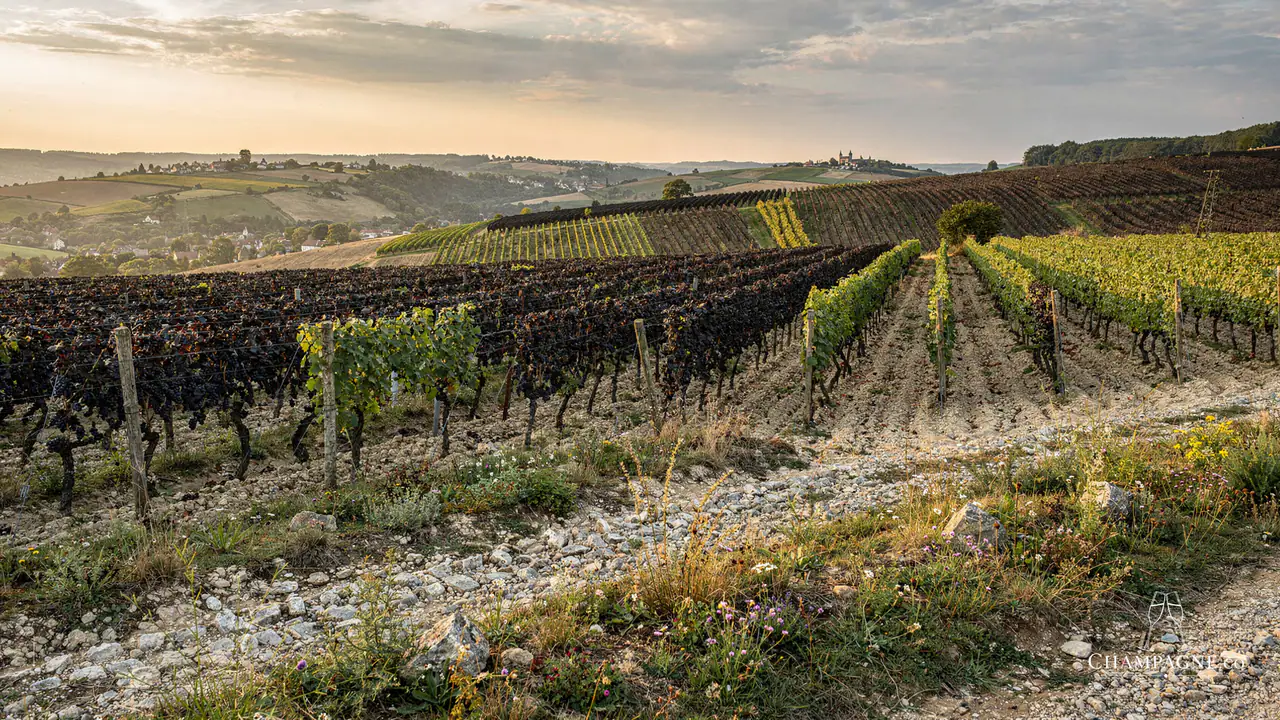
Editorial profile
Olivier Horiot is a grower-producer in Les Riceys, at the southern end of Champagne's Côte des Bar. His work is unusual not simply because the estate grows all seven permitted Champagne varieties, but because the portfolio crosses all three appellations associated with Les Riceys: Champagne, Rosé des Riceys and Coteaux Champenois.
The current vineyard mix published by the producer is approximately 75% Pinot Noir, 10% Chardonnay, 5% Pinot Blanc, 3% Arbane, 3% Meunier, 2% Petit Meslier and 2% Pinot Gris. Pinot Noir therefore remains the estate's centre of gravity, while the minority varieties give Horiot room to explore a much wider genetic palette than most Champagne producers.
Why this producer matters
Horiot offers a particularly clear view of Les Riceys as a wine-growing place rather than merely a source of southern Champagne. The estate has produced site-specific still wines since 2000 and, under the Olivier Horiot name, vintage Champagnes since 2004. This makes the range a useful bridge between the area's sparkling-wine identity and its distinctive traditions of Rosé des Riceys and Coteaux Champenois.
The seven-variety vineyard is another defining feature. Wines such as Arbane and 5 Sens make old or minority Champagne varieties visible within a portfolio still anchored by Pinot Noir. That diversity is meaningful because it sits within a coherent village context rather than being treated as a novelty in isolation.
Vineyards and farming
The estate is based at 25 rue de Bise in Riceys-Bas. The producer describes its farming as organic, and current cuvée pages identify wines including Métisse and Arbane as organic Champagne.
The vineyard's seven varieties are Pinot Noir, Chardonnay, Pinot Blanc, Arbane, Meunier, Petit Meslier and Pinot Gris. Their published proportions underline how strongly Pinot Noir dominates while also showing the deliberate preservation of varieties that are rarely encountered in contemporary Champagne vineyards.
Winemaking and range identity
Horiot's own account separates the portfolio into several strands. The Olivier Horiot Champagnes include Sève, Métisse, 5 Sens and Arbane, while the domaine also makes Rosé des Riceys and Coteaux Champenois as separate still-wine appellations. These categories should not be collapsed into a single Champagne list.
The producer also maintains a distinction between the terroir-focused Olivier Horiot wines and assemblage Champagnes bottled under the Serge Horiot name, reflecting the family's continuing cooperative connection. For readers, that makes the producer name on the bottle important: the two ranges are related historically but are not interchangeable.
Champagne.co analysis
Olivier Horiot is most interesting when the three strands of the estate are considered together: Les Riceys, Pinot Noir and varietal diversity. Pinot Noir supplies the core identity, but the seven-variety vineyard prevents the domaine from becoming a one-note study of the grape. At the same time, Rosé des Riceys and Coteaux Champenois keep the work rooted in local wine traditions that pre-date the modern dominance of sparkling Champagne.
That gives the range a useful internal contrast. Sève explores Pinot Noir through Champagne; Arbane isolates a rare variety; 5 Sens broadens the varietal lens; the still wines show what the same village can express without a second fermentation. Horiot is therefore a producer for readers who want to understand how appellation, variety and place intersect in the Côte des Bar.
Buying guidance
For a first Champagne from the domaine, Métisse is the most straightforward orientation point. Move to Sève Blanc de Noirs or Sève Rosé de Saignée when Pinot Noir and the Les Riceys identity are the priority. Arbane is the specialist choice for anyone interested in Champagne's rare permitted varieties, while 5 Sens offers the broader varietal perspective.
If exploring beyond sparkling wine, seek out Horiot's Rosé des Riceys and Coteaux Champenois separately. They are valuable companions to the Champagne range precisely because they show another side of Les Riceys, not because they are substitutes for Champagne.
Loading current Champagne range…
Spotted something wrong? Report a correction
Every report goes to a human review queue. Nothing on this page changes automatically.