Pascal Doquet
Champagne Pascal Doquet is an organically certified family estate based in Vertus, now Blancs-Coteaux, at the southern end of the Côte des Blancs. The current Association des Champagnes Biologiques record identifies Laure, Noé and Pascal Doquet as the…
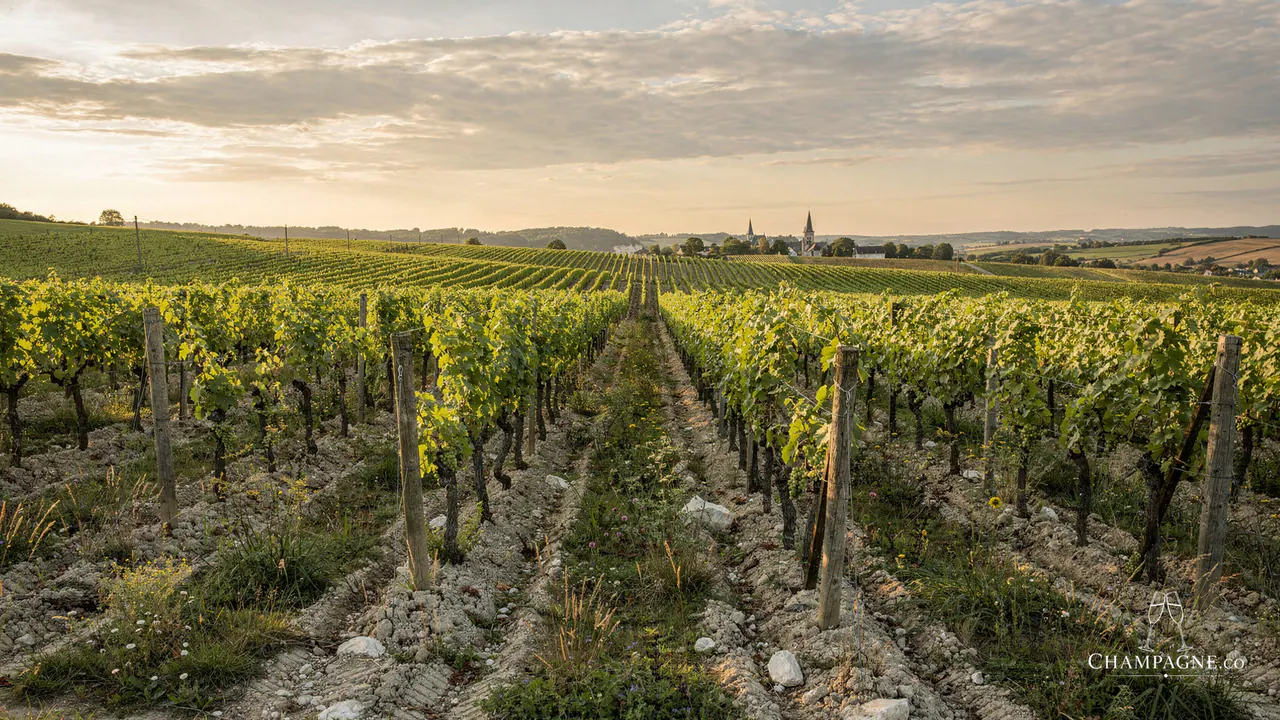
Editorial profile
Champagne Pascal Doquet is an organically certified family estate based in Vertus, now Blancs-Coteaux, at the southern end of the Côte des Blancs. The current Association des Champagnes Biologiques record identifies Laure, Noé and Pascal Doquet as the family team and records 8.69 hectares, all certified organic.
The vineyard is overwhelmingly Chardonnay: approximately 95% Chardonnay and 5% Pinot Noir. Geographically, around 60% of the estate lies in the southern Côte des Blancs and 40% in the chalky Coteaux Vitryats.
Why this producer matters
Pascal Doquet combines long-established organic farming with a range that makes geography unusually explicit. The estate's non-vintage wines establish the Chardonnay-led house vocabulary, while the Cœur de Terroir programme narrows the focus to individual village origins.
The family's environmental chronology is also unusually well documented. Pascal Doquet became independent in 2004, the estate committed formally to organic certification in 2007, and 2010 was the first certified-organic harvest. Noé joined in 2017, continuing the family succession.
Vineyard and cellar approach
The domaine's current certification-sector profile describes separate vinification by terroir. Indigenous yeasts are used for fermentation and, since 2016, also for the prise de mousse, the second fermentation in bottle. Approximately half of the wines are raised in wood.
The estate had already returned to full soil cultivation without herbicides from 2001. These practices provide the technical framework for the wines without requiring broader stylistic claims.
Champagne.co analysis
Pascal Doquet is best understood through the relationship between organic farming, Chardonnay and place. The domaine's vineyard is not confined to one Côte des Blancs village: the substantial Coteaux Vitryats component broadens the geographic picture, while separate vinification keeps those origins visible through the cellar.
The Cœur de Terroir wines are the clearest expression of that philosophy because village becomes the organising principle. The non-vintage Blanc de Blancs wines, by contrast, provide the broader estate reference point.
Buying guidance
Start with one of the current non-vintage Blanc de Blancs for the most representative introduction to the Chardonnay-led estate. Choose the rosé if you want to see the limited Pinot Noir side of the vineyard.
Move to a Cœur de Terroir release when village identity is the priority: Vertus and Le Mont Aimé provide Premier Cru routes, while Le Mesnil-sur-Oger is the Grand Cru option. Check the exact vintage and release information because those wines are not interchangeable across years.
Loading current Champagne range…
Spotted something wrong? Report a correction
Every report goes to a human review queue. Nothing on this page changes automatically.