Paul Bara
Champagne Paul Bara is a family house rooted in Bouzy Grand Cru, one of the Montagne de Reims villages most closely associated with Pinot Noir. The Bara family can be traced in the Champagne region to the seventeenth century, while Auguste François Bara…
Editorial profile
Champagne Paul Bara is a family house rooted in Bouzy Grand Cru, one of the Montagne de Reims villages most closely associated with Pinot Noir. The Bara family can be traced in the Champagne region to the seventeenth century, while Auguste François Bara arrived in Bouzy in 1833. Paul Bara was the first generation to sell Champagne under the family name, beginning in the 1950s.
The modern house combines that family continuity with professional management. Chantale Bara remains President and the family figurehead; Stéphanie Ducloux has directed the house since 2021; and Grégory Baert became cellar master in 2023.
Why this producer matters
Paul Bara is a particularly direct expression of Bouzy because estate geography, grape plantings and range architecture all point in the same direction. The vineyard is overwhelmingly Pinot Noir; the core blends are Pinot-Noir-led; the prestige tier includes pure Pinot Noir wines; and even the rosé connects back to Bouzy Rouge.
Chardonnay is present as both a blending component and, in L'Audacieuse, a deliberate contrast. That makes the range useful for understanding Bouzy through several different wine types rather than one signature bottle.
Vineyard and cellar approach
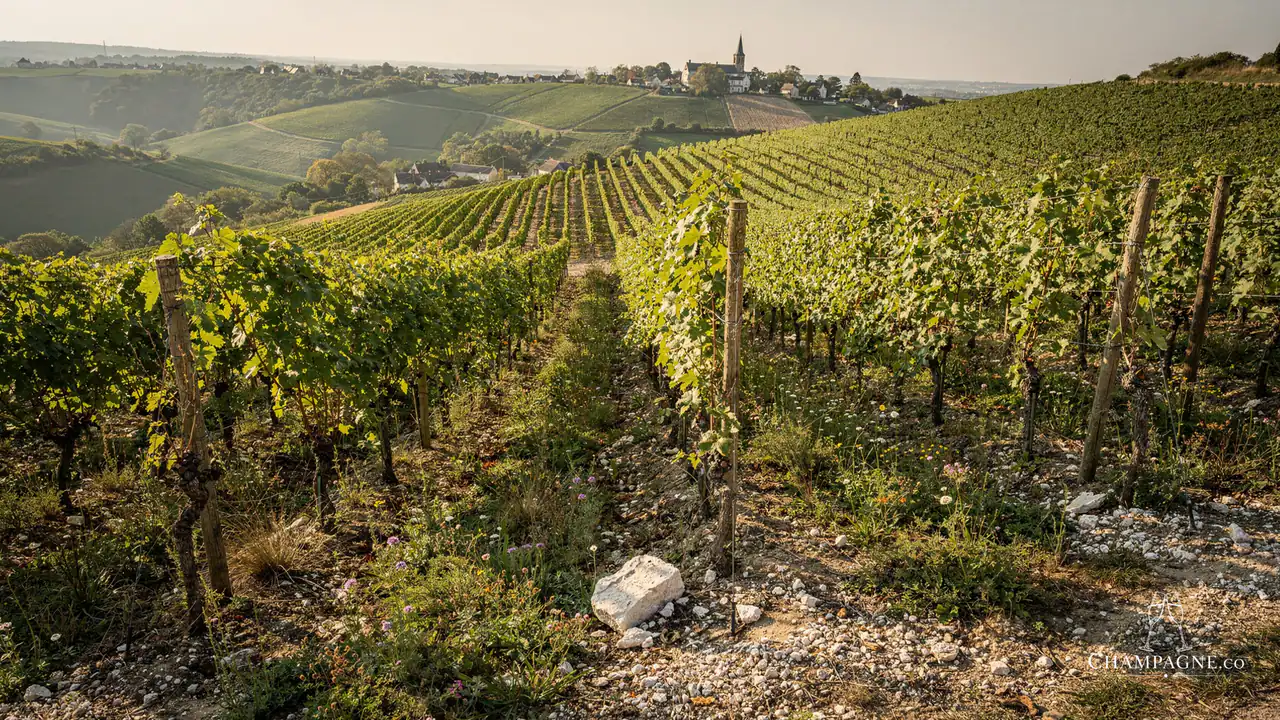
The current estate covers 11 hectares across 33 Grand Cru parcels, all in Bouzy. Pinot Noir accounts for 9.5 hectares, with 1.5 hectares of Chardonnay. The house states that it does not use chemical weedkillers or insecticides and maintains cover between the vine rows. In 2020 it obtained both HVE and Viticulture Durable en Champagne certification.
The current cellar material states that malolactic fermentation is blocked. Alcoholic fermentation is carried out in temperature-controlled stainless steel, and the house says the taille is not used in its Champagnes. The producer describes roughly two to three years of maturation for the traditional range and at least five to six years for vintage wines.
Champagne.co analysis
Paul Bara's range works as a study of Bouzy Pinot Noir at different levels of concentration and context. Brut Réserve and Extra Brut establish the house blend; Grand Rosé connects sparkling wine to Bouzy Rouge; Comtesse Marie de France and Annonciade move to pure Pinot Noir; and Grand Millésime and Spécial Club add vintage specificity.
L'Audacieuse is important precisely because it breaks that pattern. A pure Chardonnay wine from a strongly Pinot-Noir-led estate gives readers a useful internal contrast without leaving Bouzy.
Buying guidance
Start with Brut Réserve for the broad house benchmark or Extra Brut if lower dosage is the priority. Choose Grand Rosé if the connection between Champagne and Bouzy's still-red tradition is what interests you.
For a more concentrated Pinot Noir expression, look to Comtesse Marie de France or Annonciade. Choose L'Audacieuse when Chardonnay is the priority.
Loading current Champagne range…
Spotted something wrong? Report a correction
Every report goes to a human review queue. Nothing on this page changes automatically.