Paul Déthune
Champagne Paul Déthune is a family grower-producer in Ambonnay Grand Cru on the Montagne de Reims. The producer traces the Déthune winegrowing line to 1610, and the current generation is led by Pierre and Sophie Déthune from the family estate at 2 rue du…
Editorial profile
Champagne Paul Déthune is a family grower-producer in Ambonnay Grand Cru on the Montagne de Reims. The producer traces the Déthune winegrowing line to 1610, and the current generation is led by Pierre and Sophie Déthune from the family estate at 2 rue du Moulin.
The house presents its Champagnes as 100% Grand Cru, rooted in Ambonnay and particularly in the village's Pinot Noir. Chardonnay remains an important partner in the blends, but the live range increasingly moves from classic multi-vintage cuvées toward pure Pinot Noir and parcel-specific wines.
Why this producer matters
Paul Déthune combines three layers of Ambonnay expression: a long-running reserve-wine system based substantially on wood, a Pinot-Noir-led Grand Cru core, and an increasingly site-specific parcel programme.
The current range is therefore best understood by moving from the multi-vintage Brut family through pure-variety wines to named parcels. That progression shows how the domaine uses both time and site rather than relying on one prestige hierarchy.
Vineyard, wood and reserve wines
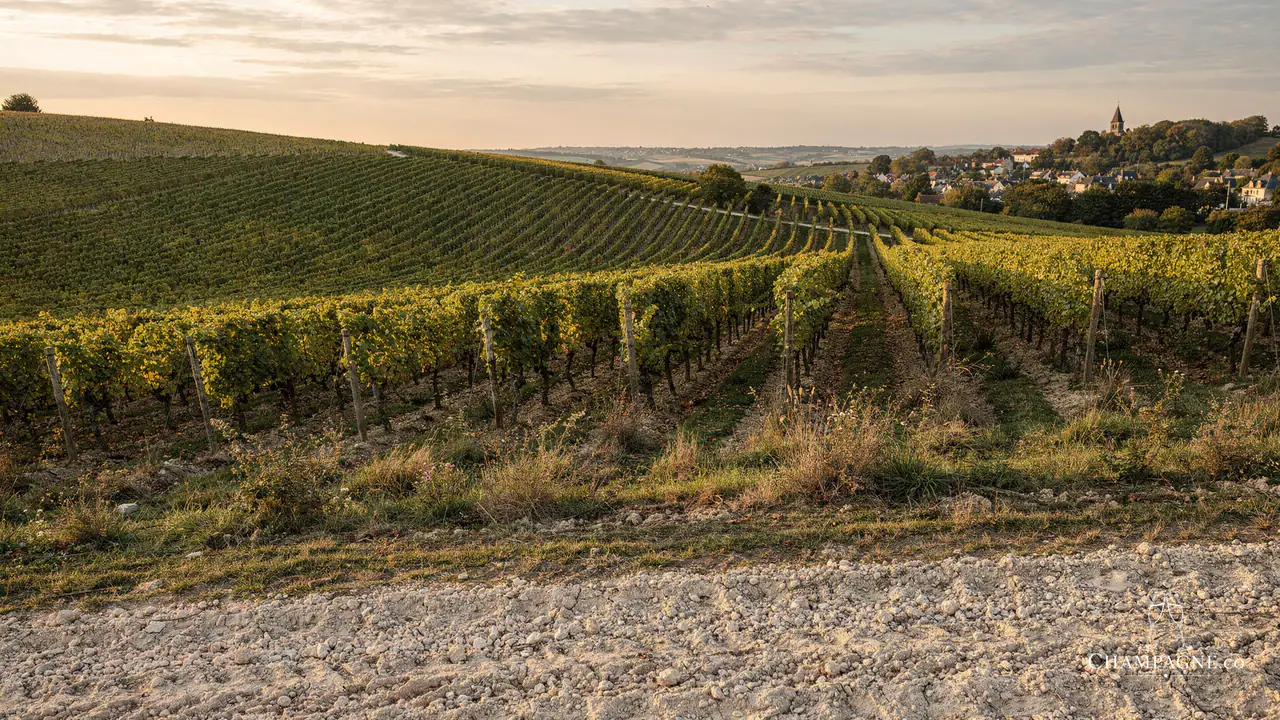
The producer states that it decided in 2019 to begin organic conversion and that the entire estate had entered conversion by 2020. Its current first-party page still says the estate must wait before obtaining organic certification and selling its first wines from certified organic viticulture, so the conversion is not presented as completed certification.
Wood is structurally important in the cellar. The producer currently describes five oak tuns and 90 Champagne oak barrels, with reserve wines also matured in oak tuns.
The current Brut Grand Cru is 70% Pinot Noir and 30% Chardonnay, with 30–50% reserve wines drawn from a span of forty years and aged or vinified in 34-hectolitre oak tuns. The house gives the same 70/30 blend and reserve architecture for Extra-Brut Grand Cru and Brut Nature Grand Cru, with dosage changing across the three wines.
Champagne.co analysis
Paul Déthune's core idea is Ambonnay interpreted through reserve depth and increasing parcel specificity. The Brut family shows how a long reserve library and wood programme can underpin continuity; the Blanc de Noirs strips the blend back to Pinot Noir; and the named parcel wines make vineyard identity mandatory rather than optional.
That makes the parcel programme the most significant development in the modern range. Les Crayères, Le Haut des Bermonts and Le Bout du Clos are not simply prestige labels: their parcel and vintage identities are the point of the wines.
Buying guidance
Start with Brut Grand Cru for the broad house reference. Compare Extra-Brut or Brut Nature if you want to see how dosage changes within the same broad 70/30 framework.
Choose Blanc de Noirs NV Grand Cru for a pure Pinot Noir route. For the most site-specific experience, move to Les Crayères 2017, Le Haut des Bermonts 2019 or Le Bout du Clos 2018 and buy by exact parcel and vintage. Vintage cuvées should likewise be treated by their stated year rather than as permanent technical formulas.
Loading current Champagne range…
Spotted something wrong? Report a correction
Every report goes to a human review queue. Nothing on this page changes automatically.