Paul Goerg
Champagne Paul Goerg is a cooperative-rooted producer in Vertus, now Blancs-Coteaux, at the southern end of the Côte des Blancs. Its present identity begins in 1950, when eight Vertus winegrowing families — Collard, Faucheret, Férat, Rogué, Grégoire,…
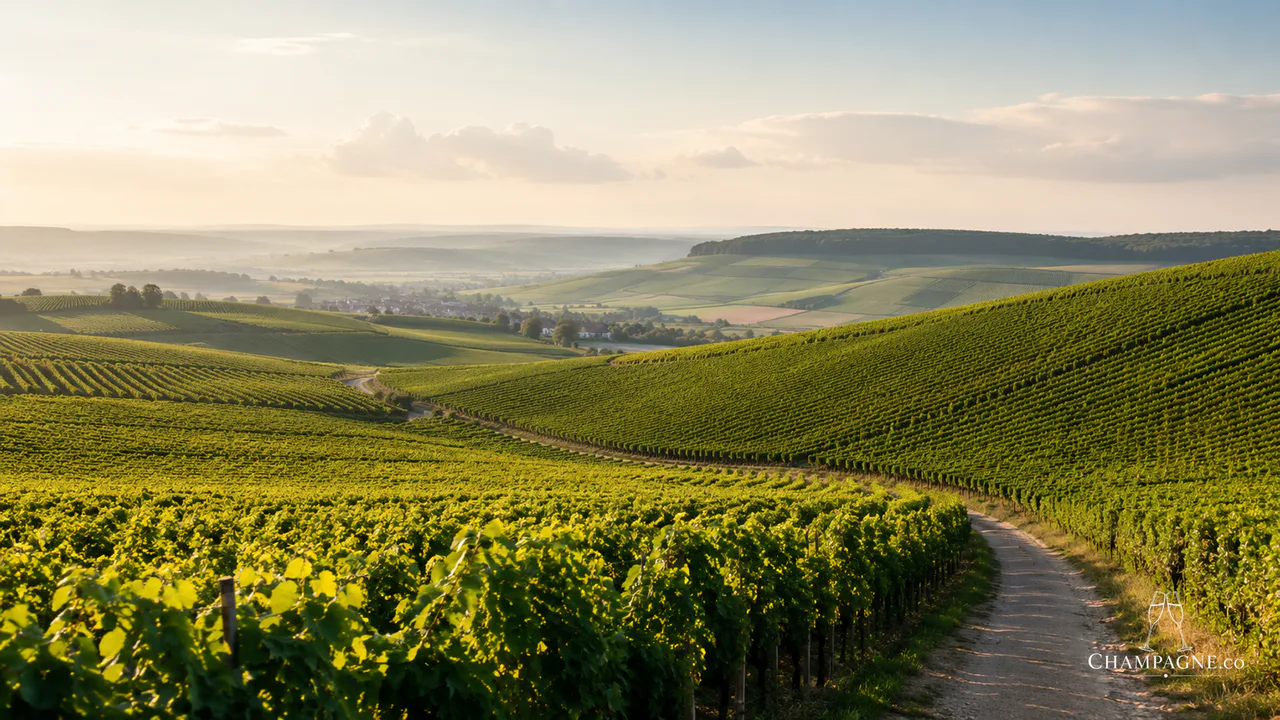
Editorial profile
Champagne Paul Goerg is a cooperative-rooted producer in Vertus, now Blancs-Coteaux, at the southern end of the Côte des Blancs. Its present identity begins in 1950, when eight Vertus winegrowing families — Collard, Faucheret, Férat, Rogué, Grégoire, Doquet, Gallois and Pougeoise — joined their vineyards and activity. The producer states that representatives of those families remain involved through the company's board.
That ownership structure matters. Paul Goerg is not a single-family grower estate, but neither is it best described as an anonymous large cooperative brand: its own history is explicitly built around the continuing participation of the founding winegrowing families.
Why this producer matters
Paul Goerg is a distinctive Côte des Blancs model: a house founded by eight winegrowing families, still organised around that collective identity, but increasingly explicit about old-vine parcel selection and separate vinification.
The result is a useful contrast with both single-grower domaines and the major négociant houses. Chardonnay is the recurring thread, while the parcel-selection programme gives the cooperative a more detailed vineyard vocabulary than a broad regional blend alone.
Chardonnay and parcel selection
The house currently positions itself around Chardonnay. Its live vineyard material describes a parcel-selection programme across more than 15 hectares of predominantly Chardonnay vineyards.
The programme covers around 15 lieux-dits, including La Croix Saint-Ladre, Les Faucherets and Le Pas de Cheval, and uses vines stated to be more than 35 years old. Harvest timing is decided plot by plot, and selected juices are vinified separately in small tanks. The current page identifies cellar master Damien Cambres in connection with this programme.
Champagne.co analysis
Paul Goerg is best understood through the relationship between collective vineyard ownership and increasingly precise Chardonnay selection. Tradition and Rosé show the broader cooperative-house side, while Blanc de Blancs and the parcel programme sharpen the focus toward Côte des Blancs Chardonnay.
That makes the house more interesting than a simple cooperative label suggests. The founding-family structure provides continuity, while separate parcel vinification gives the cellar team the tools to build more specific expressions from within a large collective vineyard base.
Buying guidance
Start with Tradition Brut for the broadest introduction or Blanc de Blancs Brut if Chardonnay is the priority. Choose Absolu Extra Brut for a drier route and Rosé Brut for the rosé expression.
Treat Vintage 2012 and Lady 2007 as exact-year wines: confirm the actual bottle and current availability rather than assuming that a persistent producer page means the same release is universally in stock.
Loading current Champagne range…
Spotted something wrong? Report a correction
Every report goes to a human review queue. Nothing on this page changes automatically.