Pehu-Simonet
Champagne Pehu-Simonet is a grower based in Verzenay Grand Cru on the Montagne de Reims and led by David Pehu. The current portfolio is increasingly organised around individual crus and lieux-dits rather than one fixed house blend.
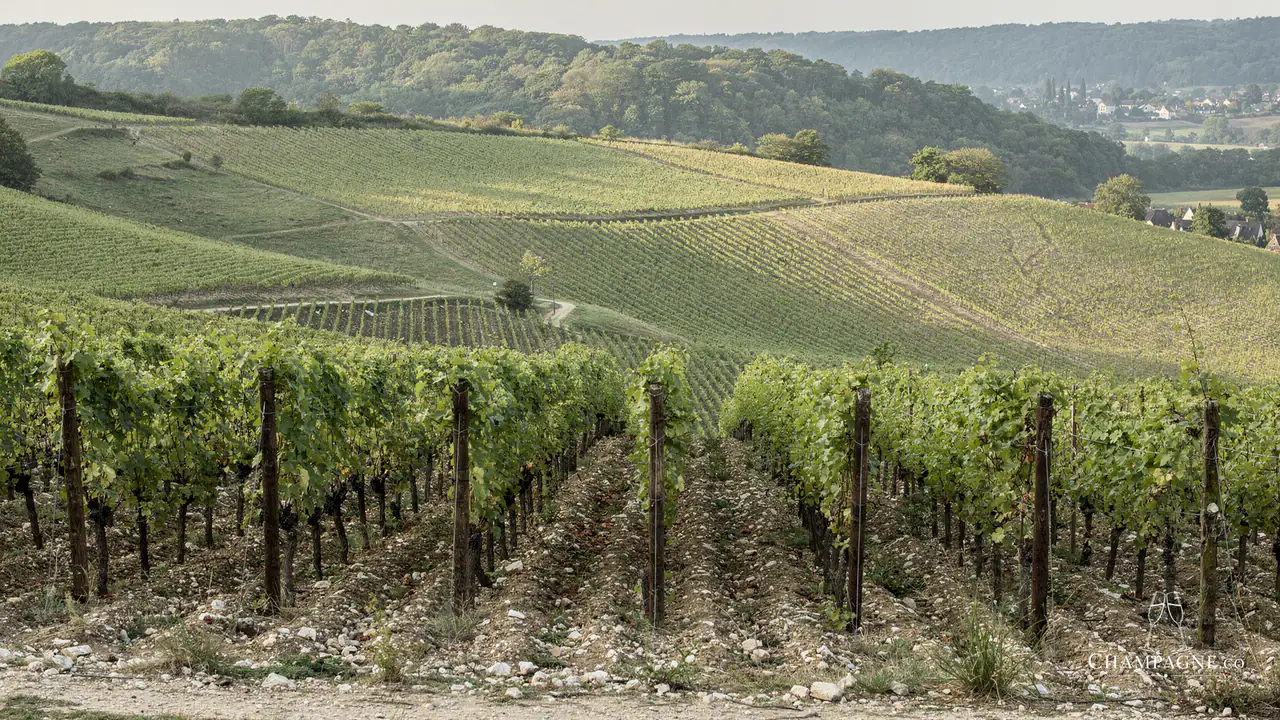
Editorial profile
Champagne Pehu-Simonet is a grower based in Verzenay Grand Cru on the Montagne de Reims and led by David Pehu. The current portfolio is increasingly organised around individual crus and lieux-dits rather than one fixed house blend.
The clearest way to understand the range is through two families: the Face Nord wines, which establish the broader Grand Cru identity, and the Fins Lieux series, which narrows the focus to particular places, varieties and vintages.
Why this producer matters
Pehu-Simonet is especially useful as a study in narrowing geographical scale: from a Grand Cru multi-site Face Nord blend, to a Verzenay-only Blanc de Noirs, to numbered Fins Lieux wines tied to individual villages and sites.
The producer is also a good example of why exact release data matter. Current trade records contain conflicting estate-area figures and show different malolactic-fermentation treatments across individual wines.
Current evidence and cellar distinctions
Current trade material gives both 5 hectares and 7.5 hectares for the domaine, so neither is adopted as a definitive current vineyard total without a cleaner estate or certification record.
Likewise, one producer summary says malolactic fermentation is always blocked, while current bottle pages show otherwise. Face Nord Brut is listed with partial malolactic fermentation, and Face Nord Verzenay Blanc de Noirs with malolactic fermentation performed. The release sheet therefore controls the bottle record.
Organic descriptions also vary in scope across current sources, from practising organic at producer level to certified organic on particular SKUs. Certification is therefore kept tied to the source and release for which it is actually established.
Champagne.co analysis
Pehu-Simonet's most distinctive feature is the shift from broad Grand Cru blending to numbered place-specific wines. Face Nord establishes the house vocabulary, while Fins Lieux asks the reader to focus on a particular site, village, grape and vintage.
That precision makes source discipline unusually important. A single estate-wide acreage, malo rule or organic-certification statement would be misleading when current records themselves differ. The exact bottle is the right level of resolution.
Buying guidance
Start with Face Nord Grand Cru Brut for the broad house reference. Choose Face Nord Verzenay Blanc de Noirs if you want a more concentrated Verzenay Pinot Noir expression.
Move to Fins Lieux when site identity is the priority. Select by the named lieu-dit, village, grape and vintage rather than by number alone. For any Pehu-Simonet bottle, check the exact release sheet because reserve content, malo, dosage and certification scope can differ materially between wines.
Loading current Champagne range…
Spotted something wrong? Report a correction
Every report goes to a human review queue. Nothing on this page changes automatically.