Penet-Chardonnet
Penet-Chardonnet is the estate-grown Grand Cru expression of the Penet family in Verzy and Verzenay, on the Montagne de Reims. The family traces its viticultural history to the seventeenth century. The Penet-Chardonnet name itself dates to 1967, when…
Editorial profile
Penet-Chardonnet is the estate-grown Grand Cru expression of the Penet family in Verzy and Verzenay, on the Montagne de Reims. The family traces its viticultural history to the seventeenth century. The Penet-Chardonnet name itself dates to 1967, when Christian Penet married Marie-Louise Chardonnet and the vineyard holdings of two long-established Grand Cru families were joined.
The present generation is Alexandre Penet, an oenologist, working with his wife Martine. The family now presents several Champagne identities, so the distinction between them matters: Penet-Chardonnet Grand Cru is the historical estate-grown range; Alexandre Penet is a broader separate range; and Ex Ante is another distinct Champagne proposition.
Why this producer matters
Penet-Chardonnet is a strong example of a modern Grand Cru estate built around transparency and progressively finer geographical resolution. The six-hectare vineyard establishes the Verzy/Verzenay base; Terroir & Sens interprets selected parcels through perpetual reserve; and the single-vineyard wines isolate individual lieux-dits and vintages.
The brand architecture is equally important. Family ownership does not make every bottle from every Penet label an estate-grown Penet-Chardonnet wine, so provenance needs to remain attached to the exact marque and release.
The estate vineyard
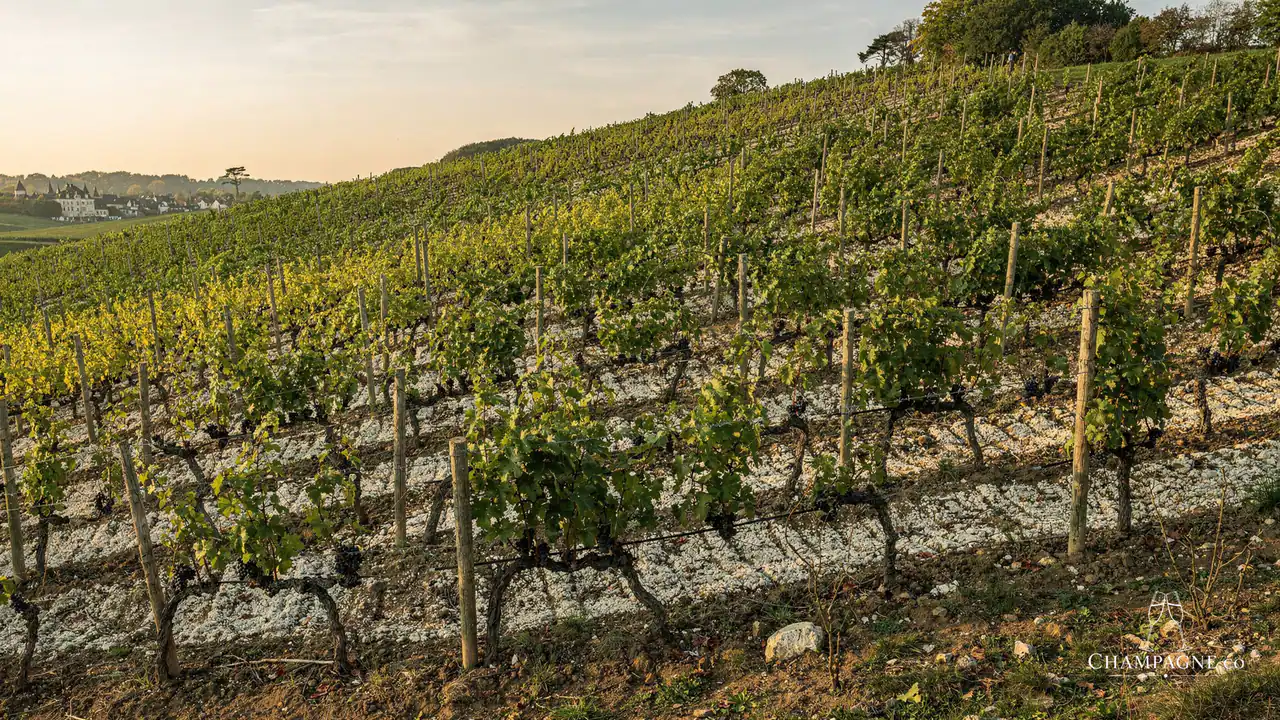
The current family vineyard page gives a clear present-day estate census: 6 hectares, entirely in the Grand Cru villages of Verzy and Verzenay. Plantings are approximately two-thirds Pinot Noir and one-third Chardonnay.
The producer describes a sustainable, reasoned approach without chemical fertilisers, herbicides or insecticides, with soil cultivation used to support biodiversity and the natural cycle of the vineyard. These are current producer-stated practices rather than an organic-certification claim.
Champagne.co analysis
Penet-Chardonnet is best read as a Grand Cru estate that becomes more specific as the range progresses. Terroir & Sens provides the multi-vintage selected-parcel framework, while the single-vineyard wines reduce the scale to one named site and one harvest.
The family labels add a second lesson: provenance belongs to the bottle, not merely to the surname. Keeping Penet-Chardonnet, Alexandre Penet and Ex Ante distinct prevents a family-level vineyard fact from becoming an unsupported claim for every wine.
Buying guidance
Start with Terroir & Sens for the broadest expression of the Penet-Chardonnet estate and its perpetual-reserve approach. Choose the Blanc de Blancs or Rosé version when grape or style is the priority.
Move to one of the single-vineyard vintage Champagnes for the most site-specific experience and buy by exact lieu-dit and year. When considering Alexandre Penet or Ex Ante, treat them as separate family ranges and check the bottle's own provenance rather than assuming it is identical to Penet-Chardonnet Grand Cru.
Loading current Champagne range…
Spotted something wrong? Report a correction
Every report goes to a human review queue. Nothing on this page changes automatically.