Philippe Gamet
The family producer historically known as Champagne Philippe Gamet now presents itself publicly as Maison Gamet, a fourth-generation Récoltant-Manipulant based in Mardeuil in the Vallée de la Marne.
Editorial profile
The family producer historically known as Champagne Philippe Gamet now presents itself publicly as Maison Gamet, a fourth-generation Récoltant-Manipulant based in Mardeuil in the Vallée de la Marne.
The family traces Champagne bottling on both sides to the 1920s. Fabienne and Philippe combined their family businesses in 1993, and their children Marianne and Jean-François returned in 2018 and now represent the current generation.
A vineyard on both sides of the Marne
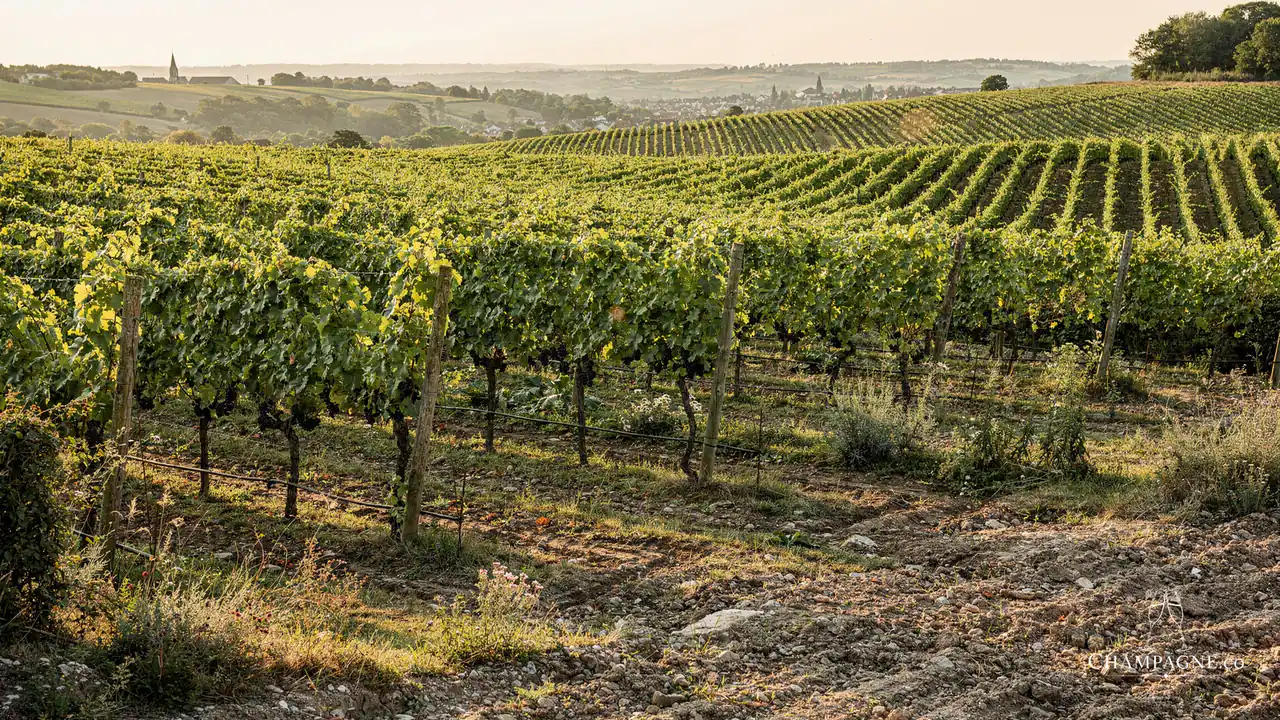
Maison Gamet currently works more than eight hectares across Mardeuil, Fleury-la-Rivière and Damery, with Meunier the dominant grape. The range is organised around the geography of the river.
The Rive Gauche is Mardeuil, south of the Marne, where the producer describes marl and limestone soils with generally north- and west-facing vines. The Rive Droite is Fleury-la-Rivière and Damery, where cooler clay, marl and sand occur on predominantly south- and east-facing sites.
That division is more than naming: it provides the clearest structural explanation of the core wines.
Vineyard and cellar approach
The estate states that vines are either ploughed or grassed and that vineyard protection is adapted to the season. Maison Gamet currently carries both Haute Valeur Environnementale (HVE) and Viticulture Durable en Champagne (VDC) certification.
In the cellar, wines are vinified in temperature-controlled stainless steel and in wood, including demi-muids and barrels. The family uses house-cultured yeasts originating from its own parcels. Bottle ageing varies substantially by cuvée, so base year, reserve share, vessel, dosage and time on lees remain release-specific.
The two banks and the reserve cellar
Rive Gauche is the Mardeuil assemblage. The current indexed release uses a 2022 base, with 55% Meunier, 30% Pinot Noir and 15% Chardonnay, plus 15% reserve wine, and is dosed at 5 g/L.
Rive Droite is a Blanc de Noirs from Fleury-la-Rivière and Damery. The current 2022-base release is 85% Meunier and 15% Pinot Noir, with 30% reserve wine and 4 g/L dosage.
La Vallée Suspendue adds a different dimension. The current producer page gives a 2017 base, 80% Meunier, 15% Pinot Noir and 5% Chardonnay, with a perpetual reserve maintained since 1999 and a current dosage of 4 g/L. Because it combines a base year with perpetual reserve material, it is a multi-vintage assemblage rather than a 2017 vintage Champagne.
Parcel wines
Maison Gamet also bottles site-specific wines from selected parcels. Current first-party pages include Rocherets 2019 from Meunier in Mardeuil, Nombrillères 2020 from Chardonnay and Carrés du Midi 2020 from Pinot Noir. The range also retains Bas-Bauchets 2020 and Blanc de Blancs 2018 as exact release identities.
The family additionally produces Coteaux Champenois, Ratafia and other farm products; these sit outside the Champagne AOC cuvée count.
Why this producer matters
Maison Gamet is best understood as a map of the Marne rather than merely as a Meunier specialist. Rive Gauche and Rive Droite separate two river-bank geologies; La Vallée Suspendue introduces time through perpetual reserve; and the parcel wines narrow the scale to individual sites and grapes.
The current generation has turned that geography into the organising principle of the range, making origin more informative than a conventional prestige hierarchy.
Champagne.co analysis
Maison Gamet's strongest feature is the way the range changes one variable at a time. Rive Gauche and Rive Droite compare the two sides of the Marne. La Vallée Suspendue changes the focus from geography to accumulated reserve wine. Rocherets, Nombrillères and Carrés du Midi then isolate individual parcels and grape varieties.
The wines form a progression from broad river-bank identity to long-term reserve blending and finally to site-specific bottlings.
Buying guidance
Start with Rive Gauche for the broadest introduction to the Mardeuil side of the estate, then compare it with Rive Droite to understand the family’s two-bank concept. Choose La Vallée Suspendue if the perpetual-reserve programme is the main interest.
For a narrower terroir comparison, move to Rocherets, Nombrillères or Carrés du Midi according to grape and parcel. Check the base year or vintage on every bottle because reserve share, dosage and ageing are deliberately release-specific.
Loading current Champagne range…
Spotted something wrong? Report a correction
Every report goes to a human review queue. Nothing on this page changes automatically.