Philipponnat
Champagne Philipponnat is a historic house based in Mareuil-sur-Aÿ, with a family vineyard story that the house traces back to 1522. Its modern identity is unusually easy to read because three ideas recur across the range: Pinot Noir from the central Marne…
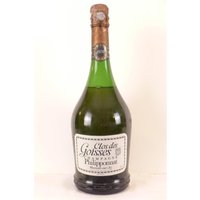
Representative Champagne from Philipponnat
Editorial profile
Champagne Philipponnat is a historic house based in Mareuil-sur-Aÿ, with a family vineyard story that the house traces back to 1522. Its modern identity is unusually easy to read because three ideas recur across the range: Pinot Noir from the central Marne and Montagne de Reims sector, a long-running perpetual-reserve system, and an increasingly precise hierarchy of individual sites.
The house today combines its own vineyard holdings with fruit from partner growers. Current Philipponnat material describes around 20 hectares of Premiers and Grands Crus vineyards developed by the estate; that figure is best understood as the house's own vineyard base, not as the total surface behind every bottle it produces.
Why this producer matters
Philipponnat is important because it links traditional Champagne blending with a genuinely parcel-conscious approach. Its non-vintage wines are built around continuity through the Réserve Perpétuelle, while Clos des Goisses and the smaller plot wines move in the opposite direction, narrowing the focus to individual vineyards and vintages.
That gives the range a coherent progression rather than a simple ladder of prestige. A reader can start with the house blend, move into vintage and 1522 wines, and then follow the producer into increasingly specific expressions of Mareuil-sur-Aÿ, Aÿ and the Clos des Goisses hillside.
Vineyards and Clos des Goisses
The defining vineyard is Clos des Goisses, a 5.83-hectare walled vineyard at Mareuil-sur-Aÿ. The slope is south-facing and exceptionally steep, with chalk close to the surface. Philipponnat acquired the site in 1935 and developed it as a separately harvested and vinified vineyard wine.
Clos des Goisses is now treated by the house as a continuous vintage sequence: it has been produced every year since 1988, although selection is strict and the bottled volume can be substantially lower than the vineyard's theoretical yield. The vineyard itself is divided into multiple plots, and its steep, warm exposure makes it the clearest single place through which to understand Philipponnat's parcel philosophy.
The house also produces three smaller specific-plot Champagnes in selected years:
- La Rémissonne — Pinot Noir from Mareuil-sur-Aÿ, immediately above the house cellars.
- Le Léon — Pinot Noir from a historic Aÿ parcel linked by the house to the Philipponnat family as early as 1522.
- Les Cintres — Pinot Noir from two adjoining plots, Les Petits Cintres and Les Grands Cintres, within the heart of Clos des Goisses.
Unlike Clos des Goisses, these wines are not intended to appear every vintage. Their identity depends on the exact vineyard and year.
Cellar and Réserve Perpétuelle
Philipponnat's Réserve Perpétuelle system has been renewed every year since 1946. Part of the previous blend is retained and incorporated into the next, creating continuity between harvests without treating the wine as a fixed recipe.
The current range contains both Réserve Perpétuelle Brut and Réserve Perpétuelle Non Dosé. The Brut is currently aged for roughly three to four years on lees; the Non Dosé follows the same broad reserve philosophy without sugar added at dosage. Exact blend and release data remain specific to the bottle in question.
Philipponnat also makes active decisions around malolactic fermentation rather than imposing one rule across the range. The house states that it often seeks to avoid malolactic fermentation, using cold rather than added sulphites to inhibit it. Clos des Goisses is currently described as being vinified mainly in wood without malolactic fermentation. Those practices should remain attached to the wines for which the house actually specifies them.
The house's current environmental programme includes HVE level 3 and Viticulture Durable en Champagne credentials. Its winery and winemaking procedures are currently certified organic; that is a cellar/process certification and should not be confused with a claim that every vineyard supplying every Philipponnat wine is organically certified.
Champagne.co analysis
Philipponnat's real distinction is the way it uses time and place as two separate forms of continuity. Réserve Perpétuelle carries history forward through blending. Clos des Goisses and the three specific plots do the opposite: they isolate one place and one year as precisely as possible.
That contrast explains the range better than prestige language does. Réserve Perpétuelle is about the house as a continuing organism; Clos des Goisses is about a single hillside; Le Léon, La Rémissonne and Les Cintres go narrower still. The 1522 wines sit between those poles, linking family history to selected vintage expressions.
Pinot Noir provides the common thread, but Philipponnat should not be reduced to a generic 'Pinot Noir house'. The more revealing feature is how the house changes the scale of observation from multi-year blend to vintage, clos and individual plot.
Buying guidance
For a first bottle, Réserve Perpétuelle Brut is the clearest introduction because it explains the house's long-running reserve system without requiring knowledge of a particular vintage. Réserve Perpétuelle Non Dosé is the logical comparison for readers interested in the same house framework without dosage sugar.
The 1522 wines are the next step for a vintage-led expression with a strong connection to the family identity. For readers specifically interested in terroir, Clos des Goisses is the central wine: always show the vintage, because vintage is intrinsic to the cuvée. The rarer La Rémissonne, Le Léon and Les Cintres are best approached as site studies rather than as a permanent prestige tier; their meaning lies in the exact parcel and year.
Readers looking at older bottles should pay particular attention to whether a wine is a standard release or an L.V. edition, because the extended-ageing version is a distinct release with its own disgorgement and maturation history.
Loading current Champagne range…
Spotted something wrong? Report a correction
Every report goes to a human review queue. Nothing on this page changes automatically.