Pierre Baillette
Champagne Pierre Baillette is a small family grower based in Trois-Puits, immediately south of Reims on the Montagne de Reims. The domaine is run by Périne Chartogne-Baillette, the fourth generation of the family, and works a compact vineyard divided…
Editorial profile
Champagne Pierre Baillette is a small family grower based in Trois-Puits, immediately south of Reims on the Montagne de Reims. The domaine is run by Périne Chartogne-Baillette, the fourth generation of the family, and works a compact vineyard divided mainly between Trois-Puits and Rilly-la-Montagne Premier Cru, with a small holding in Verzenay Grand Cru.
The estate is deliberately parcel-conscious. Rather than building its identity around a large, fixed house blend, Pierre Baillette uses individual villages and lieux-dits to separate Chardonnay, Pinot Noir and Meunier. That makes origin more useful to the reader than any borrowed critical hierarchy: the important question is which village, parcel, grape and release a bottle represents.
Why this producer matters
Pierre Baillette gives a particularly clear view of the less-famous southern edge of the Montagne de Reims. Trois-Puits and Rilly-la-Montagne form the core of the estate, while the small Verzenay holding provides a Grand Cru Pinot Noir counterpoint.
Périne's work also creates a useful bridge between village Champagne and single-parcel Champagne. Le Village gathers the Trois-Puits vineyard into one multi-variety expression; Le Mont Ferré isolates Chardonnay; the Cœur de Craie wines narrow the focus further to Pinot Noir from individual villages or sites.
Vineyard and farming
Current independent factual records consistently identify Périne Chartogne-Baillette as the grower and place the domaine's vineyards in Trois-Puits, Rilly-la-Montagne and Verzenay.
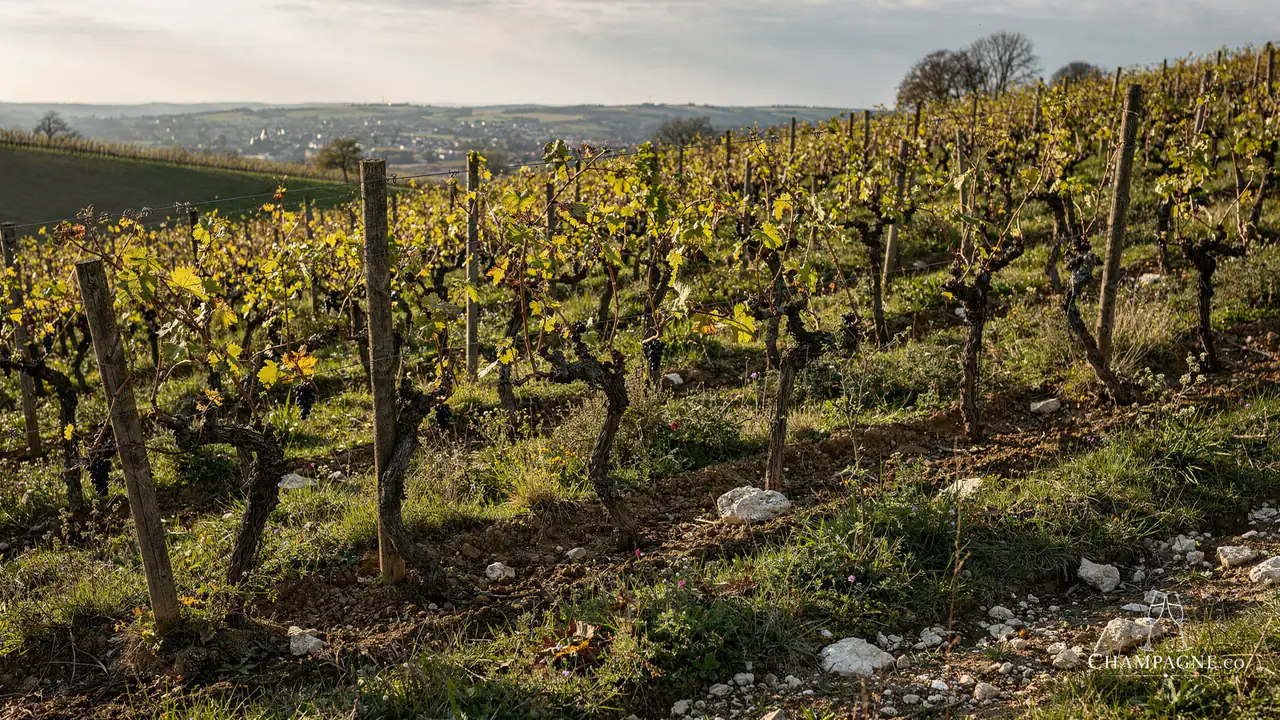
The farming record is clearer. The vines have been worked without chemical weedkillers since 2007, and some parcels are ploughed by horse. That is a meaningful part of the estate's approach, but it should not be converted into a formal organic or biodynamic certification claim unless a current certifier establishes one.
Cellar approach
Current factual producer records describe vinification in both tank and barrel, with indigenous yeasts.
The safest way to read Pierre Baillette is therefore release by release. Vintage, dosage, barrel size, reserve-wine proportion and disgorgement should be retained whenever the exact bottle record supplies them, but should not be generalized across the whole domaine.
Champagne.co analysis
The most useful way to understand Pierre Baillette is as a three-village map in miniature. Trois-Puits is the centre of gravity and supplies the multi-grape Le Village as well as a Pinot Noir Cœur de Craie. Rilly-la-Montagne adds another Premier Cru Pinot Noir expression, while Verzenay provides the Grand Cru comparison. Le Mont Ferré shifts the focus to Chardonnay.
That structure makes the domaine more interesting than its small scale suggests. It is a compact estate where small changes in village, parcel and grape are deliberately made visible.
Buying guidance
Le Village is the best starting point because it shows the Trois-Puits estate as a blend rather than as a single-variety experiment. Readers who want to isolate Chardonnay should move to Le Mont Ferré, always with the vintage shown.
For Pinot Noir, the Cœur de Craie wines are the key comparison.
A technical specification from one release should never be carried automatically into the next.
Loading current Champagne range…
Spotted something wrong? Report a correction
Every report goes to a human review queue. Nothing on this page changes automatically.