Pierre Brigandat
Champagne Pierre Brigandat is a small récoltant-manipulant based in Channes, one of the southernmost villages of the Champagne appellation in the Côte des Bar. The domaine was created by Pierre Brigandat in 1961 and is now run by his son Bertrand…
Editorial profile
Champagne Pierre Brigandat is a small récoltant-manipulant based in Channes, one of the southernmost villages of the Champagne appellation in the Côte des Bar. The domaine was created by Pierre Brigandat in 1961 and is now run by his son Bertrand Brigandat, who took over in 2002, with Cendrine working alongside him since 2013.
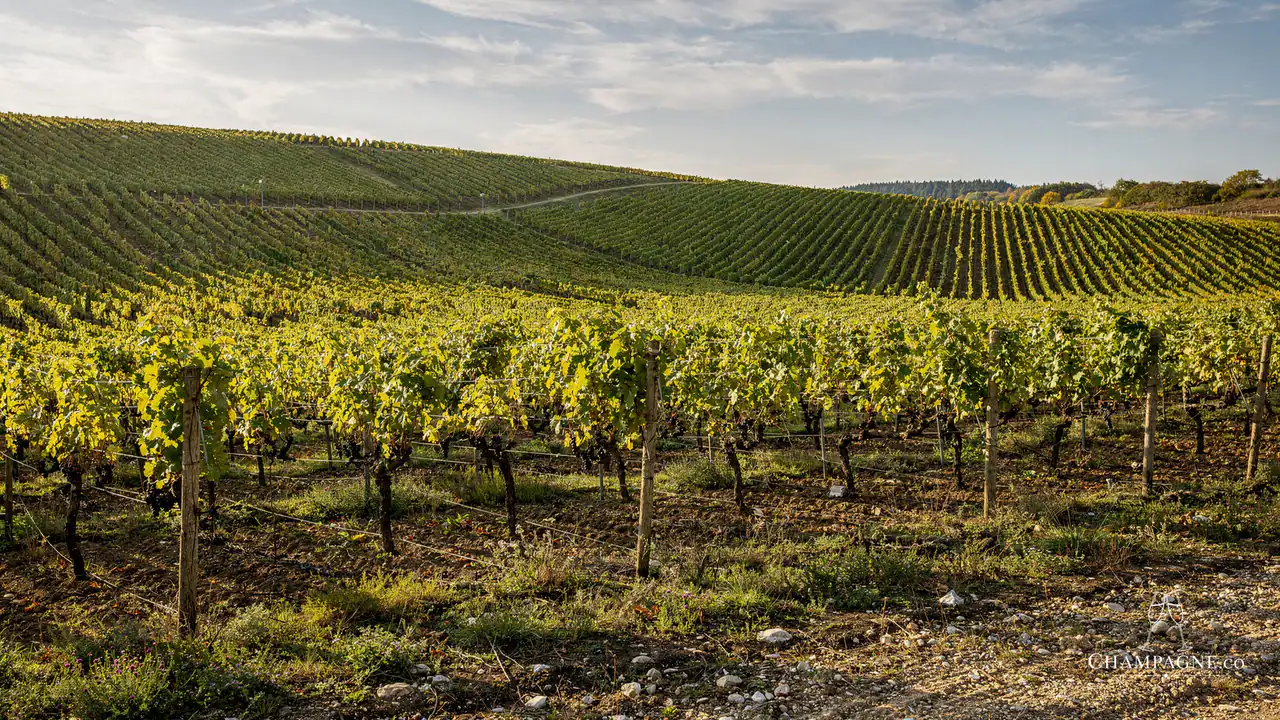
The current estate covers 8 hectares and is planted to Pinot Noir and Chardonnay. Its south-facing position and Kimmeridgian-influenced soils give the producer a distinctly southern Champagne context, but the range is broader than a simple Pinot-Noir house style: dosage, rosé maceration, oak and reserve-wine methods are used to create clearly different cuvées from the same compact vineyard base.
Why this producer matters
Pierre Brigandat is a useful Côte des Bar producer because it shows how a small family estate can use several winemaking routes without losing a coherent sense of place. Blanc de Noirs is the most direct expression of the local Pinot-Noir identity; Brut Nature removes dosage; Rosé de Saignée uses maceration; Dentelles & Crinolines and Belles Bulles move into more ambitious cellar work; and Soléra adds a reserve-wine dimension across years.
The result is not a single stylistic formula but a compact range in which the technical choices are easy to compare.
Vineyard and farming
The estate's current first-party material gives a vineyard surface of 8 hectares around Channes. Pinot Noir and Chardonnay are the two principal grapes, grown on south-facing Côte des Bar slopes.
The domaine states that soils have been worked with the plough since 2002. It holds both Haute Valeur Environnementale (HVE) and Viticulture Durable en Champagne (VDC) certification. Those credentials describe the estate's current environmental framework and should not be inflated into an organic or biodynamic certification claim.
Cellar approach
Pierre Brigandat uses both stainless-steel tanks and oak barrels. That mixed cellar programme matters because different cuvées use different combinations of grape, dosage, maceration and reserve strategy.
The estate's Soléra cuvée is particularly useful for understanding that approach. The producer describes a reserve system in which part of the existing wine is retained and refreshed with younger wine before the rejuvenated portion is bottled. The method creates continuity across years, but exact composition and any release-specific technical data should remain attached to the current bottling rather than treated as a permanent house formula.
Champagne.co analysis
Pierre Brigandat is best understood through contrast within one small southern estate. The vineyard itself is compact and geographically coherent; the differentiation happens through winemaking. Blanc de Noirs foregrounds grape and place. Brut Nature removes dosage. Rosé de Saignée changes extraction. Soléra introduces time. The special cuvées bring additional élevage choices into the picture.
That makes Brigandat a useful reference for readers who want to understand how Côte des Bar Champagne can move beyond a single stereotype of ripe Pinot Noir. The producer's strongest editorial story is not simply warmth or fruit maturity, but the way those grapes are directed through several clearly different cellar paths.
Buying guidance
Blanc de Noirs is the clearest starting point because it gives the most straightforward view of the estate's Pinot-Noir-led identity. Brut Nature is the logical comparison for readers interested in the effect of zero dosage.
For rosé, choose Rosé de Saignée to see the domaine's maceration route. Millésime 2019 is the current dated release and should always be shown with its vintage. Soléra is the most useful choice for readers interested in reserve-wine continuity across years, while Dentelles & Crinolines and Belles Bulles sit in the more elaborate end of the current range.
Loading current Champagne range…
Spotted something wrong? Report a correction
Every report goes to a human review queue. Nothing on this page changes automatically.