Pierre Callot
Champagne Pierre Callot et Fils is a family grower based in Avize, in the heart of the Côte des Blancs. The current independent-grower record identifies Thierry Callot with the domaine and gives a worked surface of 5 hectares, planted approximately 95%…
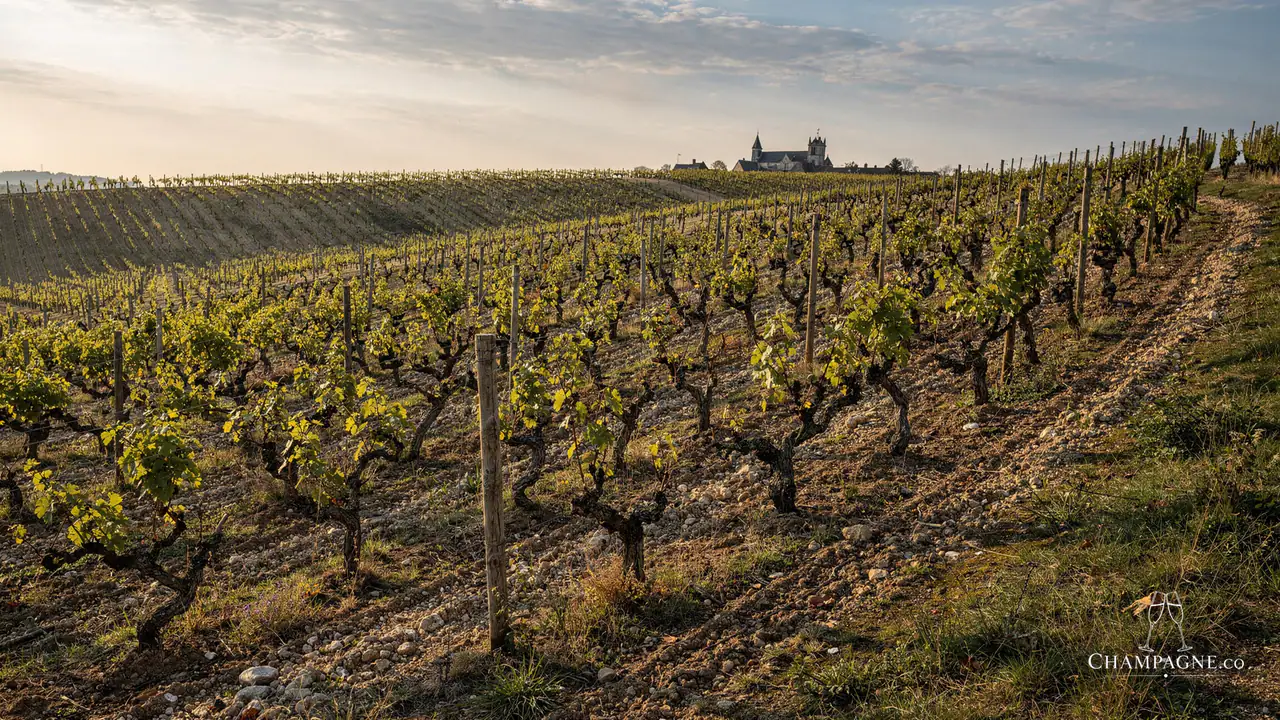
Editorial profile
Champagne Pierre Callot et Fils is a family grower based in Avize, in the heart of the Côte des Blancs. The current independent-grower record identifies Thierry Callot with the domaine and gives a worked surface of 5 hectares, planted approximately 95% Chardonnay and 5% Meunier.
That planting mix makes Chardonnay the clear centre of gravity of the estate, with Meunier playing a very small supporting role.
Why this producer matters
Pierre Callot is a compact example of the classic Côte des Blancs family estate: small scale, strong Chardonnay dominance and an Avize base. For readers exploring grower Champagne, it offers an intimate counterpoint to the larger houses that dominate the village's international reputation.
Because current public documentation for the domaine is limited, Champagne.co deliberately keeps this profile bounded to verified identity facts rather than reconstructing a detailed range from older or restrictive sources.
Vineyard and farming
The current independent-grower record gives a vineyard surface of 5 hectares, planted 95% Chardonnay and 5% Meunier, with the domaine based in Avize. Exact village-by-village holdings, classifications and farming certifications are not asserted here because a sufficiently detailed current source is not available.
Champagne.co analysis
Pierre Callot's clearest distinguishing features are its small scale and its overwhelming Chardonnay orientation from an Avize base. The five-hectare surface keeps the estate intimate, and the 95/5 planting split means that almost everything the domaine produces expresses the white-grape identity of the Côte des Blancs.
Buying guidance
Treat Pierre Callot as a producer to explore bottle by bottle. Check the exact cuvée name, any vintage or base-year information, dosage and disgorgement details on the bottle or current technical sheet rather than assuming a fixed house recipe, and verify the classification stated for the specific wine being purchased.
Loading current Champagne range…
Spotted something wrong? Report a correction
Every report goes to a human review queue. Nothing on this page changes automatically.