Pierre Péters
Champagne Pierre Péters is a six-generation family grower-producer based in Le Mesnil-sur-Oger, at the heart of the Côte des Blancs. The domaine has produced Grand Cru Blanc de Blancs Champagne since 1919 and states that its wines come exclusively from its…
Editorial profile
Champagne Pierre Péters is a six-generation family grower-producer based in Le Mesnil-sur-Oger, at the heart of the Côte des Blancs. The domaine has produced Grand Cru Blanc de Blancs Champagne since 1919 and states that its wines come exclusively from its own vineyards.
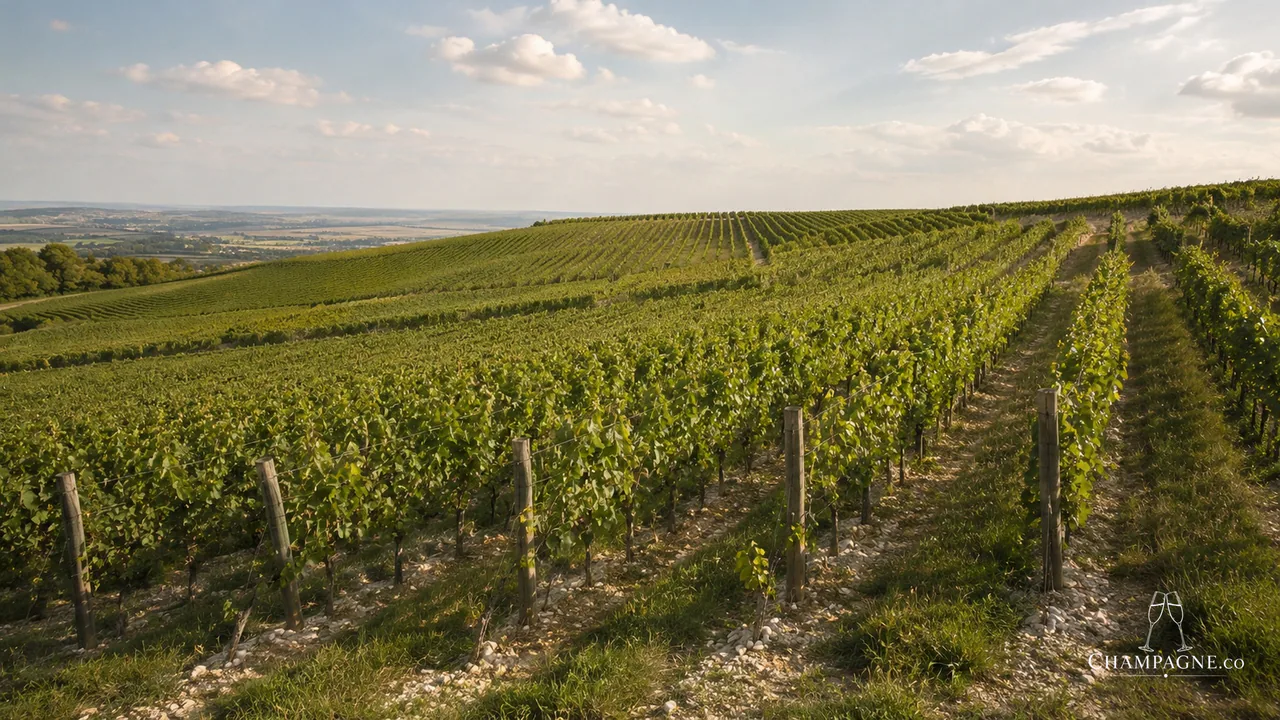
The estate currently works just over 19 hectares of Chardonnay, principally in Le Mesnil-sur-Oger, Oger, Avize and Cramant. Rodolphe Péters, an oenologist, joined the family business in 2007 and took control in 2008.
Why this producer matters
Pierre Péters is important because it shows several different ways of expressing Chardonnay without leaving the Côte des Blancs. Cuvée de Réserve uses blending across many years to establish the house identity. L'Esprit turns to vintage Champagne. Les Chétillons and Les Montjolys move inward to two very different Le Mesnil terroirs. L'Étonnant Monsieur Victor and Héritage use long reserve histories to create another kind of complexity.
The range therefore works along two axes at once: place and time. Some wines narrow the geography; others widen the chronology.
Vineyard and farming
The current estate covers a little over 19 hectares, all planted to Chardonnay and concentrated in the Grand Cru Côte des Blancs villages of Le Mesnil-sur-Oger, Oger, Avize and Cramant.
Pierre Péters has maintained its own massal selection of Chardonnay across generations, and the current vineyard averages more than thirty years of age. The estate's French vineyard page records Haute Valeur Environnementale (HVE) certification.
The house states that all Champagne is made from its own vineyards. That estate-only sourcing is a meaningful distinction and should be kept separate from the larger regional footprint of a négociant house.
Cuvée de Réserve and reserve wines
Cuvée de Réserve is the most direct expression of the Pierre Péters house style. The current winemaking material states that it combines the current harvest with an assemblage of reserve wines spanning more than twenty harvest years.
The point of that reserve system is continuity. The cuvée is not simply a single base vintage supplemented by one or two older years; it deliberately draws on a long memory of Chardonnay harvests. Exact proportions still belong to the release, but the multi-decade reserve architecture is a stable part of the wine's identity.
Les Chétillons
Les Chétillons is the estate's best-known single-vineyard Champagne. Pierre Péters owns three plots of old Chardonnay vines in this Le Mesnil-sur-Oger lieu-dit, acquired in 1930. Each plot is vinified separately before the three are assembled for the vintage wine.
The domaine has produced Les Chétillons as a separate cuvée since 1971. It is always a vintage Champagne, so vintage, disgorgement and dosage must remain intrinsic to the exact bottle rather than being generalized from another year.
Les Montjolys
Les Montjolys is a second, deliberately different Le Mesnil parcel programme. The current producer technical page describes a Grand Cru site with deeper clay-and-flint soil over the Le Mesnil chalk, using Chardonnay from seven old-vine parcels.
The parcels are vinified separately with different approaches before selection and blending. Malolactic fermentation is partial rather than universal, and each vintage spends at least six years on lees. Current producer guidance places dosage at roughly 3.5–4.5 g/L depending on vintage.
The contrast with Les Chétillons is editorially valuable: both are Le Mesnil Chardonnay, but the soil profile, parcel structure and vinification are not the same.
Champagne.co analysis
Pierre Péters is best understood through a tension between assemblage and precision. Cuvée de Réserve deliberately compresses more than twenty harvests into one house expression. Les Chétillons and Les Montjolys do the reverse, isolating individual Le Mesnil terroirs and allowing each vintage to remain visible.
Héritage takes the reserve concept to its logical extreme by making family chronology itself part of the blend. L'Étonnant Monsieur Victor occupies the middle ground: a selection-driven cellar cuvée whose edition matters as much as the name.
This makes Pierre Péters more than a generic Grand Cru Blanc de Blancs producer. The estate uses Chardonnay to explore how much identity comes from site, how much from vintage, and how much from blending across time.
Buying guidance
Cuvée de Réserve is the correct first bottle because it explains the domaine's long reserve-wine philosophy and broad Côte des Blancs identity.
For vintage Champagne without moving immediately to a single parcel, choose L'Esprit with the exact year shown. For terroir comparison, Les Chétillons and Les Montjolys are the key pair: two Le Mesnil Grand Cru Chardonnay wines built from different sites and different parcel structures.
L'Étonnant Monsieur Victor is for readers interested in cellar selection and edition-specific blending.
Loading current Champagne range…
Spotted something wrong? Report a correction
Every report goes to a human review queue. Nothing on this page changes automatically.