R. Dumont & Fils
Champagne R. Dumont & Fils is a family grower based in Champignol-lez-Mondeville, in the central Côte des Bar. The family's winegrowing history in the Aube reaches back to before the French Revolution, while Champagne production under the present family…
Editorial profile
Champagne R. Dumont & Fils is a family grower based in Champignol-lez-Mondeville, in the central Côte des Bar. The family's winegrowing history in the Aube reaches back to before the French Revolution, while Champagne production under the present family story began in the 1970s.
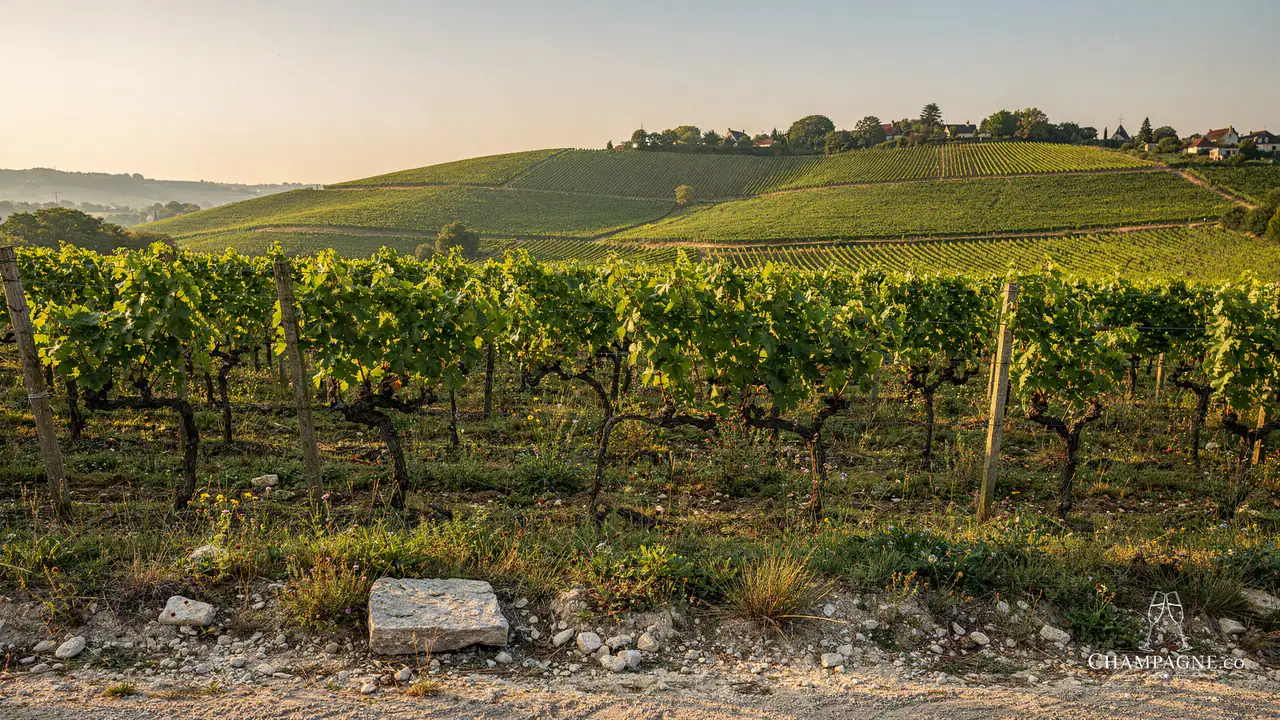
The current grower record places the domaine at 23 hectares, all in Champignol-lez-Mondeville. Its vineyards sit unusually high for Champagne, with the upper sites reaching about 370 metres, on the Kimmeridgian geology characteristic of this part of the Aube. Pinot Noir is the defining grape in the producer's own account, but the current range also demonstrates that the house is not stylistically confined to Blanc de Noirs.
R. Dumont & Fils is a Récoltant-Manipulant and is currently certified Terra Vitis. The producer states that its cuvées are made only from its own harvest and vinified by the domaine.
Why this producer matters
R. Dumont & Fils gives a useful view of the Côte des Bar away from its better-known villages. Champignol-lez-Mondeville combines Kimmeridgian soils with comparatively elevated vineyards, and the domaine explicitly connects that altitude with later ripening, freshness and acidity.
The producer also matters because its public identity needs careful separation from related Dumont family activity. Domaine de Mondeville / Champagne Dumont has its own current organic certification and vineyard record. Those details should not simply be folded into the 23-hectare R. Dumont & Fils profile unless a specific bottle or legal identity establishes the connection.
Vineyard and farming
All 23 hectares in the current R. Dumont & Fils record are in Champignol-lez-Mondeville. The vineyards rise to roughly 370 metres and sit on Kimmeridgian soils. This gives the house an unusually concentrated village identity for an estate of this scale.
The domaine's current environmental certification is Terra Vitis, a sustainable-viticulture framework. That is the appropriate certification to attach directly to R. Dumont & Fils. Separate organic or biodynamic claims associated with other Dumont family identities should not be generalized across this range without exact evidence.
Champagne.co analysis
R. Dumont & Fils is most distinctive when viewed through place rather than prestige hierarchy. A 23-hectare holding concentrated in one elevated Côte des Bar village gives the producer a coherent geographic story, while the combination of a Brut Nature Blanc de Noirs and a Solera Blanc de Blancs prevents that story from becoming one-dimensional.
For readers exploring the Aube, this is a producer that helps broaden the map beyond the most heavily represented Côte des Bar names. The interest lies in the conjunction of altitude, Kimmeridgian geology, estate-only fruit and a range that can move between Pinot Noir directness and Chardonnay/reserve-wine expression.
Buying guidance
Start with the Brut Nature Blanc de Noirs if the aim is to understand the producer's Pinot Noir and high-site identity most directly. The Solera Réserve Blanc de Blancs Extra Brut is the more useful counterpoint for readers who want to see how the same domaine handles Chardonnay and reserve-wine complexity.
Treat the Millésime 2012 Extra Brut as a specific mature release rather than as a proxy for whatever vintage may be available later. With any Dumont-labelled bottle, also check the exact producer identity on the label: R. Dumont & Fils and Domaine de Mondeville have related family context but should not be assumed to share identical vineyard, certification or winemaking specifications.
Loading current Champagne range…
Spotted something wrong? Report a correction
Every report goes to a human review queue. Nothing on this page changes automatically.