R. Pouillon
Champagne R. Pouillon & Fils is a family domaine based in Mareuil-sur-Aÿ. The current estate covers about 7 hectares divided into 40 identified parcels across Avenay, Aÿ, Mareuil-sur-Aÿ, Épernay, Festigny, Mutigny and Tauxières.
Editorial profile
Champagne R. Pouillon & Fils is a family domaine based in Mareuil-sur-Aÿ. The current estate covers about 7 hectares divided into 40 identified parcels across Avenay, Aÿ, Mareuil-sur-Aÿ, Épernay, Festigny, Mutigny and Tauxières.
The domaine works with Pinot Noir, Meunier and Chardonnay and organises much of its range around individual parcels or closely defined terroirs. Fabrice Pouillon has also developed a distinctive second-fermentation method that links the sparkling-wine process back to the estate's own grapes.
Why this producer matters
R. Pouillon is especially interesting because its range makes vineyard origin unusually visible while still retaining a multi-village house wine and a long-running reserve blend. Readers can move from Grande Vallée to individual sites such as Les Valnons or Chemin du Bois, then compare those with the multi-year Solera.
The domaine's Méthode Fabrice Pouillon (M.F.P.), developed in 2004, is another defining feature. Instead of relying on externally sourced sucrose for the prise de mousse, the estate uses sugar derived from its own grapes. The producer now applies the method across the Champagne range.
Vineyards and cellar approach
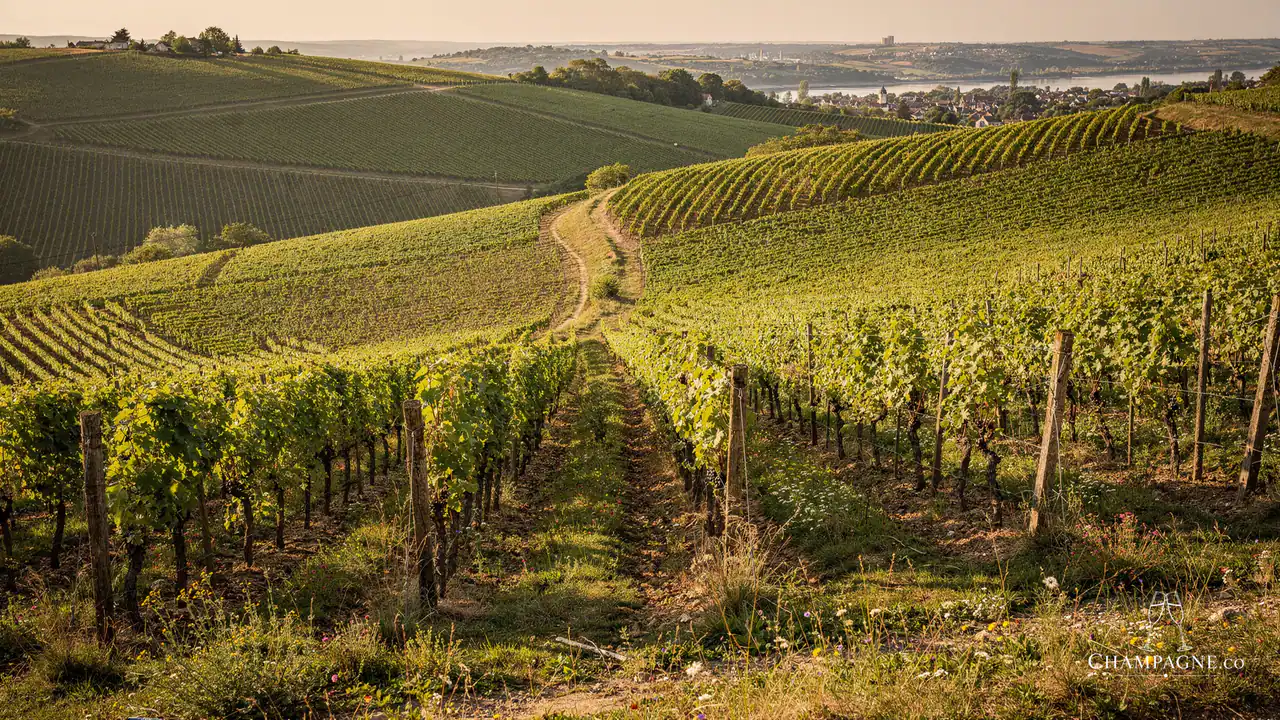
The 40 parcels extend across both sides of the Marne Valley and into neighbouring sectors, giving the estate a varied mix of exposures, soils and grape varieties. Current vineyard work includes permanent plant cover, compost and selected horse-drawn cultivation within a broader regenerative approach.
Vinification and élevage take place largely in barrels and demi-muids, with smaller ceramic or concrete vessels also used for experimentation. The cellar programme is therefore closely linked to parcel identity rather than one uniform tank-based method.
Champagne.co analysis
R. Pouillon is best understood along two axes: place and time. The parcel cuvées isolate individual vineyards; Solera deliberately combines years; Grande Vallée sits between those extremes as the broader estate expression.
M.F.P. then provides a technical thread connecting all of them. Rather than being a single special cuvée, the method is part of the house's overall approach to turning its wines into Champagne.
Buying guidance
Start with Grande Vallée for the widest view of the domaine. Choose Les Valnons, Chemin du Bois or another parcel wine if the priority is a more precise terroir expression.
Select Solera when reserve-wine continuity and multi-year blending are the main interest. Coteaux Champenois should be bought and catalogued separately as still wine.
Loading current Champagne range…
Spotted something wrong? Report a correction
Every report goes to a human review queue. Nothing on this page changes automatically.