Rare Champagne
Rare Champagne is a prestige-vintage house built around selective declaration rather than a broad permanent range. The modern Rare story begins with the 1976 vintage, created after an exceptionally dry growing season, and the house has continued to release…
Editorial profile
Rare Champagne is a prestige-vintage house built around selective declaration rather than a broad permanent range. The modern Rare story begins with the 1976 vintage, created after an exceptionally dry growing season, and the house has continued to release wines only from years it considers distinctive enough to merit the Rare name.
The current leadership pairs Maud Rabin, director of Rare Champagne, with Émilien Boutillat, Chef de Caves. Régis Camus remains central to the house's history because he shaped the modern Rare style over decades before handing technical responsibility to Boutillat.
Rare's range is unusually narrow for a Champagne house. It centres on vintage white Champagne and vintage rosé, supplemented by library vintages and occasional special editions. The current house presentation includes Rare Millésime 2012, Rare Millésime 2013 and Rare Rosé Millésime 2014 among its active releases and collections.
Why this producer matters
Rare is interesting because it treats the decision to make a wine at all as part of the house identity. There is no non-vintage entry cuvée, no routine annual vintage programme and no large ladder of styles. A release begins with the judgement that a particular harvest is worth preserving as a Rare vintage.
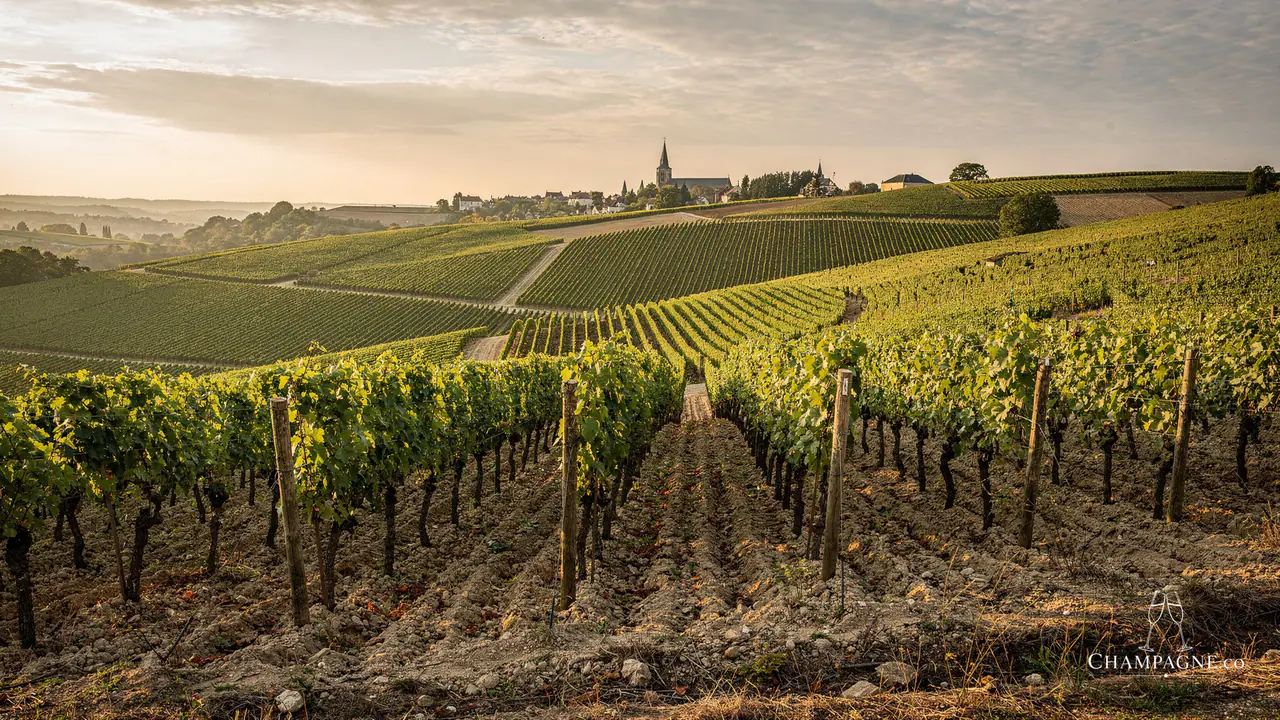
The vineyard philosophy also gives the house a distinctive angle. Rare says it selects sites for their expressive potential rather than simply by village classification and makes particular use of Chardonnay from the Montagne de Reims, a zone more commonly associated with Pinot Noir. Pinot Noir from the Montagne de Reims is equally important to the structure of the blends.
That combination means Rare should not be read as a conventional Chardonnay prestige cuvée built mainly around the Côte des Blancs. Its identity comes from selective vintage declaration, Montagne de Reims sourcing and long ageing, with each release treated as its own interpretation rather than as a yearly repetition of one fixed formula.
House and vineyard identity
Rare's current house material places expression ahead of classification when choosing vineyard sources. Chardonnay from villages on the Montagne de Reims forms an important part of the style, while Pinot Noir from the same broad area provides structure and texture.
The house's environmental programme is tied to the wider vineyard organisation behind Rare and its sister Champagne operations. Current Rare material states that the house vineyard has held both Viticulture Durable en Champagne and Haute Valeur Environnementale certification since 2015.
For readers, the important distinction is that Rare is not presenting one contiguous estate or one single-village identity. Its wines are blends assembled from selected sites chosen for the needs of each declared vintage.
Cellar approach and vintage selection
Rare's cellar philosophy is built around long ageing and a deliberately limited number of releases. The house's current material repeatedly emphasises the individuality of each declared year rather than a permanent technical recipe.
That makes vintage-specific information essential. Blends, release dates, formats and dosage should be read in relation to the exact wine and year. Older vintages remain visible through the house's "Promenade des Millésimes", but archive visibility does not mean every vintage is in normal current distribution.
The current cellar team is led by Émilien Boutillat. His role is to preserve the house signature while allowing each selected year to keep its own character. This tension between continuity and vintage individuality is the key to understanding Rare's range.
Champagne.co analysis
Rare Champagne is most compelling as a study in restraint. Many prestige houses define themselves through a flagship wine that is produced in most years; Rare instead makes the declaration decision itself part of the luxury proposition. That gives the vintage archive real meaning because gaps between releases are intentional rather than accidental.
The Montagne de Reims Chardonnay component adds another layer. It broadens the familiar map of prestige Chardonnay beyond the Côte des Blancs and allows Rare to build white vintages from a different mix of sites. Pinot Noir from the Montagne then provides the complementary structural element.
The range therefore rewards readers who think in vintages rather than in a fixed house ladder. Rare Millésime 2012 and 2013 are not interchangeable editions of one permanent recipe; each is meant to represent a year that the cellar team chose to preserve. The rosés follow the same logic on an even more selective basis.
Buying guidance
For a current white Rare, compare Rare Millésime 2012 and Rare Millésime 2013 by vintage rather than assuming one is simply the newer replacement for the other. Both remain active in the house's current presentation, and availability can vary by market.
For rosé, Rare Rosé Millésime 2014 is the principal current reference point, while Rare Rosé Millésime 2012 provides another active vintage in the collection. Older Rare whites and rosés are primarily collector purchases and should be evaluated with provenance, storage history and exact bottle condition in mind.
Rare Le Secret is a specialist purchase for collectors interested in the house's exceptional-edition history. It should be bought for what it is — a singular long-aged project outside the normal vintage sequence — rather than as a substitute for a standard Rare release.
Loading current Champagne range…
Spotted something wrong? Report a correction
Every report goes to a human review queue. Nothing on this page changes automatically.