Rémi Leroy
Champagne Rémi Leroy is a family grower in Meurville, in the Côte des Bar. Rémi Leroy is an oenologist and agricultural engineer trained in Bordeaux, and the family domaine now covers close to nine hectares.
Editorial profile
Champagne Rémi Leroy is a family grower in Meurville, in the Côte des Bar. Rémi Leroy is an oenologist and agricultural engineer trained in Bordeaux, and the family domaine now covers close to nine hectares.
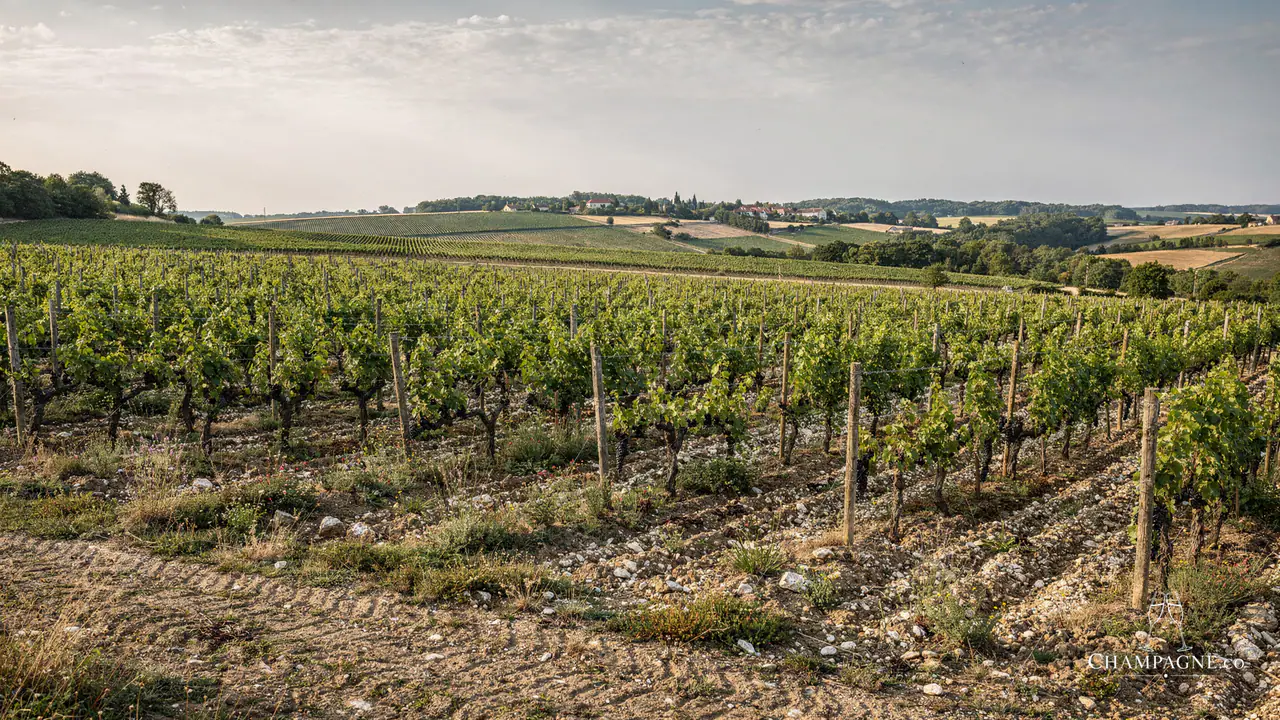
The estate is strongly defined by local geology. Most of its slopes are on Upper Jurassic Kimmeridgian clay-limestone, while the plateau above Meurville includes pure Portlandian limestone. That contrast between slope and plateau is one of the clearest reasons to look beyond a generic description of the Côte des Bar when approaching Leroy's wines.
The current vineyard mix is approximately 70% Pinot Noir, 20% Chardonnay and 10% Meunier, although Leroy says Chardonnay is gradually increasing through replanting. Average vine age is stated at about 23 years.
Why this producer matters
Rémi Leroy is a useful Côte des Bar reference because the domaine combines a Pinot Noir-led vineyard with a cellar programme that keeps individual lots relatively small and flexible. The estate's geology is also unusually explicit: Kimmeridgian slopes are complemented by Portlandian limestone on the plateau, giving the range a clear physical framework.
The producer's approach is pragmatic rather than certification-led. Leroy describes moderate organic-matter inputs, careful pruning and de-budding, ploughing, managed natural grassing and preventive disease management. In the cellar, stainless steel and Burgundy barrels are both used, malolactic fermentation is carried out, and the wines are aged on their lees without fining or filtration.
Vineyards and terroir
The estate is based in Meurville and farms close to nine hectares. Pinot Noir is the dominant variety, followed by Chardonnay and Meunier. Leroy is deliberately increasing Chardonnay through replanting, with the aim of giving it a larger role in the principal blend.
Most vineyard slopes are on Kimmeridgian clay-limestone, the same broad geological period encountered elsewhere in the southern Champagne region. The plateau above Meurville is different, with much poorer Portlandian limestone soils.
The old-vine parcel Mer sur Mont is particularly important. It lies on the Portlandian plateau and was planted in 1960 with a mixed massal selection that includes Pinot Noir, Meunier, Chardonnay and Pinot Blanc. Its low-yielding old vines give the domaine a separate parcel expression beyond the core blends.
Winemaking and cellar approach
Grapes are pressed soon after picking, with gravity used for juice movement before alcoholic fermentation begins. Fermentation takes place in small stainless-steel vats and Burgundy oak barrels, and malolactic fermentation is carried out.
The wines mature on fine lees. Leroy does not fine or filter and says sulphur use has been reduced over time. Bottling takes place in spring, after which the wines are kept in bottle for longer than the regulatory minimum before disgorgement. Dosage is kept low and adjusted according to the maturity and balance of the wine.
The cellar style is therefore not one of complete uniformity. Stainless steel, oak, lees ageing and low dosage are tools used across the range, but the exact balance between them depends on the cuvée and release.
Champagne.co analysis
Rémi Leroy is best understood through the interaction between geology and cellar flexibility. The domaine's Pinot Noir majority gives it a recognisable Côte des Bar starting point, but the increasing Chardonnay component and the contrast between Kimmeridgian slopes and Portlandian plateau prevent the wines from fitting a single simple template.
The cellar approach reinforces that diversity. Small vats and Burgundy barrels allow different lots to be handled separately, while lees ageing and low dosage keep the focus on structure rather than sweetness. The result is a range where the main Brut offers the broadest view of the domaine and the vintage and parcel wines show more specific choices of grape and site.
Mer sur Mont is especially revealing because it brings together the estate's rare Portlandian plateau, old vines and mixed planting. It is the clearest bottle for readers interested in what makes Meurville different within the wider Côte des Bar.
Buying guidance
Start with the Brut/Extra Brut if you want the broadest introduction to the domaine's Pinot Noir-led style and mixed use of reserve wines, steel and oak. Check the base year because Leroy allows vintage character to remain visible rather than smoothing every release into an identical formula.
Choose Blanc de Noirs Millésime for a more concentrated Pinot Noir expression and Blanc de Blancs Millésime if Chardonnay is the priority. Mer sur Mont is the specialist purchase for readers interested in the old-vine mixed planting and the estate's Portlandian plateau geology.
The Rosé sits separately as the fruitier, blended rosé expression, while the Brut Nature version of the core wine is the logical choice for those who specifically want the domaine with no dosage.
Loading current Champagne range…
Spotted something wrong? Report a correction
Every report goes to a human review queue. Nothing on this page changes automatically.