Robert Barbichon
Champagne Robert Barbichon is a family grower in Gyé-sur-Seine, in the Côte des Bar. The historic brand name remains Robert Barbichon, while Thomas Barbichon is the current named contact and represents the fourth generation together with Maxime in…
Editorial profile
Champagne Robert Barbichon is a family grower in Gyé-sur-Seine, in the Côte des Bar. The historic brand name remains Robert Barbichon, while Thomas Barbichon is the current named contact and represents the fourth generation together with Maxime in contemporary Champagne de Vignerons material.
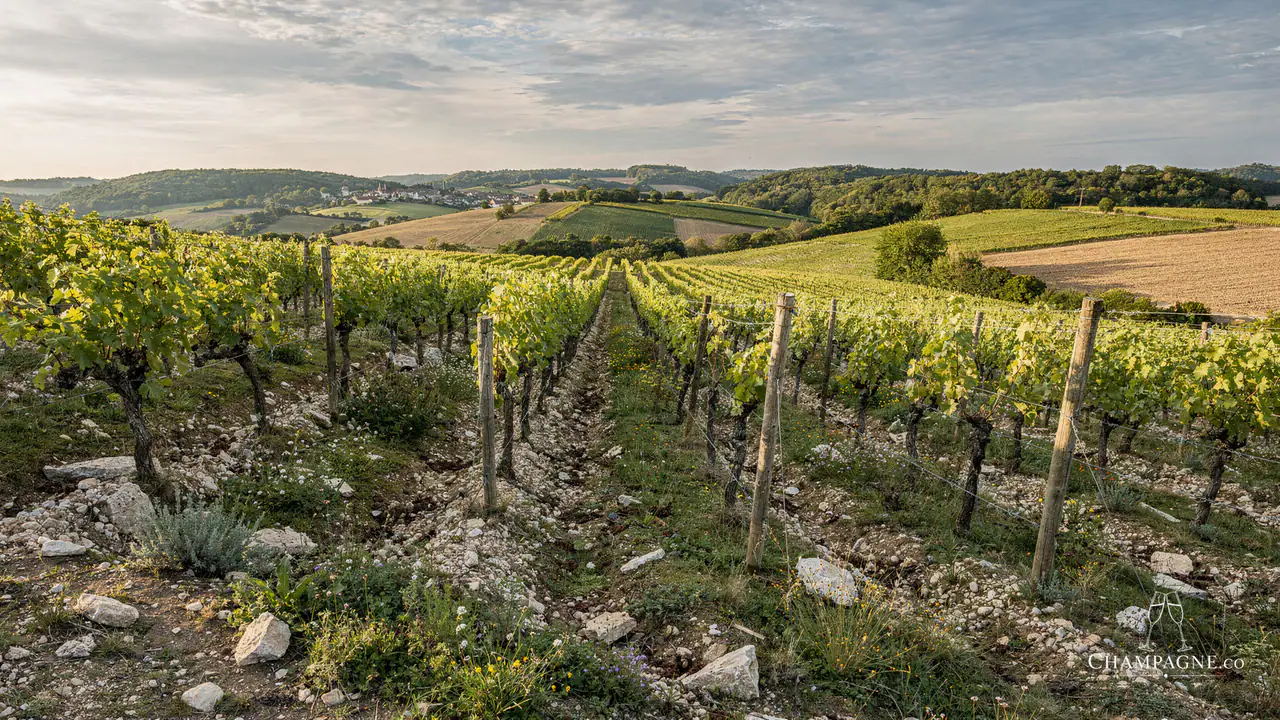
The domaine's current public records expose two different vineyard snapshots. Champagne de Vignerons says the family works about nine hectares, mainly around Gyé-sur-Seine and Celles-sur-Ource. The current organic-sector record is narrower, covering a certified-organic surface of 5.8 hectares in 2026. Those figures describe different current records and are best kept distinct rather than forced into one artificial estate total.
Pinot Noir dominates the vineyard, with smaller holdings of Chardonnay, Meunier and Pinot Blanc. The presence of Pinot Blanc is particularly important because the current range includes both a four-variety blend and wines that separate white- and black-grape directions.
Why this producer matters
Robert Barbichon stands out in the Côte des Bar for the combination of long-established organic farming, a meaningful proportion of Pinot Blanc and a range that gives the four permitted varieties different roles rather than reducing the domaine to Pinot Noir alone.
The estate entered organic certification in 2007 and recorded its first certified-organic harvest in 2010. Current Champagne de Vignerons material also describes biodynamic practice from the 2012 harvest. The 2026 Association des Champagnes Biologiques publication similarly presents Thomas Barbichon's vineyard as farmed organically and biodynamically, while organic certification remains the independently recorded formal label.
Vineyards and terroir
The vineyard is centred on Gyé-sur-Seine, with further parcels around neighbouring Côte des Bar villages including Celles-sur-Ource and Neuville-sur-Seine. Champagne de Vignerons describes clay-limestone soils derived from Upper Jurassic Kimmeridgian formations and an average vine age of roughly 38 years.
The same source gives a broad operating mix of about 75% Pinot Noir, 11% Chardonnay, 9% Meunier and 5% Pinot Blanc. The 2026 organic-sector snapshot for the certified 5.8 hectares is closely related but not identical, listing Pinot Noir at 79%, Chardonnay at 10%, Pinot Blanc at 6% and Meunier at 5%. These are dated vineyard snapshots, not interchangeable permanent percentages.
Current farming is based on organic methods and biodynamic preparations, with soil cultivation and local compost used to support biological activity. The estate's organic certification dates to the 2010 harvest, making this a mature part of the domaine's identity rather than a recent conversion story.
Winemaking and range identity
The public producer directories do not currently provide a complete release-by-release cellar specification, so the most reliable way to understand Barbichon is through the architecture of the range rather than through unverified assumptions about one permanent winemaking recipe.
The live Champagne de Vignerons listing separates Blanc de Blancs, Blanc de Noirs, Réserve 4 Cépages, Brut Nature and Rosé de Saignée. That is a coherent set: one wine emphasises the white-grape side of the vineyard, another the black grapes, the four-variety blend brings the planting mix together, Brut Nature explores the range without dosage and the rosé uses the saignée method.
Champagne.co analysis
Robert Barbichon's identity is broader than the headline “organic Côte des Bar grower” suggests. The organic chronology is important, but the more revealing feature is the four-grape vineyard. Pinot Noir supplies the centre of gravity, while Chardonnay, Meunier and especially Pinot Blanc give the domaine more options for structuring the range.
That structure is visible in the bottle names. Réserve 4 Cépages assembles the estate's varietal diversity, Blanc de Noirs narrows the focus toward the dominant black grapes, and Blanc de Blancs moves in the opposite direction. Brut Nature and Rosé de Saignée then change the method rather than simply the grape composition.
The result is a compact portfolio that lets readers approach one organically farmed Côte des Bar estate from several angles without relying on a prestige hierarchy.
Buying guidance
Start with Réserve 4 Cépages if you want the most complete introduction to the estate's unusual planting mix. It is the natural bottle for understanding why Pinot Blanc matters here alongside the three principal Champagne grapes.
Choose Blanc de Noirs when Pinot Noir-led Côte des Bar character is the priority, or Blanc de Blancs to explore the white-grape side of the domaine. Brut Nature is the logical choice for zero dosage, while Rosé de Saignée is the specialist option for readers specifically interested in maceration rosé.
Because current public directories give range names more reliably than detailed release specifications, check the exact blend, base year and disgorgement on the bottle when comparing different releases.
Loading current Champagne range…
Spotted something wrong? Report a correction
Every report goes to a human review queue. Nothing on this page changes automatically.