Robert Dufour et Fils
Robert Dufour et Fils is a historical Champagne producer identity from Landreville in the Côte des Bar. Current business directories still list Champagne Robert Dufour et Fils at 4 rue de la Croix-Malot, while the strongest detailed wine records for the…
Editorial profile
Robert Dufour et Fils is a historical Champagne producer identity from Landreville in the Côte des Bar. Current business directories still list Champagne Robert Dufour et Fils at 4 rue de la Croix-Malot, while the strongest detailed wine records for the Robert Dufour label belong to earlier decades rather than to a clearly documented current range.
Those records establish the scale and shape of the producer's earlier activity but should be read as historical evidence, not as a current vineyard census or live 2026 catalogue.
The Dufour family name remains important in Landreville through the later work of Charles Dufour and other family members. Robert Dufour et Fils belongs to that lineage, but it is not interchangeable with the modern Charles Dufour producer identity and its current wines.
Why this producer matters
Robert Dufour et Fils matters chiefly as an earlier chapter in a Landreville family story that later produced some of the Côte des Bar's better-known contemporary growers. Robert Dufour bottled wine under the family name rather than functioning only as a grape supplier, leaving a documented Champagne identity before the next generation developed separate labels and approaches.
That historical context is useful because it explains why older Robert Dufour bottles still appear on the market and why the family name can overlap with current Landreville producers. The correct reading is continuity of family and place, not continuity of one unchanged brand, vineyard area or technical programme.
Landreville and vineyard context
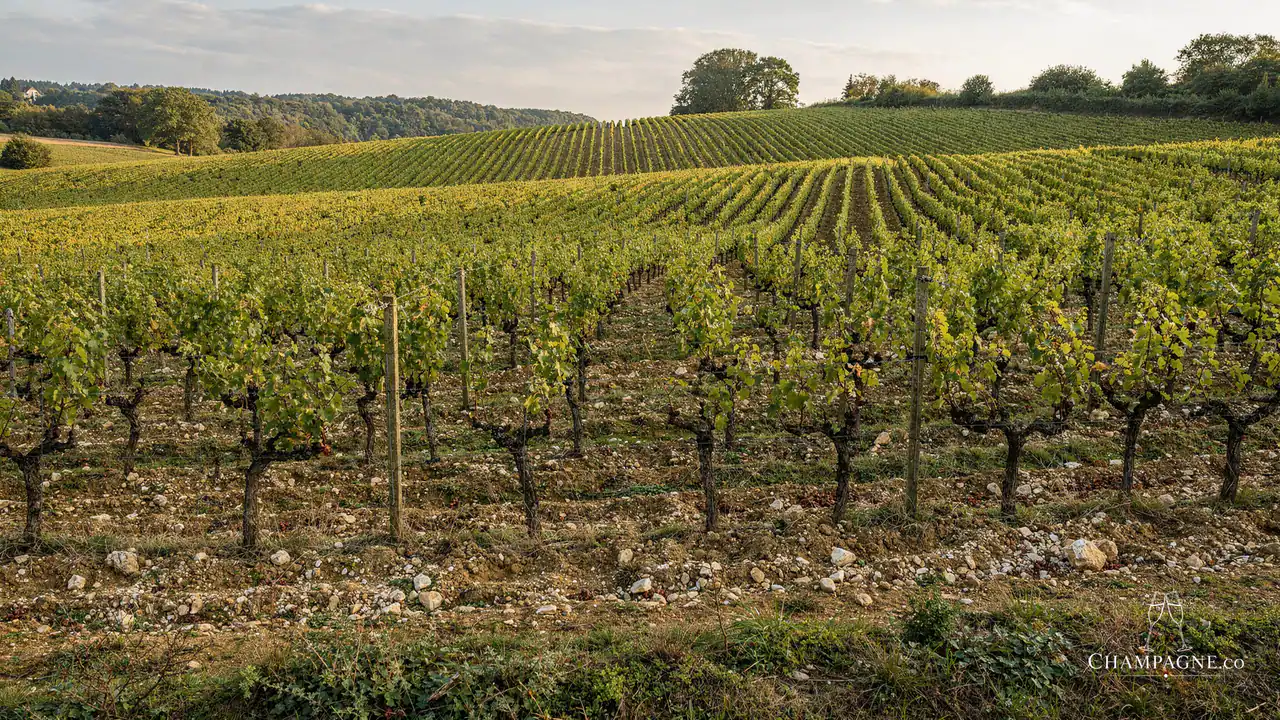
Landreville lies in the Aube sector of Champagne, where clay-limestone soils and Pinot Noir have long played an important role. Historical Robert Dufour records placed the producer at 14 hectares, but no equally authoritative current Robert-labelled vineyard census is publicly available.
For that reason, the historical 14-hectare figure is best understood as part of the producer's earlier profile. Modern vineyard figures associated with Charles Dufour or other members of the family should not be transferred back to Robert Dufour et Fils simply because the growers are related.
Cellar and family continuity
The surviving historical record shows a producer that made and sold its own Champagne from Landreville, including both black-grape and Chardonnay-led wines. More recent collector releases also show direct continuity between generations: the 2004 Ballade of the Villages was vinified and put to tirage by Robert Dufour, then disgorged many years later by his son Charles.
That bottle is particularly useful for understanding the transition. It is neither a normal current Robert Dufour house release nor simply a standard Charles Dufour cuvée; it is a long-aged family wine whose production spans two generations.
Champagne.co analysis
Robert Dufour et Fils is a case where historical clarity is more valuable than artificial completeness. There is enough evidence to establish a genuine Landreville producer, an earlier 14-hectare vineyard operation and a small group of documented cuvées, but not enough current first-party material to pretend that the old house continues today with the same range and technical identity.
The family connection to Charles Dufour makes that distinction especially important. It would be easy to fill the gaps in the Robert Dufour profile with modern Charles Dufour vineyard practices, certifications or cuvées, but doing so would blur two different producer identities. The more accurate picture is one of succession: Robert Dufour et Fils forms part of the family history, while later generations developed their own current work.
For collectors, this makes older Robert Dufour bottles interesting precisely because they document an earlier phase of the Côte des Bar's grower movement. They are historical wines with a specific family and village context, not substitutes for current Charles Dufour releases.
Buying guidance
Buy Robert Dufour et Fils as a historical or collector Champagne, not as though it were a fully documented contemporary range. Exact vintage, storage history and provenance matter more than trying to compare an old label against a current house hierarchy that cannot be reliably established.
Ballade of the Villages 2004 is the most distinctive bottle for readers interested in the transition between generations because its production history links Robert and Charles directly. Older Tradition, Blanc de Blancs and Chardonnay Cuvée Prestige bottles should be approached as archive releases, with condition and authenticity checked carefully before purchase.
Loading current Champagne range…
Spotted something wrong? Report a correction
Every report goes to a human review queue. Nothing on this page changes automatically.