Roger Coulon
Champagne Roger Coulon is a family grower in Vrigny, on the Montagne de Reims, with a history that reaches back through nine generations. Éric and Isabelle Coulon remain central to the domaine, while their children Edgar and Louise are now active in the…
Editorial profile
Champagne Roger Coulon is a family grower in Vrigny, on the Montagne de Reims, with a history that reaches back through nine generations. Éric and Isabelle Coulon remain central to the domaine, while their children Edgar and Louise are now active in the vineyard and cellar, continuing the family's transition into a new generation.
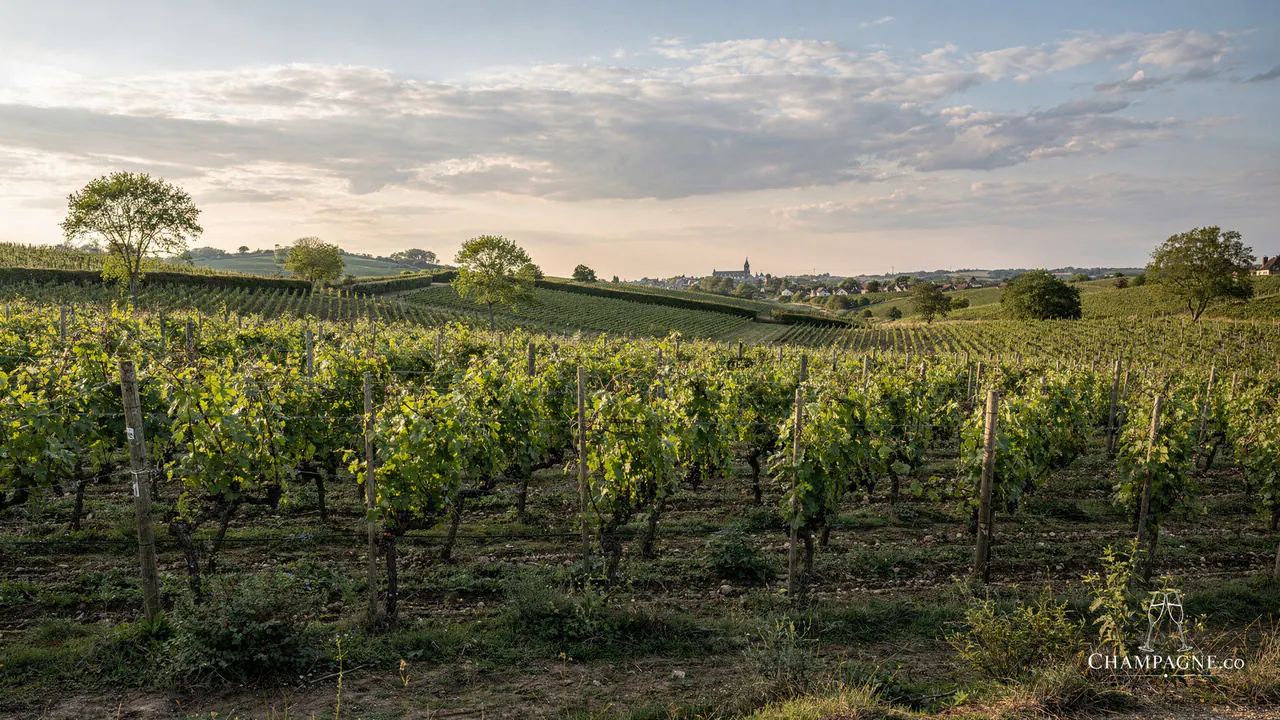
The estate's defining physical feature is fragmentation. Its current site identifies 109 parcels spread across Premier Cru villages including Vrigny, Coulommes-la-Montagne, Pargny-lès-Reims and Villers-Allerand, with an additional Grand Cru presence in Chouilly. That mosaic gives the domaine an unusually large number of small decisions to make about grape, site, vessel and ageing.
The second defining feature is continuity through reserve wine. Roger Coulon maintains a perpetual reserve for Heri-Hodie that began in 1995, allowing one of the estate's most important wines to carry material from many harvests rather than being shaped by one base year alone.
Why this producer matters
Roger Coulon is best understood through the tension between place and memory. The 109 parcels encourage precise site-by-site farming, while the perpetual reserve creates a second dimension through time. The range uses both ideas rather than choosing one over the other.
The family has also pushed the vineyard toward organic and agroforestry methods. The current estate site describes its vines as cultivated organically and with agroforestry, while Edgar Coulon explains that he joined the domaine in 2016 and developed a more resilient vineyard programme around trees, biodiversity and reduced intervention. Louise returned in 2019 after wine and spirits studies and cellar experience outside Champagne.
Vineyards and farming
Vrigny remains the centre of the domaine. The vineyard extends through a patchwork of Premier Cru sites on the western Montagne de Reims, with Chouilly adding a Grand Cru Côte des Blancs component. Meunier, Pinot Noir and Chardonnay all play meaningful roles.
The estate's current material identifies 109 separate parcels, including 26 more than 40 years old. Some named sites are considerably older: Les Linguets is planted on its own roots, while Les Limons and Le Village are among the domaine's long-established parcels.
Farming is based on organic methods, permanent and spontaneous vegetation, soil work and agroforestry. The emphasis is on maintaining biological diversity and allowing individual parcels to respond differently rather than imposing one identical treatment on the entire holding.
Winemaking and cellar approach
Roger Coulon's cellar philosophy is closely tied to parcel separation. The producer uses indigenous yeasts drawn from its vineyard sites and allows fermentation to proceed slowly and spontaneously. Wines are not filtered, and the current estate material describes a range of vessels including barrels, tanks and rounded or ovoid containers.
Dosage is kept to Extra Brut levels or omitted altogether, while long or short ageing is chosen according to the wine. The perpetual reserve adds another layer to this approach, particularly in Heri-Hodie, where successive harvests contribute to a reserve begun in 1995.
The aim is not to make every cuvée technically identical. Instead, the same low-intervention framework gives the domaine room to express old vines, individual villages, Meunier, Chardonnay, Pinot Noir and reserve-wine age in different ways.
Champagne.co analysis
Roger Coulon's range makes sense when read on two axes. The first is time: Heri-Hodie uses a perpetual reserve to connect many harvests, while the family itself is moving from Éric and Isabelle toward Edgar and Louise. The second is place: 109 parcels create a fine-grained vineyard map from which village, old-vine and individual-site wines can be drawn.
That combination prevents the domaine from fitting neatly into either the “solera house” or “parcel grower” category. It is both. Heri-Hodie is about memory, Esprit de Vrigny is about village, Héritage is about one site, and Rosélie demonstrates how seriously the estate treats Meunier in its own right.
The cellar method provides continuity without erasing those distinctions. Indigenous fermentation, restrained dosage and flexible use of vessels let the wines differ by site and purpose while still belonging to a recognisable family style.
Buying guidance
Start with Heri-Hodie if you want to understand the domaine's perpetual-reserve philosophy and the importance of Meunier. It is the most direct route into the idea of wine as accumulated family memory.
Choose Esprit de Vrigny for a more site-led, zero-dosage expression of the home village. Rosélie is the specialist bottle for 100% Meunier rosé de saignée, while L'Hommée focuses on the estate's older historic parcels.
For collectors interested in unusual vineyard material, Blanc de Noirs Franc de Pied is the more specific own-rooted expression. Héritage is also worth seeking when available because it is tied to a single lieu-dit and is not produced automatically every year.
Loading current Champagne range…
Spotted something wrong? Report a correction
Every report goes to a human review queue. Nothing on this page changes automatically.