Roger Manceaux
Champagne Roger Manceaux is a five-generation family grower in Rilly-la-Montagne, on the Montagne de Reims. Patrick Manceaux and Agnès Givry currently lead the estate, continuing the family work established under the Roger Manceaux name in the twentieth…
Editorial profile
Champagne Roger Manceaux is a five-generation family grower in Rilly-la-Montagne, on the Montagne de Reims. Patrick Manceaux and Agnès Givry currently lead the estate, continuing the family work established under the Roger Manceaux name in the twentieth century.
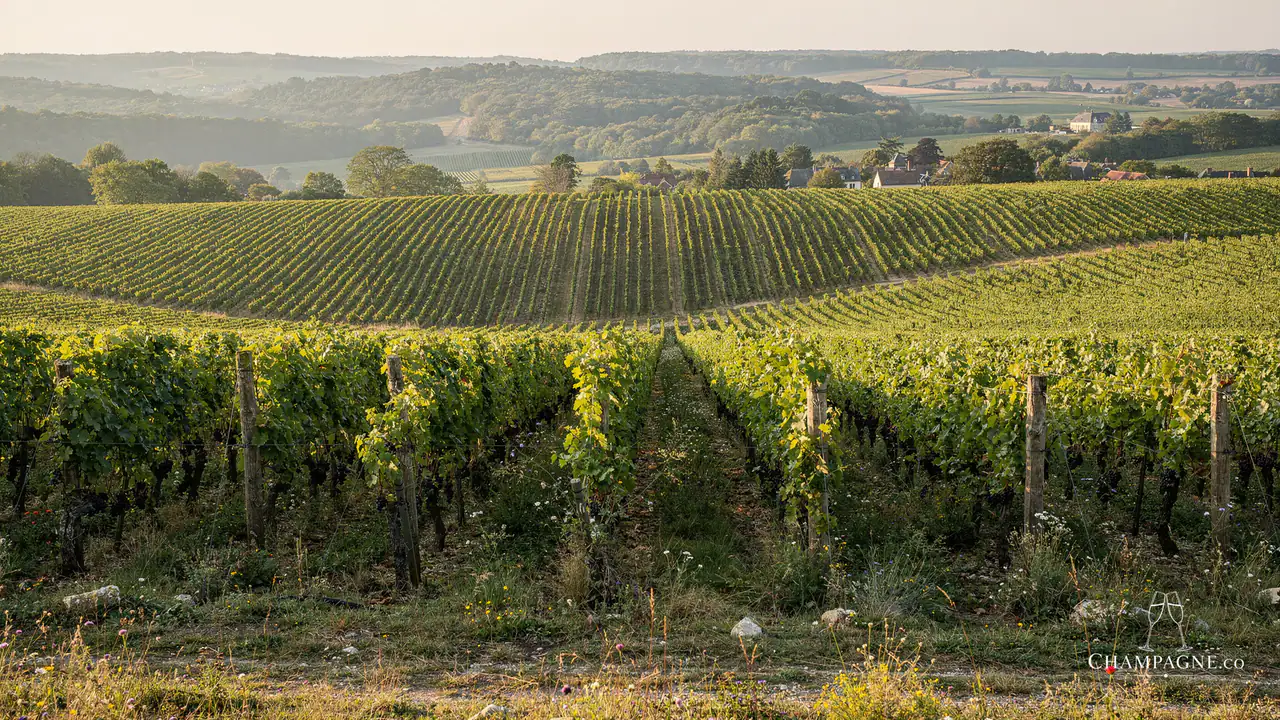
The domaine farms 12 hectares across Premier Cru and Grand Cru villages. Current Vignerons Indépendants records split that holding into 8.5 hectares of Premier Cru and 3.5 hectares of Grand Cru, planted approximately 45% Pinot Noir, 30% Chardonnay and 25% Meunier. The vineyard spans Rilly-la-Montagne and other Montagne de Reims villages, including Mailly-Champagne Grand Cru.
Why this producer matters
Roger Manceaux offers a broad view of the Montagne de Reims because the estate works all three principal Champagne grapes across both Premier Cru and Grand Cru sites. Pinot Noir is the largest component of the vineyard, but Chardonnay and Meunier are substantial enough to support dedicated varietal wines as well as the blended house cuvées.
The domaine is also certified under both Haute Valeur Environnementale and Viticulture Durable en Champagne. That places current vineyard management within recognised Champagne sustainability frameworks without turning the producer into an organic or biodynamic estate by assumption.
Vineyards and terroir
The 12-hectare vineyard is divided between 8.5 hectares of Premier Cru and 3.5 hectares of Grand Cru. Rilly-la-Montagne is the home village, while the wider holding includes Premier Cru sites and Grand Cru vines in Mailly-Champagne.
The grape mix mirrors the diversity of the area: roughly 45% Pinot Noir, 30% Chardonnay and 25% Meunier. This allows the domaine to build both traditional three-grape blends and single-variety wines without relying on purchased fruit to create stylistic breadth.
Current environmental credentials include HVE and Viticulture Durable en Champagne. The estate's public material emphasises careful vineyard management and biodiversity, but does not present the vineyard as organically or biodynamically certified.
Winemaking and cellar approach
Stainless steel is the main cellar material, giving the estate a neutral base for the core blends, while oak is used selectively for some of the more ambitious wines. The range is organised into three broad families — Tradition, Prestige and Collection — which makes the progression from house blends to varietal and vintage wines relatively easy to follow.
Release details vary substantially. The current French site, for example, lists Millésime 2019, while older or translated pages may still show earlier vintages. Blend, dosage, disgorgement and vintage therefore need to remain attached to the specific bottle rather than being treated as permanent specifications.
Champagne.co analysis
Roger Manceaux's range is unusually useful for comparing the three principal Champagne grapes within one estate. The core Cuvée de Réserve shows the blended house style, while the dedicated Meunier, Chardonnay and Pinot Noir wines separate the components and allow readers to see how each variety functions on its own.
The cru structure adds a second dimension. The Collection bottlings then introduce vintage, oak and lower-intervention ideas without changing the estate's underlying three-grape identity.
This makes Roger Manceaux less about one headline cuvée than about range coherence. The wines form a practical map from blended Premier Cru Champagne through varietal expressions to Grand Cru and vintage releases.
Buying guidance
Start with Cuvée de Réserve for the clearest picture of the house blend. Choose Nature Zéro Dosage if you want to compare the same broad varietal structure without dosage.
For a grape-by-grape view, the 100% Meunier, 100% Chardonnay and 100% Pinot Noir Grand Cru wines are the most instructive. The Pinot Noir bottling is especially useful if you want to see the estate's Grand Cru side rather than its Premier Cru base.
Look to Millésime 2019, Patrimoine 2014 or Héritage 2018 for more release-specific, cellar-aged expressions. L'Expression Sans Sulfites Ajoutés is the specialist choice for readers interested in the domaine's no-added-sulphites approach.
Loading current Champagne range…
Spotted something wrong? Report a correction
Every report goes to a human review queue. Nothing on this page changes automatically.