Simon Rion
Champagne Simon Rion is a fourth-generation grower in Courmas, in the Petite Montagne de Reims. Simon Rion took over the family estate in 2007, succeeding his father Pascal. The domaine remains compact at 2.15 hectares, all within Courmas.
Editorial profile
Champagne Simon Rion is a fourth-generation grower in Courmas, in the Petite Montagne de Reims. Simon Rion took over the family estate in 2007, succeeding his father Pascal. The domaine remains compact at 2.15 hectares, all within Courmas.
The current vineyard is split between roughly 1.20 hectares of Meunier, 0.85 hectares of Pinot Noir and 0.10 hectares of Chardonnay. The estate is therefore rooted in all three principal Champagne varieties, but with Meunier carrying the largest share of the vineyard.
Why this producer matters
Simon Rion's defining feature is concentration. Every hectare lies in the same village, so the range offers a tight view of Courmas rather than a blend of widely separated sectors of Champagne.
The estate also combines that small scale with a surprisingly broad range architecture. Its six current Champagnes move from house blends through rosé and a two-grape cuvée to Blanc de Blancs and Blanc de Noirs, allowing buyers to compare different expressions from one very limited vineyard base.
Vineyards and farming
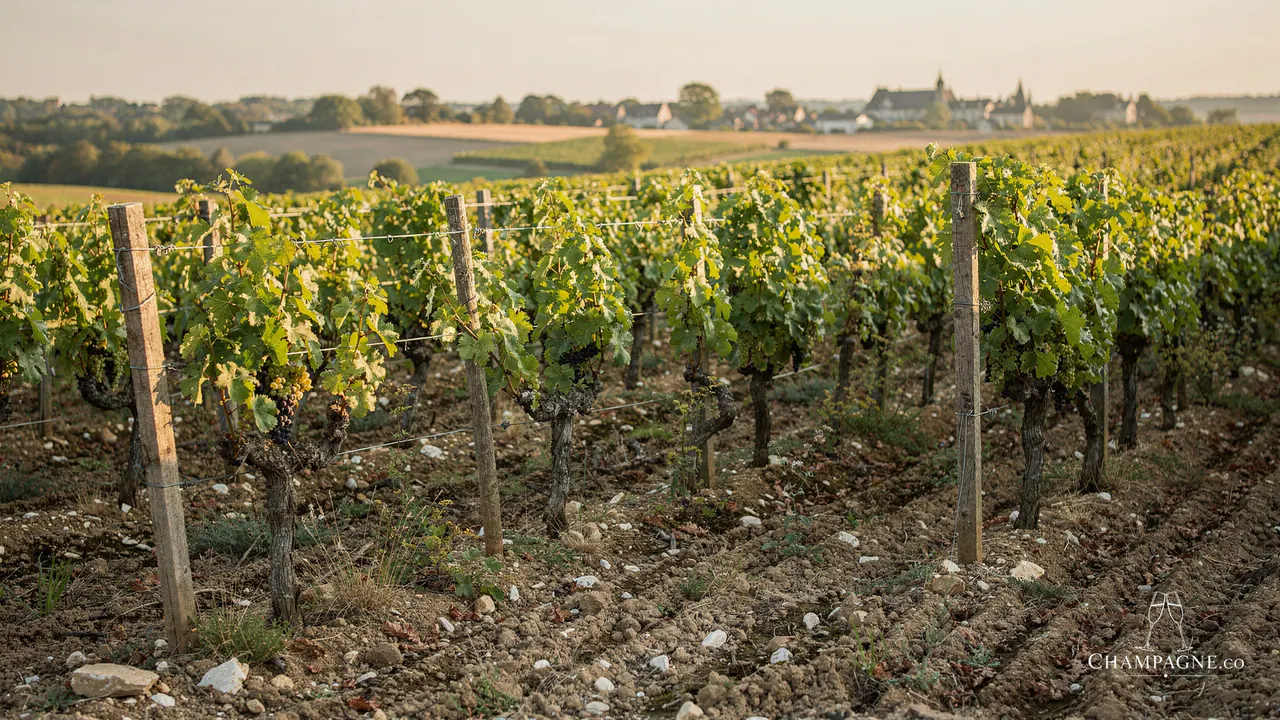
The domaine's 2.15 hectares are entirely in Courmas. The producer describes clay-limestone soils and an average vine age of about 25 years. Meunier is the largest component of the vineyard, followed by Pinot Noir and a much smaller Chardonnay holding.
Soil work is central to the current farming approach. The producer says all vineyard soils are maintained mechanically and that herbicides have not been used since 2017. The estate also holds Haute Valeur Environnementale and Viticulture Durable en Champagne certifications.
Those credentials describe the current farming framework without implying organic or biodynamic certification.
Cellar and range approach
The range is intentionally straightforward: six named Champagnes, with the distinction between them driven by blend, colour and grape selection rather than a complicated hierarchy of prestige labels.
The official site currently lists Originel, Réserve, Rosé, Éclat 2 Cépages, Blanc de Blancs and Blanc de Noirs. Exact dosage, reserve-wine share, base year and ageing can vary by release, so the named cuvée and the details on the bottle or current technical sheet are the useful reference points for a particular purchase.
Champagne.co analysis
Simon Rion is a useful example of how much range a very small grower can build without losing a clear sense of place. The entire estate is confined to Courmas, yet the vineyard contains all three principal Champagne grapes and the portfolio uses them in several different ways.
The most interesting contrast is between vineyard composition and finished range. Meunier is the largest planting, while Chardonnay occupies only a small fraction of the estate, so the Blanc de Blancs naturally represents a much narrower slice of production than the house blends or black-grape wines. That gives the six-wine range more structural interest than its simple naming suggests.
Buying guidance
Choose Originel if you want the broadest introduction to the house. Réserve is the natural next step for a reserve-led expression, while Rosé changes the format without leaving the estate's compact Courmas identity.
For a more grape-specific comparison, Éclat 2 Cépages places Pinot Noir and Chardonnay together, Blanc de Blancs isolates the estate's small Chardonnay component, and Blanc de Noirs focuses on the black-grape side of the vineyard. Check current release details when dosage, base year or reserve-wine proportions matter to your purchase.
Loading current Champagne range…
Spotted something wrong? Report a correction
Every report goes to a human review queue. Nothing on this page changes automatically.