Stéphane Regnault
Champagne Stéphane Regnault is a Chardonnay-focused grower based in Le Mesnil-sur-Oger, working Grand Cru vineyards in Le Mesnil-sur-Oger and Oger. The domaine is built around parcel expression rather than a single fixed house blend, with individual cuvées…
Editorial profile
Champagne Stéphane Regnault is a Chardonnay-focused grower based in Le Mesnil-sur-Oger, working Grand Cru vineyards in Le Mesnil-sur-Oger and Oger. The domaine is built around parcel expression rather than a single fixed house blend, with individual cuvées tied to named vineyard sites.
The estate has been certified organic since the 2020 harvest. Stéphane Regnault also describes biodynamic influences in the vineyard, including horn manure, silica, plant infusions and attention to lunar cycles, but the current public record supports organic certification rather than a separate formal biodynamic certification.
Why this producer matters
Regnault's range is one of the clearest examples of parcel-led Chardonnay in the Côte des Blancs. Lydien, Mixolydien and Dorien each correspond to a different named site, while Chromatique combines material from across the estate.
The cuvée names come from musical modes, reflecting Regnault's interest in jazz, but the naming system also carries practical release information: numbers such as Lydien n°119 identify the specific composition of a release rather than functioning as decoration.
Vineyards and farming
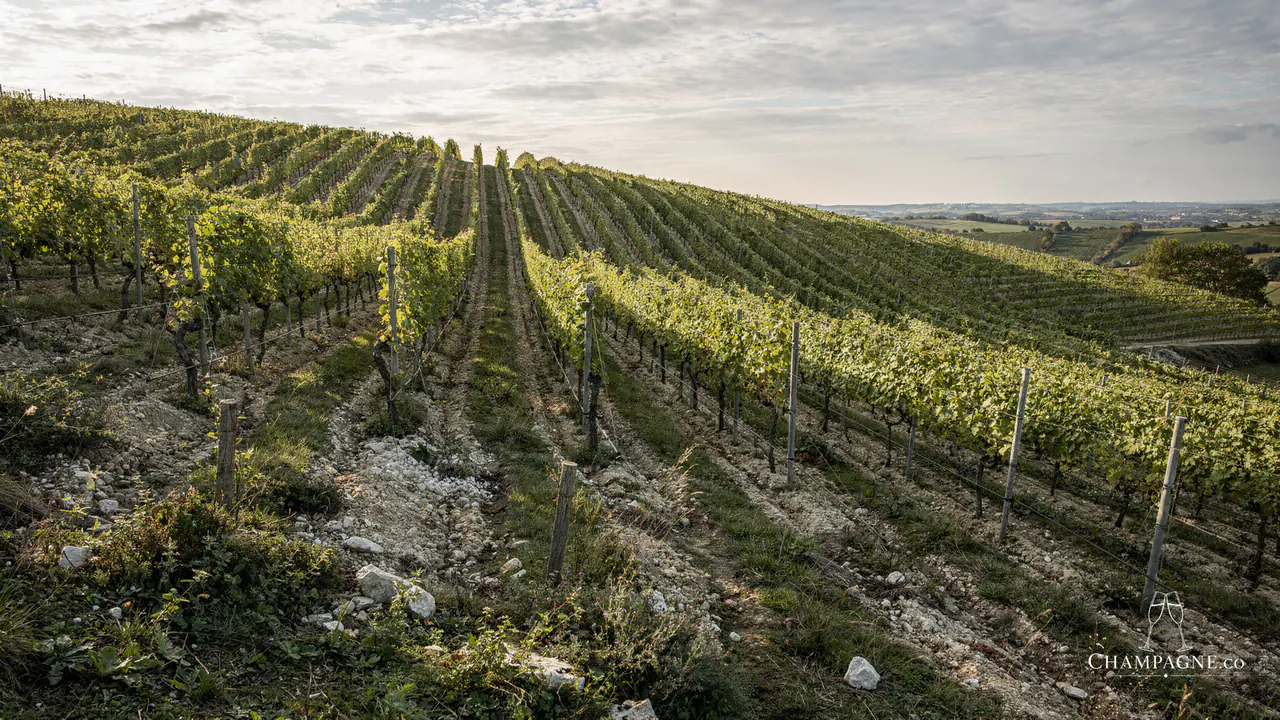
The current vineyard programme centres on Chardonnay in Oger and Le Mesnil-sur-Oger. Three parcels define the principal single-site wines:
- Le Chemin de Flavigny, Oger — the site behind Lydien.
- Le Moulin, Oger — the site behind Mixolydien.
- Les Hautes Mottes, Le Mesnil-sur-Oger — the site behind Dorien.
The vineyard has been certified Agriculture Biologique since the 2020 harvest. Regnault works without synthetic pesticides and uses mechanical soil work, plant preparations and biodynamic-inspired treatments as part of the current farming approach.
Cellar approach
Parcel identity continues into the cellar. Fermentations are spontaneous, and barrels play an important role, with the proportion of oak varying by cuvée and release. Some current releases also include wine from a perpetual reserve started in 2014.
The domaine publishes unusually detailed technical sheets for individual bottlings, so exact harvest composition, barrel percentage, reserve share, malolactic fermentation, bottling date, disgorgement and dosage should be read as release-specific information.
Champagne.co analysis
Stéphane Regnault's wines make the most sense as a study in how neighbouring Grand Cru Chardonnay sites can be separated and compared. Lydien and Mixolydien both come from Oger but from different parcels; Dorien moves to Le Mesnil-sur-Oger; Chromatique then reconnects the estate through blending.
The combination of organic farming, spontaneous fermentation, significant barrel use and a perpetual reserve gives the wines a modern grower-Champagne framework, but the defining feature is still geography.
Buying guidance
Choose Lydien if you want to explore Le Chemin de Flavigny in Oger, Mixolydien for Le Moulin, or Dorien for the Le Mesnil-sur-Oger parcel Les Hautes Mottes. Chromatique is the broader estate expression and the most useful bottle when you want to see how Regnault blends across his different Chardonnay sites.
For any of the numbered parcel wines, check the exact release number and technical sheet if harvest composition, reserve-wine share, dosage or disgorgement matters, because those details change from one edition to another.
Loading current Champagne range…
Spotted something wrong? Report a correction
Every report goes to a human review queue. Nothing on this page changes automatically.