Thévenet Delouvin
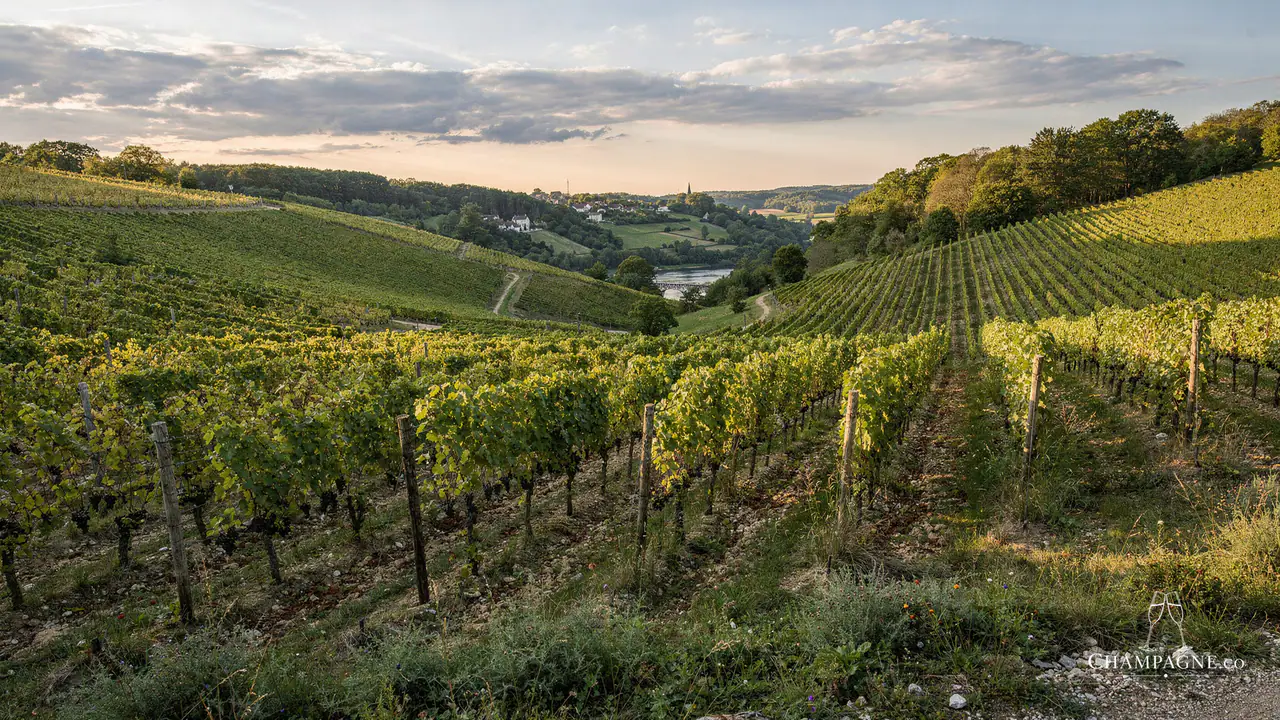
Champagne Thévenet Delouvin is a family grower based in Passy-Grigny, in the Vallée de la Marne. The domaine brings together two family vineyard histories and works across Passy-Grigny, Cerseuil and Grauves, giving it access to both sides of the Marne…
Editorial profile
Champagne Thévenet Delouvin is a family grower based in Passy-Grigny, in the Vallée de la Marne. The domaine brings together two family vineyard histories and works across Passy-Grigny, Cerseuil and Grauves, giving it access to both sides of the Marne Valley as well as Chardonnay country further south.
The vineyard is planted to all three principal Champagne grapes — Meunier, Pinot Noir and Chardonnay — with Meunier holding particular importance in the estate's identity. The family has pursued sustainable viticulture for decades and has held both Haute Valeur Environnementale level 3 and Viticulture Durable en Champagne certification since March 2016.
Why this producer matters
Thévenet Delouvin is interesting because it does not reduce Vallée de la Marne identity to a single Meunier-led house style. Its three-village footprint allows the family to work with distinct parcels and all three major varieties, then decide whether to blend them or highlight a particular grape or reserve-wine concept.
The domaine also carries out the production cycle at the estate, from pressing and parcel vinification through riddling and disgorgement. Some wines are fermented or raised in oak, while others remain more classically tank-led. That makes the range useful for comparing different ways of expressing the same family vineyard base.
Vineyards and cellar approach
The current vineyard footprint spans Passy-Grigny, Cerseuil and Grauves. Grapes and juice fractions are handled separately, with parcel vinification used to preserve differences before blending decisions are made.
Reserve wines are an important part of the cellar toolkit, and some components are vinified in oak. The producer's current materials also emphasise relatively low dosage across much of the range, with several wines offered as Extra Brut.
Champagne.co analysis
Thévenet Delouvin is best understood as a grower that uses the diversity of its vineyard rather than forcing everything into one signature blend. Meunier is central, but Chardonnay and Pinot Noir are not supporting details: they underpin separate wines, three-grape blends and the estate's reserve programme.
That makes the domaine especially useful for readers who want to see how a Vallée de la Marne grower can move between direct varietal expression and more layered blending. The strongest thread across the range is not one fixed formula but the combination of parcel separation, reserve wines and low-dosage finishing.
Buying guidance
For a first bottle, Carte Noire gives the most direct route into the estate's Meunier identity, while Réserve shows the broader three-grape blending style.
Choose Prestige or Infini if the interest is in cellar method and reserve-wine construction. For a more grape-specific comparison, look to the Chardonnay and Insolite bottlings. With all non-vintage wines, check the exact release information where available because blend proportions and reserve components can change over time.
Loading current Champagne range…
Spotted something wrong? Report a correction
Every report goes to a human review queue. Nothing on this page changes automatically.