Val Frison
The producer historically known as Val Frison is now moving into a new identity as Champagne Thomas de Marne, while retaining the same small organic domaine in Ville-sur-Arce in the Côte des Bar. The change is a continuation rather than a separate estate:…
Editorial profile
The producer historically known as Val Frison is now moving into a new identity as Champagne Thomas de Marne, while retaining the same small organic domaine in Ville-sur-Arce in the Côte des Bar. The change is a continuation rather than a separate estate: current organic-sector records explicitly describe Val Frison as gradually giving way to Thomas de Marne while preserving the same farming and cellar philosophy.
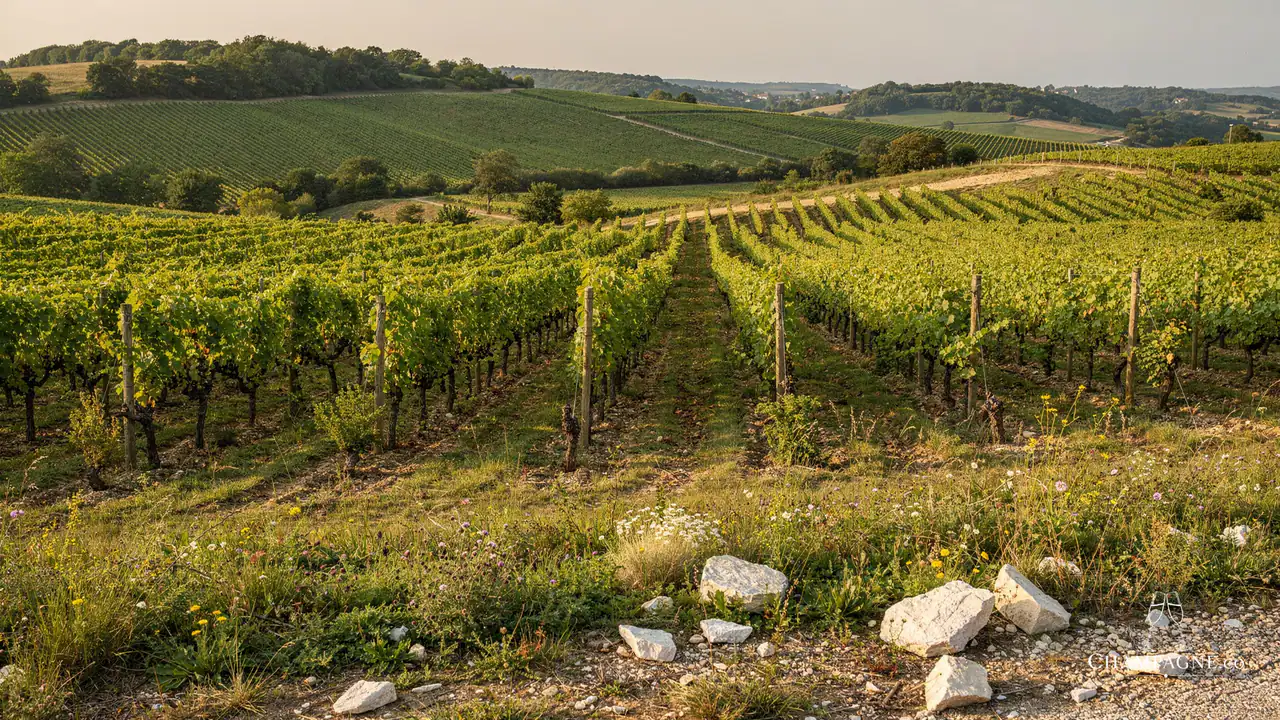
The vineyard totals 6.24 hectares and is 100% certified organic, planted to Pinot Noir and Chardonnay. The estate entered organic certification in 2003, with its first certified-organic harvest in 2007.
Why this producer matters
This is one of Champagne's clearest examples of a producer identity evolving without the vineyard philosophy being reset. Readers may still encounter bottles carrying the Val Frison name, while newer material increasingly uses Thomas de Marne. Understanding that continuity is more useful than treating the two names as unrelated producers.
The domaine is also firmly rooted in the Côte des Bar's limestone geology. Current producer material identifies both Kimmeridgian and Portlandian soils, while the cellar approach is deliberately minimal: parcel wines are fermented and aged in barrel, with no filtration, no fining and no dosage.
Vineyards and cellar approach
The certified vineyard is planted only to Pinot Noir and Chardonnay. Each parcel is handled with the aim of preserving its individual site character rather than being forced into a fixed house blend.
Fermentation and élevage take place in wood. The wines are bottled without filtration or fining and are finished without dosage, making Brut Nature an important part of the domaine's identity.
Champagne.co analysis
The defining story here is continuity through transition. Organic farming, parcel expression, barrel ageing and zero dosage remain the core ideas while the public-facing producer name changes from Val Frison toward Thomas de Marne.
That makes provenance especially important for collectors and buyers. Older Val Frison bottles and newer Thomas de Marne releases belong to the same estate lineage, but bottle-level details should not be transferred automatically from one era to another.
Buying guidance
When buying older bottles, treat Val Frison as the historical producer identity and check the exact cuvée and release information. For newer wines, look for Champagne Thomas de Marne and confirm whether the bottle belongs to the sparkling Champagne range or the separate Coteaux Champenois programme.
For readers interested in the estate's clearest stylistic signature, focus on the combination of organic Côte des Bar fruit, barrel élevage and zero dosage rather than chasing one supposedly definitive cuvée formula.
Loading current Champagne range…
Spotted something wrong? Report a correction
Every report goes to a human review queue. Nothing on this page changes automatically.