Varnier-Fannière
Champagne Varnier-Fannière is a family grower based in Avize, in the Côte des Blancs. The family's vineyard history reaches back to 1860, while Jean Fannière began producing Champagne under the family name in 1947. Later generations extended the estate…
Editorial profile
Champagne Varnier-Fannière is a family grower based in Avize, in the Côte des Blancs. The family's vineyard history reaches back to 1860, while Jean Fannière began producing Champagne under the family name in 1947. Later generations extended the estate beyond Avize into neighbouring Grand Cru Chardonnay villages.
Today the domaine is continued by Valérie Varnier with the long-standing estate team. Current independent records put the vineyard at about 4 hectares, planted overwhelmingly to Chardonnay across Grand Cru Côte des Blancs sites.
Why this producer matters
Varnier-Fannière is a compact estate with a clear organising idea: Grand Cru Chardonnay expressed through dosage, old-vine selection and individual cuvée construction rather than through a large number of villages or varieties.
The domaine's small size also makes its range unusually legible. Readers can compare a classic Brut, zero-dosage versions, chalk-focused Extra Brut wines, older-vine cuvées and vintage releases without leaving the same Chardonnay-centred family vineyard base.
Vineyards and terroir
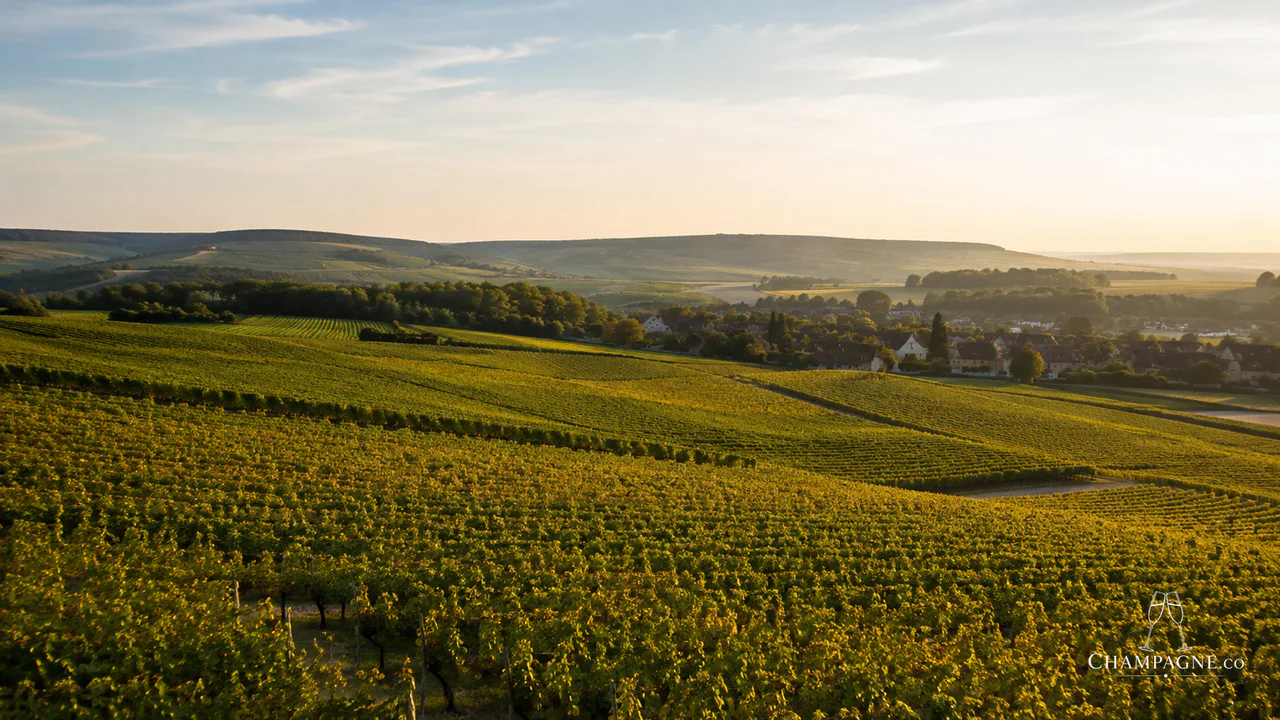
The estate is rooted in Avize and also works Grand Cru Chardonnay vineyards in neighbouring villages including Cramant and Oger. Current specialist material also records Oiry within the domaine's Côte des Blancs footprint.
Chardonnay is the defining grape. The deep chalk of the Côte des Blancs underpins the domaine's Blanc de Blancs identity and provides the common thread linking the core wines to the more selective parcel and old-vine cuvées.
Champagne.co analysis
Varnier-Fannière is most interesting when its wines are read side by side. The estate does not need a complicated story: the same Grand Cru Chardonnay foundation is tested through different dosage levels, vineyard selections and ageing choices.
That makes Brut versus Brut Zéro an especially useful comparison, while Saint-Denis and Jean-Fannière Origine show how the domaine moves from broad Côte des Blancs identity toward older-vine and parcel-specific expression.
Buying guidance
Start with Brut Grand Cru for the baseline style. Choose Brut Zéro if the purpose is to see the same general Chardonnay identity without dosage, or Esprit de Craie Extra Brut for another low-dosage route.
For the more distinctive estate wines, look to Cuvée Saint-Denis and Jean-Fannière Origine. If buying a Grand Vintage, confirm the exact year: the currently listed release is 2014, and vintage-specific details should not be transferred to later bottlings.
Loading current Champagne range…
Spotted something wrong? Report a correction
Every report goes to a human review queue. Nothing on this page changes automatically.