Vauversin
Champagne Vauversin is a small Oger Grand Cru grower devoted entirely to Chardonnay. The family's roots in Oger reach back to the seventeenth century, while Fernand Vauversin began commercialising estate Champagne around 1930.
Editorial profile
Champagne Vauversin is a small Oger Grand Cru grower devoted entirely to Chardonnay. The family's roots in Oger reach back to the seventeenth century, while Fernand Vauversin began commercialising estate Champagne around 1930.
Today the domaine is associated with Laurent Vauversin, who joined the family estate in 2011 and helped drive its move to organic farming. The vineyard is approximately 4.4–4.5 hectares, all in Oger and all planted to Chardonnay. Organic certification was achieved in 2014.
Why this producer matters
Vauversin is one of the clearest examples of a grower exploring a single Grand Cru village in detail. The constant is Oger Chardonnay; the variables are parcel position, vine age, reserve-wine structure, wood format and dosage.
The estate's organic programme also goes beyond a simple certification label. Current institutional material describes diverse cover crops, flowers, aromatic plants and trees used to increase biodiversity through the vineyard.
Vineyards and cellar approach
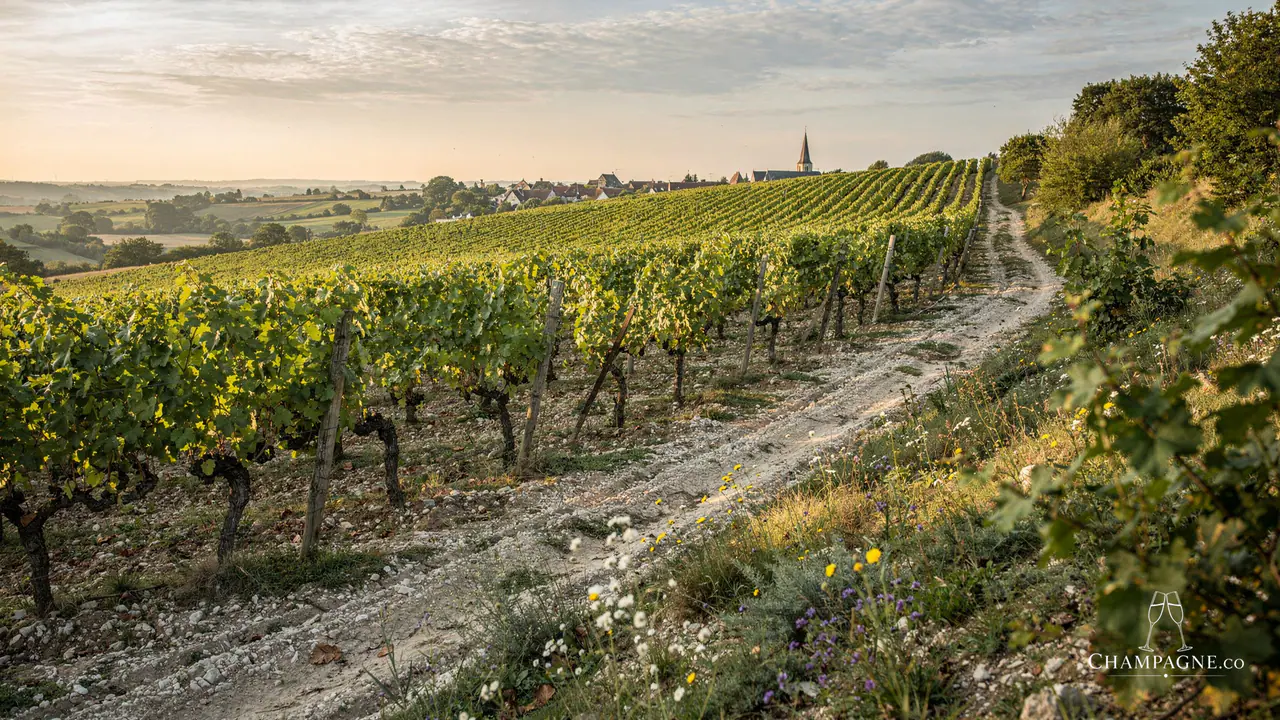
All estate vines are in Oger. The range draws on parcels from the top of the slope down to the plain, allowing the domaine to separate earlier-ripening chalky hillside sites from later sectors where chalk lies close to the surface.
Indigenous yeasts, low sulphur, barrel and foudre ageing, and unfined/unfiltered bottling are recurring features. Reserve wines play an important role, particularly in the multi-parcel wines and the perpetual-reserve cuvée.
Champagne.co analysis
Vauversin is best understood as a study of one place at different resolutions. Original and Aubeline combine parcels; Rossignol and Les Crayères narrow the focus to individual sites; Ordage changes the time dimension through perpetual reserve.
That structure makes the estate more informative than a generic 'organic Blanc de Blancs' label suggests. The wines allow readers to compare parcel, reserve and dosage choices while the village and grape stay constant.
Buying guidance
Start with Original for the broadest picture of Oger. Compare it with Aubeline if you want to see how a related multi-parcel structure changes with dosage.
For a more site-specific bottle, choose Rossignol or Les Crayères. For reserve depth rather than a single parcel, Ordage is the key wine. Check the exact disgorgement and release where available because dosage and ageing data remain bottle-specific.
Loading current Champagne range…
Spotted something wrong? Report a correction
Every report goes to a human review queue. Nothing on this page changes automatically.