Veuve Fourny & Fils
Champagne Veuve Fourny & Fils is a fifth-generation family producer based in Vertus Premier Cru at the southern end of the Côte des Blancs. The Fourny family has grown vines in Vertus since 1856, and the present house is led by brothers Charles-Henry and…
Editorial profile
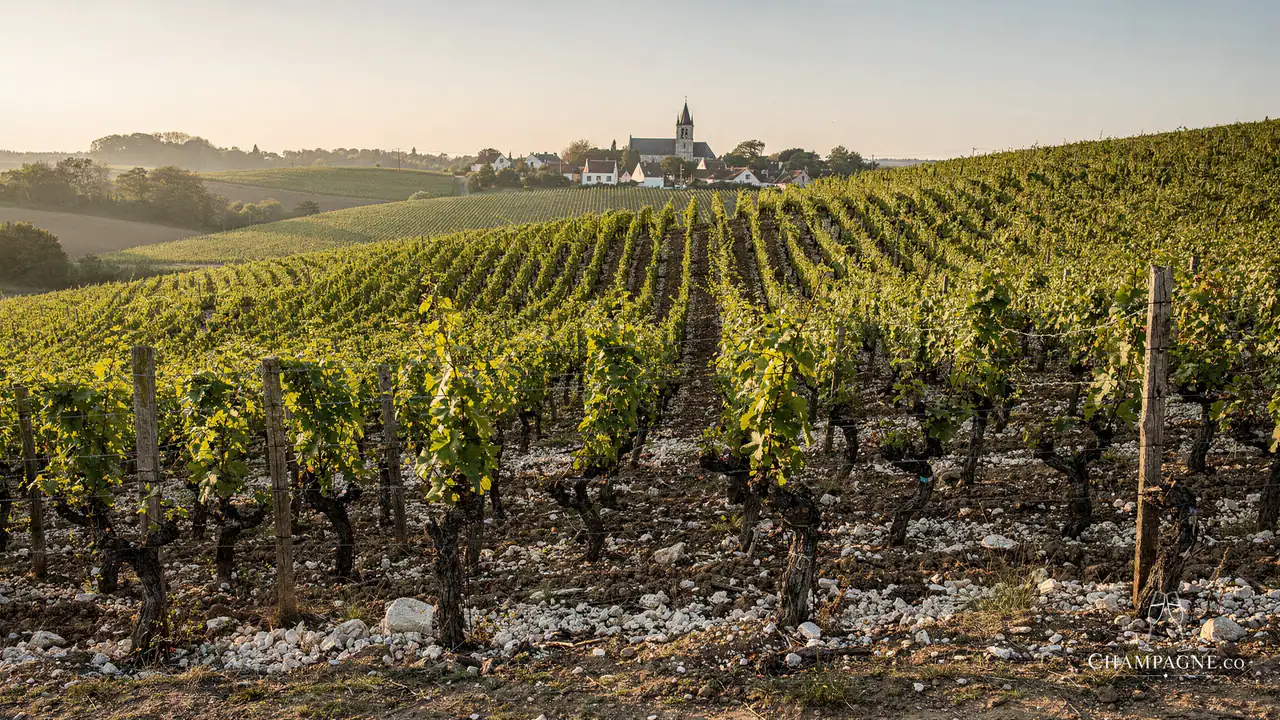
Champagne Veuve Fourny & Fils is a fifth-generation family producer based in Vertus Premier Cru at the southern end of the Côte des Blancs. The Fourny family has grown vines in Vertus since 1856, and the present house is led by brothers Charles-Henry and Emmanuel Fourny.
The domaine's identity is closely tied to Vertus, where Chardonnay dominates but Pinot Noir also has an established place. The brothers work parcel by parcel, vinifying individual sites separately before deciding which wines belong in blends and which merit a more specific expression.
Why this producer matters
Veuve Fourny combines two complementary ideas. The first is classic blending: wines such as Les Grands Terroirs bring together several harvests, reserve wines and both Chardonnay and Pinot Noir. The second is site specificity, led by Clos Faubourg Notre-Dame, the family's tiny walled Chardonnay vineyard in Vertus.
That dual approach makes the producer more useful to readers than a simple 'Côte des Blancs grower' label. The range moves between non-vintage Blanc de Blancs, multi-cru blends, vintage Vertus Chardonnay, oak-aged cuvées and several distinct rosé methods.
Vineyards and cellar approach
Current producer material describes roughly forty lieux-dits in Vertus Premier Cru, with parcels vinified separately. The family also works with long-standing partner growers, so the total production footprint is broader than the family's directly owned vineyards.
Reserve wines are important and are held in both tank and oak. Base wines may be fermented or raised in different vessels according to cuvée, while sulphur use is kept relatively low. The cellar approach is therefore tailored to the wine rather than built around one universal wood or stainless-steel rule.
Champagne.co analysis
Veuve Fourny is best understood through the tension between assemblage and parcel. Les Grands Terroirs shows the brothers using reserve wine, multiple vintages and more than one grape to create complexity; Clos Faubourg Notre-Dame does the opposite by narrowing the lens to one tiny Chardonnay site.
Between those poles sit the Blanc de Blancs, Cuvée R, Monts de Vertus and the rosés. Together they show that the house's identity is not one fixed recipe but a Vertus-centred toolkit of dosage, oak, reserve wine, vintage and parcel selection.
Buying guidance
Start with Blanc de Blancs Extra-Brut for a direct Côte des Blancs introduction, or Les Grands Terroirs if you want the broader blending style with Pinot Noir and reserve wines.
Choose Monts de Vertus for a vintage Vertus expression and Clos Faubourg Notre-Dame for the most site-specific wine. With the rosés, check the exact cuvée name: Brut, Saignée and Vinothèque represent different constructions rather than a simple quality ladder.
Loading current Champagne range…
Spotted something wrong? Report a correction
Every report goes to a human review queue. Nothing on this page changes automatically.