Vilmart & Cie
Champagne Vilmart & Cie is a family grower founded in 1890 and based in Rilly-la-Montagne Premier Cru on the Montagne de Reims. Laurent Champs has led the domaine since the 1990s, and his son Thomas Champs joined the house in 2020, extending the family…
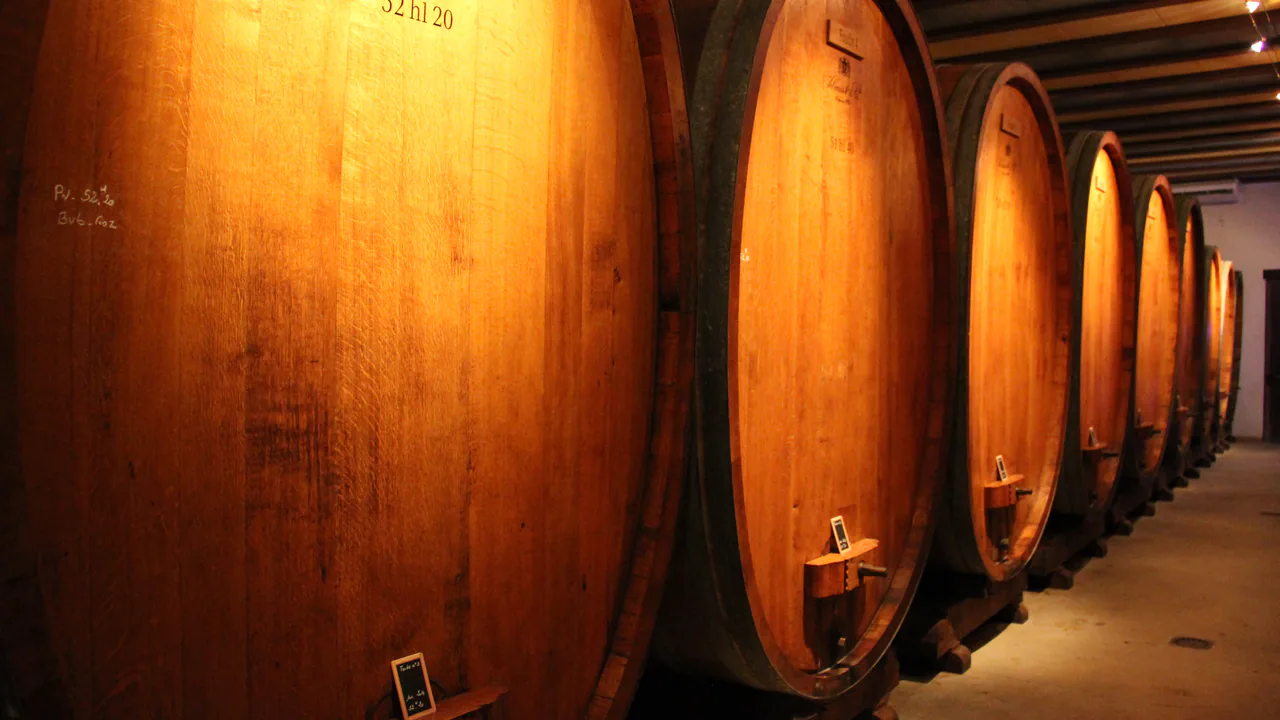
Vilmart & Cie — Champagne producer profile image.
Editorial profile
Champagne Vilmart & Cie is a family grower founded in 1890 and based in Rilly-la-Montagne Premier Cru on the Montagne de Reims. Laurent Champs has led the domaine since the 1990s, and his son Thomas Champs joined the house in 2020, extending the family continuity into a sixth generation.
The estate covers 11 hectares of Premier Cru vines in Rilly-la-Montagne and neighbouring Villers-Allerand. Chardonnay is the majority variety, with Pinot Noir making up the balance. The vineyards are unusually concentrated close to the winery, allowing the team to work a relatively compact set of parcels rather than a widely scattered Champagne holding.
Why this producer matters
Vilmart's identity is unusually consistent from vineyard to cellar. The wines are estate-grown, the base wines spend meaningful time in oak, and malolactic fermentation is avoided. That combination gives the range a clear technical signature even as the blend changes from Pinot Noir-led Grande Réserve to Chardonnay-dominant Grand Cellier and the vintage cuvées.
The house also provides a useful progression through élevage and selection. Non-vintage wines spend about ten months in large oak before bottling, while vintage wines move into smaller barrels and receive longer cellar ageing.
Vineyards and cellar approach
The current estate is 11 hectares, all Premier Cru, planted in Rilly-la-Montagne and Villers-Allerand. Current house material gives a roughly 70% Chardonnay / 30% Pinot Noir vineyard balance.
Base wines begin fermentation in wood and spend about 10 months in foudres or barrels before bottling. Vilmart blocks malolactic fermentation across the range. Non-vintage cuvées then spend roughly three to four years in the chalk cellars, while vintage wines are generally held for five to eight years or longer.
Champagne.co analysis
Vilmart is most revealing when Grande Réserve and Grand Cellier are compared. Both come from the same compact Premier Cru estate, both see extended wood ageing and both avoid malolactic fermentation, yet one is Pinot Noir-led and the other Chardonnay-led. That makes grape balance easier to isolate from cellar method.
The vintage wines then add another layer through older vines, smaller barrels and longer cellar ageing. Vilmart therefore offers a coherent progression rather than a collection of unrelated labels: house method stays recognisable while grape balance, selection and time change.
Buying guidance
Start with Grande Réserve if Pinot Noir is the priority or Grand Cellier for the more Chardonnay-led expression. Comparing the two is the simplest way to understand Vilmart's house method.
For a vintage step up, Grand Cellier d'Or 2021 is the current reference. Choose Cœur de Cuvée 2017, Emotion, Blanc de Blancs or Blanc de Noirs only with the exact vintage in mind, since these wines are not generic permanent formulas. Ratafia Chardonnay is a separate fortified product and should not be confused with the Champagne range.
Loading current Champagne range…
Spotted something wrong? Report a correction
Every report goes to a human review queue. Nothing on this page changes automatically.