Vincent Joudart
Champagne Vincent Joudart is a family grower based in Fèrebrianges, around 30 kilometres south-west of Épernay in the Vallée du Petit Morin. The estate grows the three principal Champagne varieties — Chardonnay, Pinot Noir and Meunier — on the…
Editorial profile
Champagne Vincent Joudart is a family grower based in Fèrebrianges, around 30 kilometres south-west of Épernay in the Vallée du Petit Morin. The estate grows the three principal Champagne varieties — Chardonnay, Pinot Noir and Meunier — on the clay-limestone slopes around the village and elaborates its Champagnes at the property.
Current Comité Champagne records confirm both Haute Valeur Environnementale (HVE) and Viticulture Durable en Champagne (VDC) credentials. The domaine is also a member of the Club Trésors de Champagne, placing its Spécial Club wine within the collective's grower-selected vintage programme.
Why this producer matters
Vincent Joudart offers a relatively classical picture of the Petit Morin sector: all three major grapes, estate production and a range that moves from non-vintage reserve wine through varietal and vintage bottlings to Spécial Club.
The current catalogue is particularly useful because it presents Blanc de Blancs, Blanc de Noirs and Rosé de Saignée as distinct vintage wines. That gives readers clear routes into grape variety and winemaking method without needing to infer them from a generic house blend.
Vineyards and cellar approach
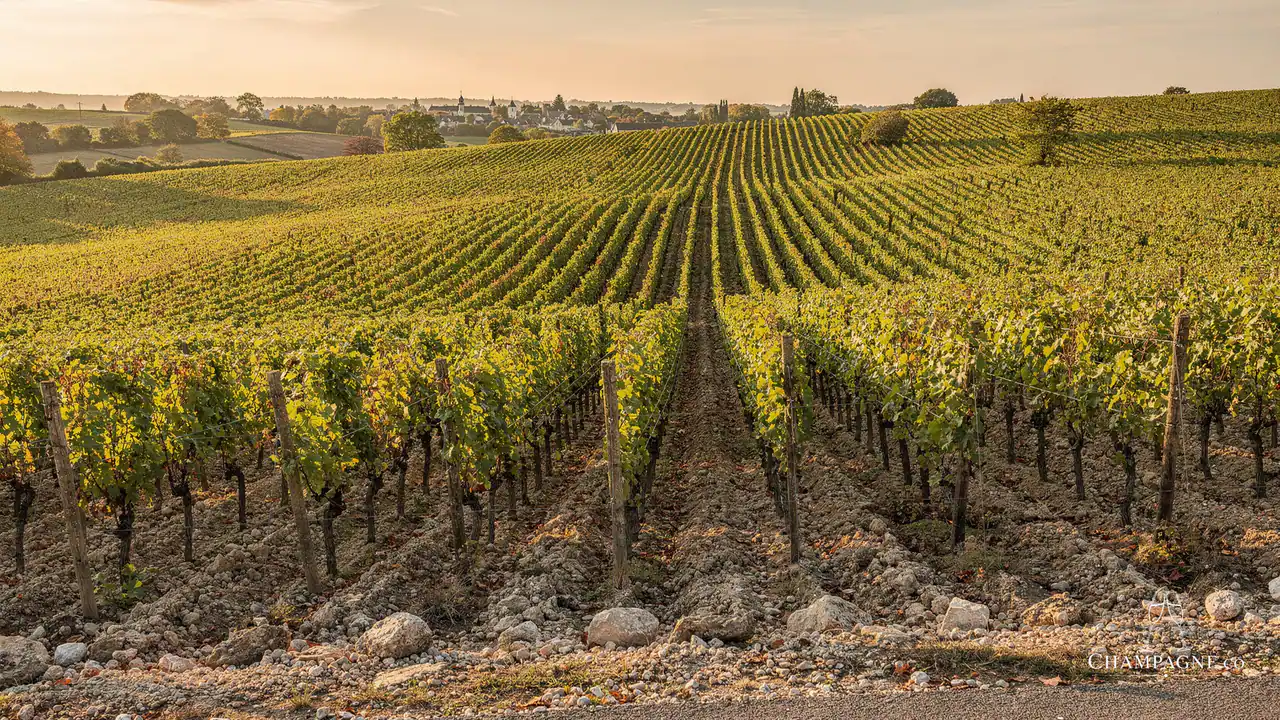
The vineyards are on the slopes of Fèrebrianges and are planted to Chardonnay, Pinot Noir and Meunier. The producer describes the soils as clay-limestone and works under the HVE and VDC environmental frameworks.
The wines are produced at the estate. Exact blend, dosage and ageing details should remain tied to the specific release, especially where vintage wines and Club selections are concerned.
Champagne.co analysis
Vincent Joudart's range is best understood as a progression from blending toward specificity. Brut Réserve establishes the house baseline; the 2019 Blanc de Blancs and Blanc de Noirs isolate grape colour; the 2020 Rosé de Saignée changes method; and Spécial Club adds a vintage selection under the Club Trésors framework.
That makes the producer especially straightforward to navigate. The value is not in imposing a prestige ranking but in choosing which dimension — blend, grape, rosé method or vintage selection — the reader wants to explore.
Buying guidance
Start with Brut Réserve for the broadest introduction. Compare Blanc de Blancs 2019 with Blanc de Noirs 2019 if grape variety is the main interest, or choose Rosé de Saignée 2020 for the estate's distinct rosé route.
For the most selective vintage expression, look to the exact Spécial Club year. Both 2018 and 2019 are currently listed, so the vintage should always be recorded rather than reducing them to one generic Spécial Club entry.
Loading current Champagne range…
Spotted something wrong? Report a correction
Every report goes to a human review queue. Nothing on this page changes automatically.