Vollereaux
Champagne Vollereaux is a sixth-generation family producer in Pierry, on the Coteaux Sud d'Épernay. The current Comité Champagne directory identifies Franck Vollereaux as the head of the business and gives the family vineyard at 40 hectares, planted to…
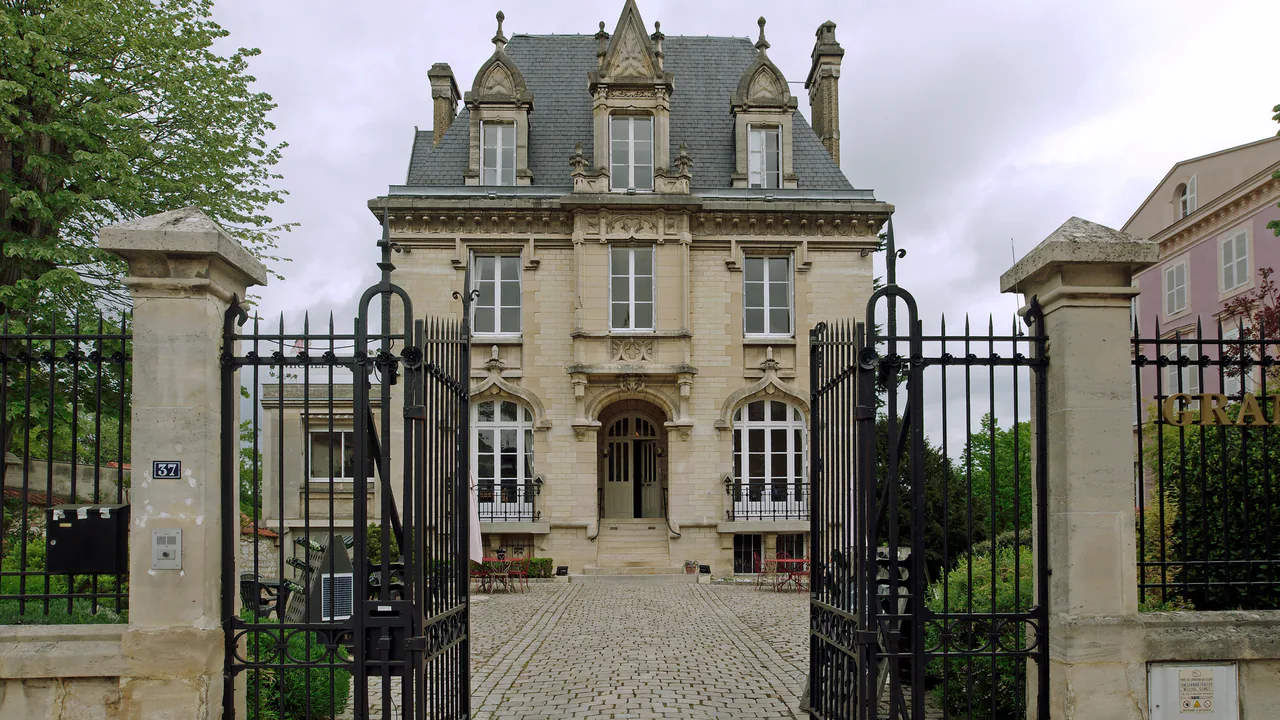
Vollereaux — Champagne producer profile image.
Editorial profile
Champagne Vollereaux is a sixth-generation family producer in Pierry, on the Coteaux Sud d'Épernay. The current Comité Champagne directory identifies Franck Vollereaux as the head of the business and gives the family vineyard at 40 hectares, planted to Chardonnay, Pinot Noir and Meunier.
That scale gives Vollereaux a broader base than many small grower estates while retaining a clear family and vineyard identity. The house's contemporary range covers classic non-vintage blends, rosé, vintage and longer-aged cuvées rather than being built around a single grape or village.
Why this producer matters
Vollereaux offers a useful bridge between grower Champagne and a more house-like model. Forty hectares across the southern Épernay sector provide enough vineyard diversity to build consistent blends, but the producer remains rooted in Pierry and under family direction.
For drinkers, the attraction is breadth without losing that regional anchor: the range can move from a balanced three-grape Brut to Pinot Noir rosé and more mature or vintage expressions.
Vineyard and terroir
The current institutional figure is 40 hectares, with all three principal Champagne grapes represented. Pierry sits immediately south of Épernay in the Coteaux Sud d'Épernay, and current producer technical material for Brut Réserve identifies fruit from Chavot-Courcourt, Monthelon, Moussy, Pierry and Sézanne.
Those village details belong to the documented release and should not be assumed for every Vollereaux wine. The important durable point is the scale and mixed planting of the family vineyard, which gives the cellar access to Chardonnay, Pinot Noir and Meunier for different blending roles.
Cellar and winemaking
Vollereaux's current technical sheets show that specifications vary materially by cuvée. The documented Brut Réserve combines 34% Chardonnay, 33% Pinot Noir and 33% Meunier, with four years on lees and 9 g/L dosage. The documented Rosé de Saignée is 100% Pinot Noir, with three years on lees and 9 g/L dosage.
These figures are best treated as release specifications, not permanent house formulas. Blend, dosage and ageing should always follow the technical information attached to the bottle being catalogued.
Champagne.co analysis
Vollereaux is best understood through balance and range rather than extremity. It is not defined by a single parcel, zero-dosage philosophy or one dominant grape. Its advantage is the ability to work across a substantial family vineyard and all three main Champagne varieties while remaining recognisably based in Pierry.
That makes Brut Réserve particularly informative: an approximately equal three-grape blend gives a straightforward view of the house's blending approach. Rosé de Saignée then changes the frame completely by focusing on Pinot Noir and maceration. Vintage or longer-aged bottles are the logical next step for drinkers interested in development with time.
Buying guidance
Start with Brut Réserve for the broadest picture of the Vollereaux style. For greater maturity, move to a vintage or longer-aged cuvée, checking the exact release rather than assuming blend, dosage or ageing from another bottle.
Loading current Champagne range…
Spotted something wrong? Report a correction
Every report goes to a human review queue. Nothing on this page changes automatically.