Vouette & Sorbée
Vouette & Sorbée is the Buxières-sur-Arce domaine built by Bertrand and Hélène Gautherot, with the next generation now involved. It is one of the Côte des Bar estates where vineyard farming, geology and individual parcels are central to the identity of the…
Editorial profile
Vouette & Sorbée is the Buxières-sur-Arce domaine built by Bertrand and Hélène Gautherot, with the next generation now involved. It is one of the Côte des Bar estates where vineyard farming, geology and individual parcels are central to the identity of the wines rather than background detail.
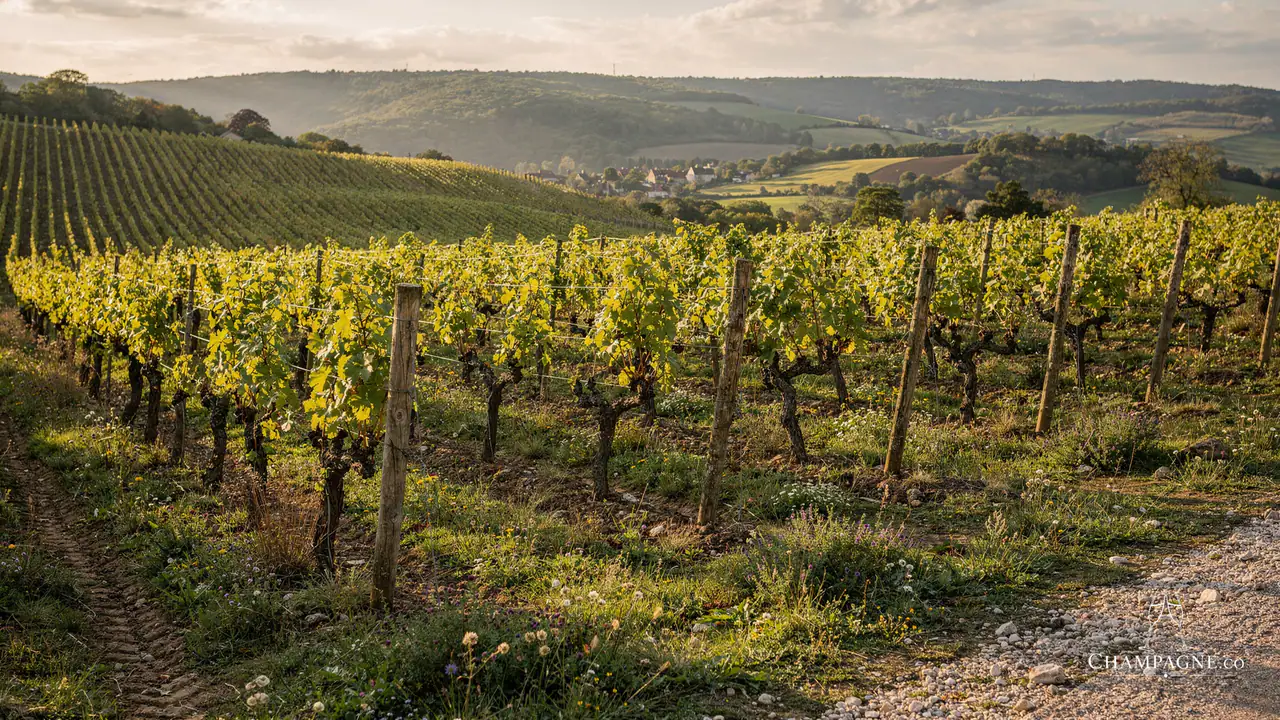
The domaine’s own current presentation describes five hectares of vines on Upper Jurassic soils. Roughly three quarters of the plantings sit on Kimmeridgian slopes, with the remainder on Portlandian ground at the Sorbée lieu-dit. Pinot Noir remains the dominant variety, although the domaine says its plantings are gradually moving toward more Chardonnay.
Why this producer matters
Vouette & Sorbée helped establish the modern reputation of the Côte des Bar as a source of serious grower Champagne with a strong sense of place. The estate has pursued organic and biodynamic farming for decades, and its current producer material continues to put living soils and the distinction between Kimmeridgian and Portlandian terroirs at the centre of its approach.
The wines are also unusually easy to understand conceptually. Fidèle is the Pinot Noir expression; Blanc d’Argile is the Chardonnay counterpoint; other bottlings explore particular parcels, varieties or methods. That clarity makes the domaine useful for drinkers who want to explore how the southern Champagne landscape can translate into markedly different wines.
Vineyard and terroir
The estate is based at Buxières-sur-Arce in the Côte des Bar. Its own current material describes a five-hectare vineyard averaging about 35 years of age, rooted in Upper Jurassic formations. Kimmeridgian soils account for most of the holdings, while the Sorbée lieu-dit sits on Portlandian geology.
The producer describes the vineyard as currently dominated by Pinot Noir, with Chardonnay becoming more important. Its long-running organic and biodynamic programme is fundamental to the domaine’s identity. The exact certified surface reported by outside certification-oriented sources can differ from the producer’s five-hectare estate description, so Champagne.co avoids turning those different administrative and estate snapshots into a false single figure.
Cellar and winemaking
The cellar philosophy is deliberately close to the vineyard. The domaine says the same people who work the vines carry out the cellar operations. Harvesting is manual and spread over roughly three weeks. A traditional vertical Coquard press is used, after which the juice is settled and moved without pumping into vessels including 400-litre barrels, pièces and amphorae. Fermentations rely on indigenous yeasts.
These practices help explain why Vouette & Sorbée is better approached as a wine domaine than as a house built around a fixed non-vintage recipe.
Champagne.co analysis
Vouette & Sorbée is most compelling when viewed through contrast. Fidèle and Blanc d’Argile offer a particularly useful two-bottle comparison: Pinot Noir versus Chardonnay, yet from the same domaine and the same broad Côte des Bar philosophy. The point is not simply that the wines are low-intervention; it is that the farming and cellar choices are used to make distinctions of site and variety more legible.
For Champagne drinkers accustomed mainly to large-house blends, this is also a good producer through which to understand why the Côte des Bar matters. The estate’s emphasis on Jurassic geology, parcel identity and grower-scale farming gives the wines a framework that is distinct from the blending logic of a major maison.
Buying guidance
Start with Fidèle for the clearest introduction to the domaine’s Pinot Noir-led identity. Choose Blanc d’Argile if Chardonnay and the Chablis-like geological connection are the greater attraction. If both appeal, buying them together is more informative than chasing a rarer bottle first.
Specialist cuvées such as Saignée de Sorbée and Textures are better treated as second-step purchases. Supply can be tight, so confirm the exact release when buying and do not assume that technical details from an older bottle apply to the current one.
Loading current Champagne range…
Spotted something wrong? Report a correction
Every report goes to a human review queue. Nothing on this page changes automatically.