Yann Alexandre
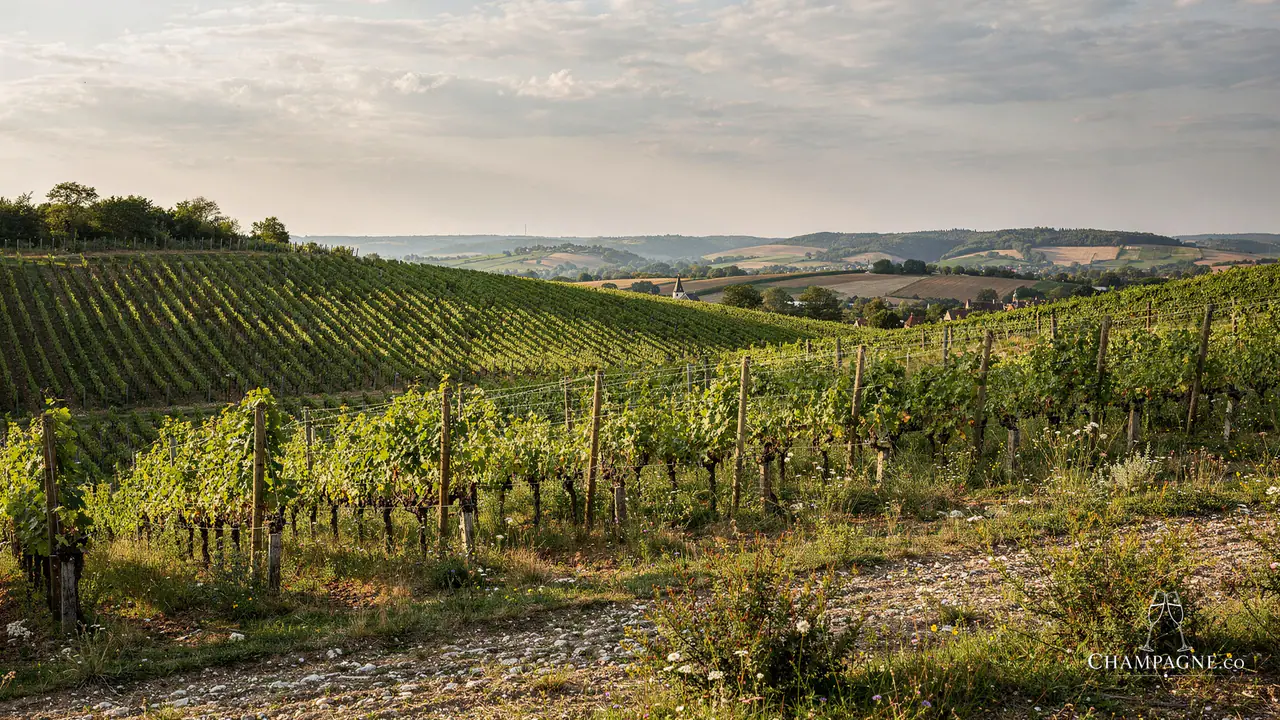
Champagne Yann Alexandre is an independent grower based in Courmas, on the Petite Montagne de Reims. Yann Alexandre took charge of the family estate in the early 2000s and works alongside his wife Séverine Alexandre.
Editorial profile
Champagne Yann Alexandre is an independent grower based in Courmas, on the Petite Montagne de Reims. Yann Alexandre took charge of the family estate in the early 2000s and works alongside his wife Séverine Alexandre.
Current 2026 trade material places the domaine at about 6.3 hectares of dispersed parcels. Meunier is the principal grape, complemented by Chardonnay and Pinot Noir, and the vineyard holds Haute Valeur Environnementale Level 3 certification.
Why this producer matters
Yann Alexandre is particularly useful for understanding how a dispersed western Montagne de Reims vineyard can be organised into a clear hierarchy of wines. The range moves from broad reserve-based blends through Premier Cru wines and then into Courmas village and single-parcel bottlings.
The cellar is deliberately flexible rather than ideological. Stainless steel and oak are both used; malolactic fermentation may be complete, partial or blocked depending on the wine; and dosage ranges from Brut Nature to Brut. The common thread is matching the method to the intended origin and structure of each cuvée.
Vineyards and cellar approach
The estate's parcels extend beyond Courmas into other parts of the Petite Montagne de Reims and selected neighbouring sectors. That dispersed geography is reflected most clearly in the broader blends, while the top of the range narrows down to specific villages and parcels.
The March 2026 producer book shows the distinction clearly. Roche Mère and Brut Noir use fruit from the Petite Montagne de Reims, Massif de Saint-Thierry and Vitryat. Grande Réserve comes from Coulommes-la-Montagne and Villedommange. Courmas and Sous-les-Roses then reduce the map to one village and, in the latter case, one parcel.
Champagne.co analysis
The strongest feature of Yann Alexandre is the way the range becomes progressively more specific. Roche Mère and Brut Noir show the estate's ability to blend across sectors and reserve years. Grande Réserve and Blanches Terres narrow the geography. Courmas and Sous-les-Roses then make origin the central idea.
That progression also explains the varied cellar choices. Oak is used where Yann wants it, not everywhere; malolactic fermentation is controlled wine by wine; and dosage follows the cuvée rather than one house-wide rule.
Buying guidance
Start with Roche Mère for the zero-dosage broad-estate expression or Brut Noir for the reserve-wine counterpart. Move to Grande Réserve or Blanches Terres for Premier Cru wines with more selective origins.
Choose Courmas 2018 or Sous-les-Roses 2018 for the clearest site-specific wines. If buying Terres des Clos, remember that it is Coteaux Champenois still wine rather than Champagne. Exact vintage, disgorgement and dosage should always remain attached to the specific release.
Loading current Champagne range…
Spotted something wrong? Report a correction
Every report goes to a human review queue. Nothing on this page changes automatically.