Yves Ruffin
Champagne Yves Ruffin is a tiny organic family domaine based in Avenay-Val-d'Or, with additional vines in Tauxières-Mutry. Yves Ruffin and his wife Odette founded the estate in 1971 and chose organic farming from the outset, making the domaine one of the…
Editorial profile
Champagne Yves Ruffin is a tiny organic family domaine based in Avenay-Val-d'Or, with additional vines in Tauxières-Mutry. Yves Ruffin and his wife Odette founded the estate in 1971 and chose organic farming from the outset, making the domaine one of the early Champagne adopters of that approach.
The current estate covers about 2.8 hectares, all certified organic, and works only with Pinot Noir and Chardonnay.
Antonin Ruffin joined the family business in 2021 and now runs it with his partner Cécile, following Sylvie Ruffin's retirement in January 2025.
Why this producer matters
Yves Ruffin is important less for scale than for continuity. Organic viticulture is not a recent conversion or separate range here; it has defined the estate since its founding generation.
The cellar identity is equally consistent. The domaine works with old oak and acacia barrels and foudres, and the present three-wine range uses that same material to explore current harvests, a single vintage and accumulated reserve wines.
Vineyards and cellar approach
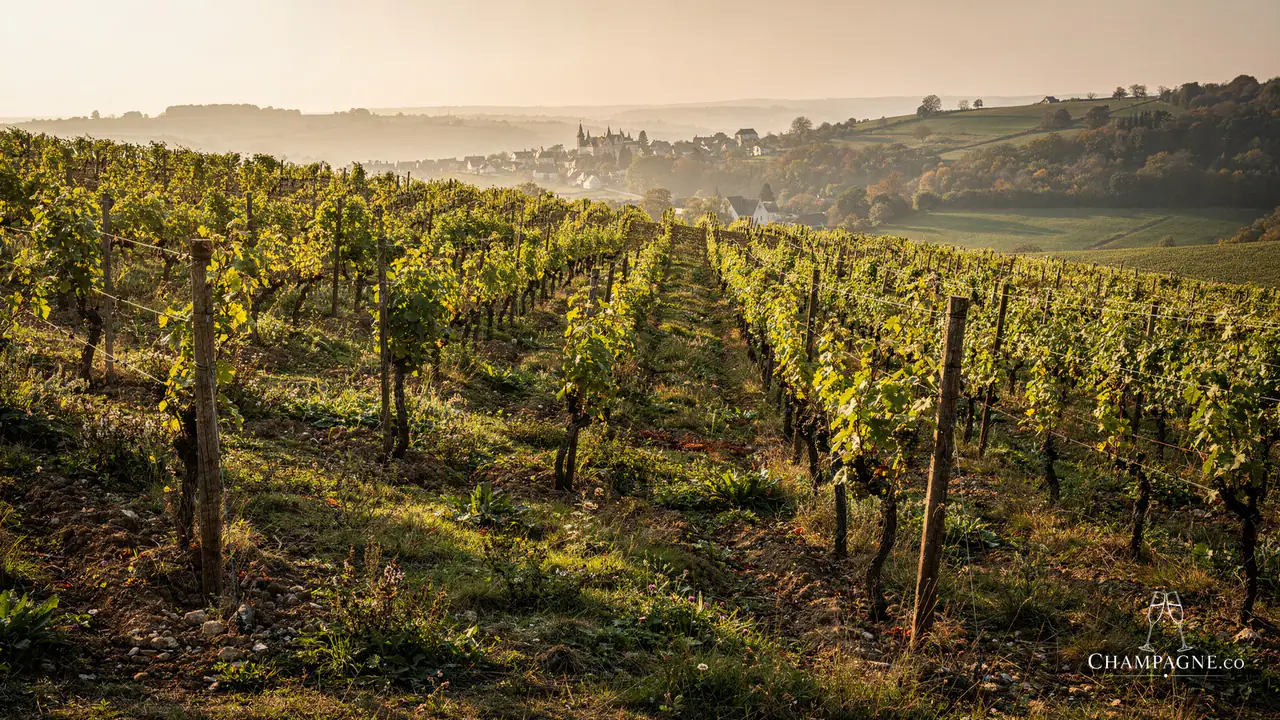
The vines are divided between Avenay-Val-d'Or, in the Vallée de la Marne, and Tauxières-Mutry on the Montagne de Reims. Pinot Noir and Chardonnay are the only planted grapes in the current certified vineyard.
All wines are raised in oak and acacia barrels or foudres before bottle ageing in the family's hand-dug cellar. The cellar was begun by Yves and Thierry Ruffin in the 1970s and cut into the chalk beneath the family property.
Champagne.co analysis
Yves Ruffin is best understood as a three-part study in time. L'Aspirant combines a current base with a small reserve component. La Nuit de Juillet fixes the lens on one vintage. Racines is built entirely from older reserve material.
Because the estate is so small and the farming and cellar approach are unusually continuous, the wines form a coherent set rather than a prestige ladder. Organic farming, two grapes and old oak/acacia are constants; the main variable is how time is used.
Buying guidance
Start with L'Aspirant for the most representative current blend. Choose La Nuit de Juillet for a vintage, zero-dosage expression and Racines for the reserve-wine side of the domaine.
Check the exact release before buying older Yves Ruffin labels. The current catalogue is deliberately compact, and archived wines should not be assumed to remain part of normal present-day production.
Loading current Champagne range…
Spotted something wrong? Report a correction
Every report goes to a human review queue. Nothing on this page changes automatically.