How to Read a Champagne Label
Dryness, vintage, producer code, village, grape style and bottle information: the label can tell you much more than the brand name.
Published 2026-09-28
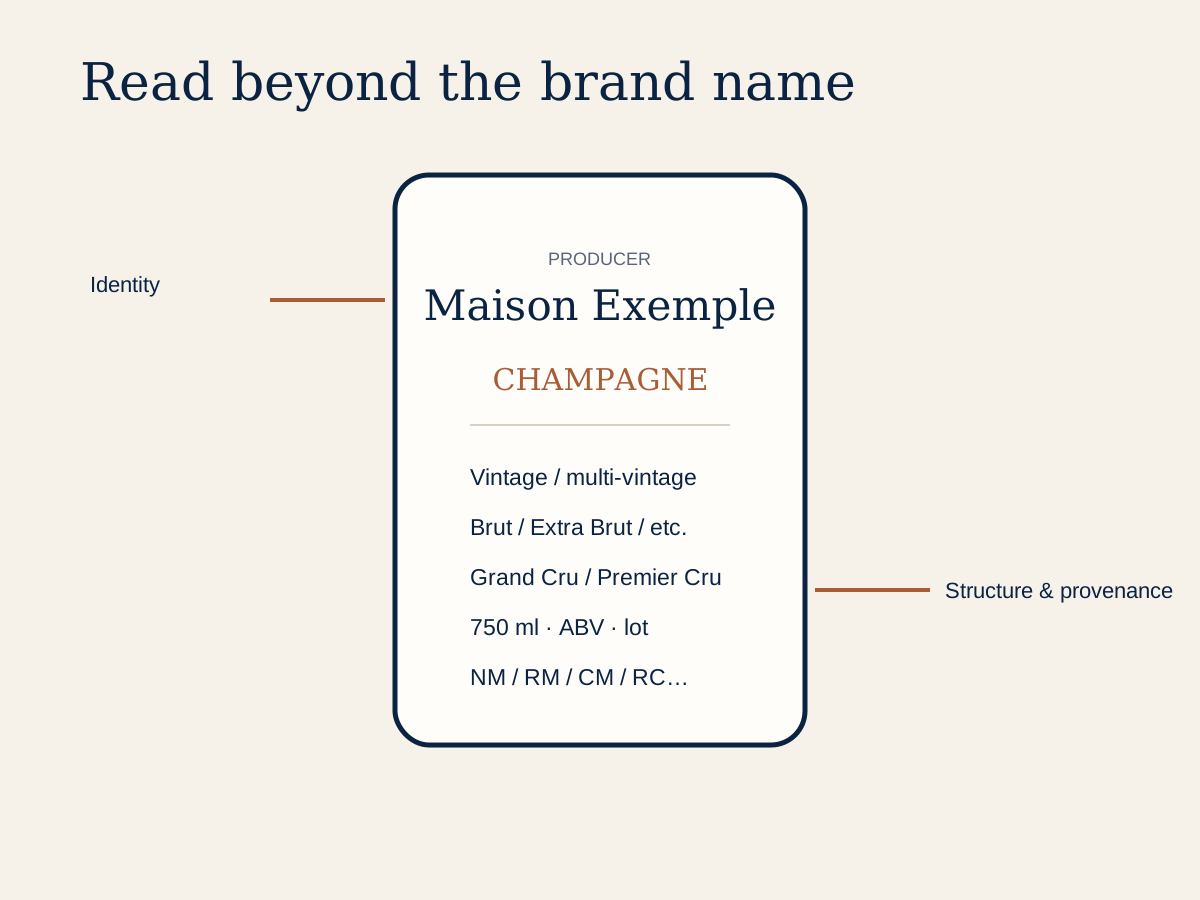
A Champagne label can look simple, but a few words and codes reveal the wine’s style, origin and producer structure. Reading them turns a bottle from a brand choice into a piece of provenance.
Champagne
The protected designation tells you the wine comes from the Champagne appellation and complies with its production rules. It is not a generic word for sparkling wine.
Producer name
This may be a large house, an estate grower, a cooperative or a brand supplied through another structure. The professional initials elsewhere on the label can help explain which.
NM, RM and other initials
Codes such as NM and RM describe the producer’s professional category. NM is associated with négociant-manipulant houses; RM with récoltant-manipulant growers. Other initials identify cooperatives and other commercial structures.
These codes explain who is behind the bottle. They do not rank quality.
Vintage or no vintage
A year on the label indicates a vintage Champagne from one harvest. A multi-vintage or non-vintage wine normally blends more than one year.
Some producers increasingly use “multi-vintage” to emphasise deliberate cross-vintage blending.
Brut and the sweetness terms
Brut, Extra Brut and Brut Nature tell you the dosage category, not the quality level. Extra Dry is sweeter than Brut despite the name.
Blanc de Blancs and Blanc de Noirs
Blanc de Blancs indicates white-grape Champagne, usually Chardonnay. Blanc de Noirs indicates white Champagne from black grapes, Pinot Noir and/or Meunier.
Rosé
Rosé tells you colour/style but not necessarily whether the producer used assemblage or saignée. For that, look at technical information.
Grand Cru and Premier Cru
These are commune-based origin mentions under the Champagne specification. They are useful provenance clues, not guarantees that one wine outranks every bottle without them.
Volume and alcohol
Bottle volume and alcohol by volume are mandatory practical information. Format matters because larger bottles can age differently and prices are not directly comparable across sizes.
Lot and disgorgement information
A lot code helps trace the bottling. Some producers additionally print disgorgement dates, base vintage, dosage and QR-linked technical sheets.
Those extra details are especially valuable for serious buyers because they identify the actual release rather than just the cuvée name.
The best label-reading habit
Read the back label as carefully as the front. The front sells identity. The back is often where the wine starts explaining itself.

Grower Champagne vs Champagne Houses
RM, NM and other producer codes reveal how a bottle reaches the market, but the grower-versus-house debate is more nuanced than the initials suggest.

What Does Brut Mean?
Brut is the reference dryness level in Champagne, but it is not the driest. Here is how dosage, acidity and the legal sugar bands fit together.

Grand Cru and Premier Cru Champagne Explained
These terms belong to Champagne’s village-based classification history. They matter, but not in the same way as Burgundy’s vineyard hierarchy.