Blanc de Blancs vs Blanc de Noirs
Both can be white Champagne. The difference is the colour of the grapes behind them, and that changes structure, aroma and food pairing.
Published 2026-09-28
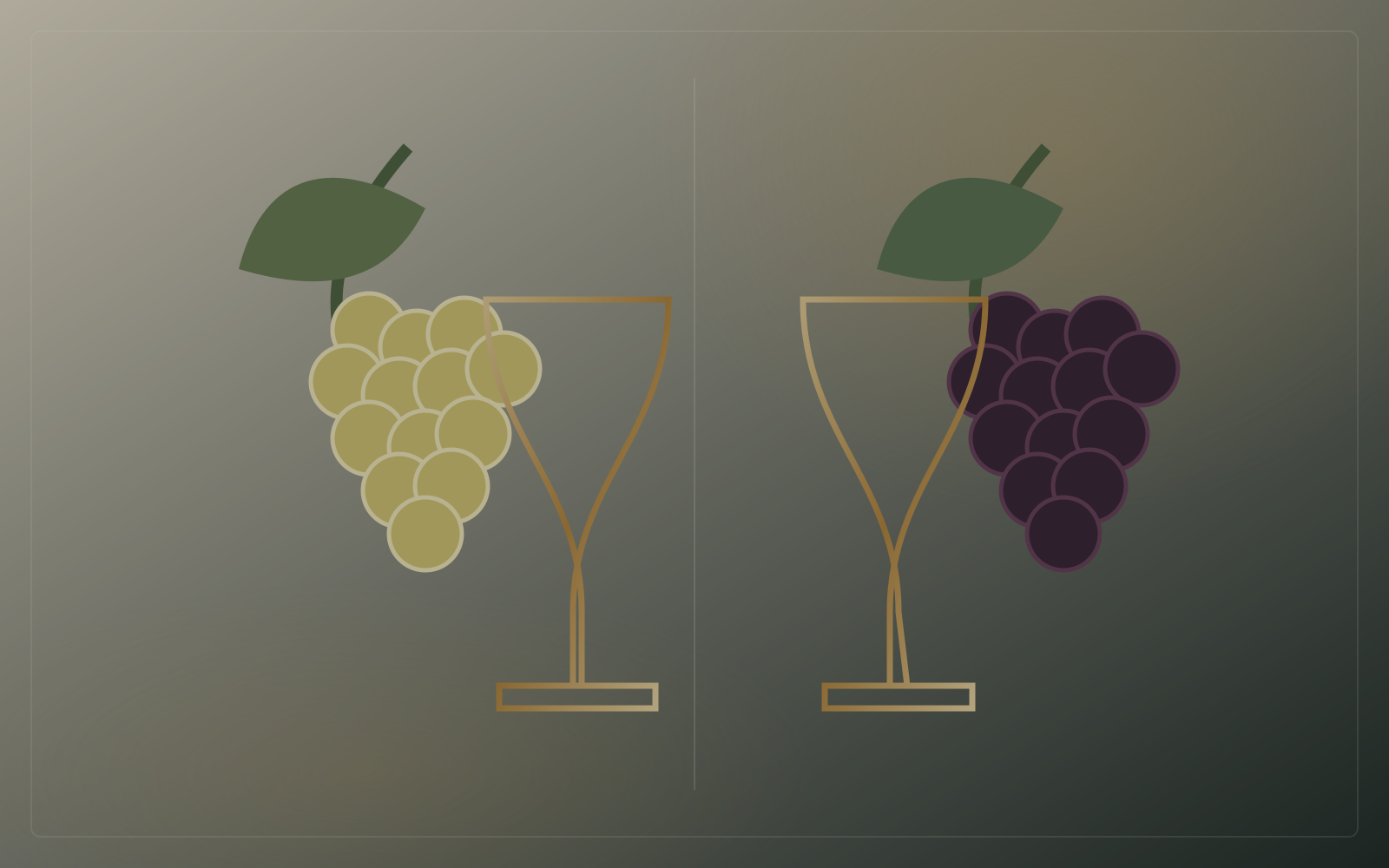
Blanc de Blancs means “white from whites”: Champagne made only from white grapes. Blanc de Noirs means “white from blacks”: white Champagne made only from black-skinned grapes.
In Champagne, that usually means Chardonnay for Blanc de Blancs and Pinot Noir, Meunier or a combination of the two for Blanc de Noirs.
Blanc de Blancs
Chardonnay is the principal white grape of Champagne, so most Blanc de Blancs is Chardonnay-led or entirely Chardonnay.
Young examples often emphasise citrus, white flowers, chalky tension and a linear shape. With age they can develop honey, nuts, pastry and a broader texture while retaining acidity.
The Côte des Blancs is particularly associated with Chardonnay, although Blanc de Blancs is made across the appellation.
Blanc de Noirs
Pinot Noir and Meunier have dark skins but clear juice. Gentle pressing allows producers to make white wine from them.
Pinot Noir can bring structure, red-apple character and breadth. Meunier often gives a softer, more immediately fruity expression. Those are useful tendencies, not rigid flavour rules.
Colour does not tell the full story
A Blanc de Noirs may be deeper in colour than a Blanc de Blancs, but winemaking, age and oxidation also affect appearance. Do not expect a white wine made from black grapes to taste like a red wine without colour.
Food pairing
Blanc de Blancs is a natural fit with oysters, shellfish, white fish and lighter starters because acidity and precision are often central.
Blanc de Noirs can have enough breadth for poultry, mushrooms, richer fish dishes and mature cheeses.
Ageing
Both styles can age very well. Blanc de Blancs can move from citrus and chalk toward honey and nuts. Pinot-rich Blanc de Noirs can become savoury, spicy and vinous.
Producer and vintage matter more than the category alone.
How to learn the difference
Taste both from producers working at a similar quality level and, ideally, at similar age. A young entry-level Blanc de Blancs compared with an old prestige Blanc de Noirs teaches less about grape colour than it does about price, age and ambition.
The most informative bottles are those that hold everything else as constant as possible.
The Grapes of Champagne
Chardonnay, Pinot Noir and Meunier dominate, but the appellation has more permitted varieties. Here is what each contributes.
Champagne and Food: A Practical Pairing Guide
Champagne is one of the most versatile food wines. Acidity, bubbles, dosage and grape structure give you more options than oysters alone.

Champagne Regions and Villages
Montagne de Reims, Vallée de la Marne, Côte des Blancs and Côte des Bar are useful shorthand, but serious Champagne gets more local than that.