The Grapes of Champagne
Chardonnay, Pinot Noir and Meunier dominate, but the appellation has more permitted varieties. Here is what each contributes.
Published 2026-09-28
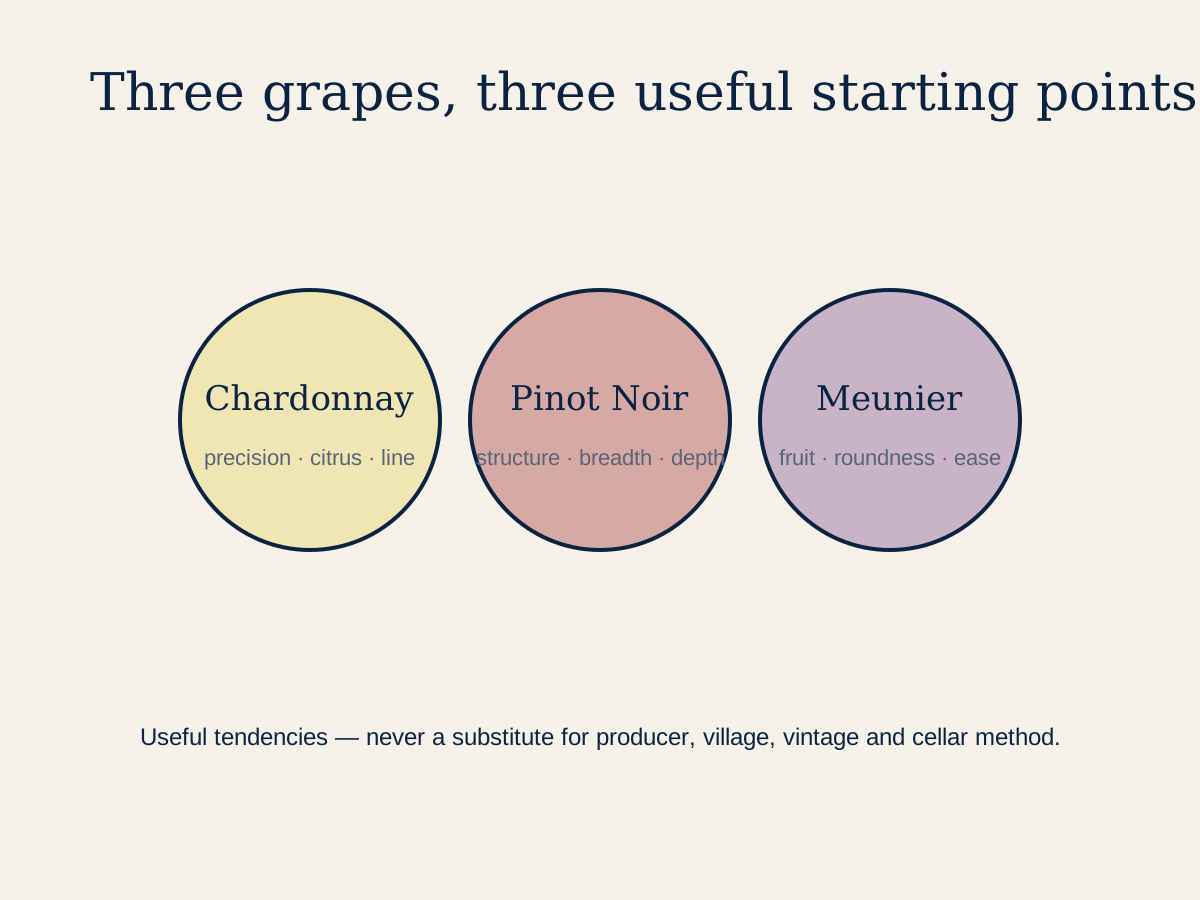
Most Champagne is built from three grapes: Chardonnay, Pinot Noir and Meunier. They dominate vineyard area and public understanding of the region, but the appellation specification also recognises a small group of other historic varieties.
Chardonnay
Chardonnay is the principal white grape. It is closely associated with the Côte des Blancs but is grown throughout Champagne.
It is often linked with acidity, citrus, floral character and a fine linear structure. With age, Chardonnay-based Champagne can move toward honey, nuts, toast and a more creamy texture.
Pinot Noir
Pinot Noir is a black-skinned grape with clear juice. In white Champagne it can contribute body, structure, red-apple or red-fruit impressions and breadth.
The Montagne de Reims and parts of the Côte des Bar are strongly associated with Pinot Noir, although it is grown much more widely.
Meunier
Meunier is also black-skinned. It has long been important in the Vallée de la Marne and other sites where its growing behaviour suits local conditions.
In blends it is often associated with fruit, roundness and approachability. Serious single-variety Meunier Champagnes demonstrate that it is capable of far more than a supporting role.
The historic varieties
The appellation specification also permits small plantings of varieties such as Arbane, Petit Meslier and Pinot Blanc, among others. They are rare in modern Champagne but are increasingly visible in specialist grower bottlings.
Their importance is cultural as much as numerical: they show that Champagne’s grape history is broader than the modern three-variety shorthand.
Blends and single-variety wines
A producer can blend grapes to balance acidity, structure, aroma and ageing potential. Others use one variety to make a more focused statement.
Blanc de Blancs and Blanc de Noirs are the clearest label clues, but they do not tell you village, vineyard age, reserve-wine policy or cellar method.
Why grape variety is only the beginning
The same Chardonnay can taste radically different depending on village, soil, ripeness, pressing, oak, malolactic fermentation, lees ageing and dosage.
Use grape variety as the first layer of understanding, not the final explanation.
Blanc de Blancs vs Blanc de Noirs
Both can be white Champagne. The difference is the colour of the grapes behind them, and that changes structure, aroma and food pairing.

Champagne Regions and Villages
Montagne de Reims, Vallée de la Marne, Côte des Blancs and Côte des Bar are useful shorthand, but serious Champagne gets more local than that.

How to Read a Champagne Label
Dryness, vintage, producer code, village, grape style and bottle information: the label can tell you much more than the brand name.