Dosage Explained: What Happens After Disgorgement
Dosage adjusts the finished Champagne after disgorgement. It influences balance and sweetness, but low dosage is not a quality score.
Published 2026-09-28
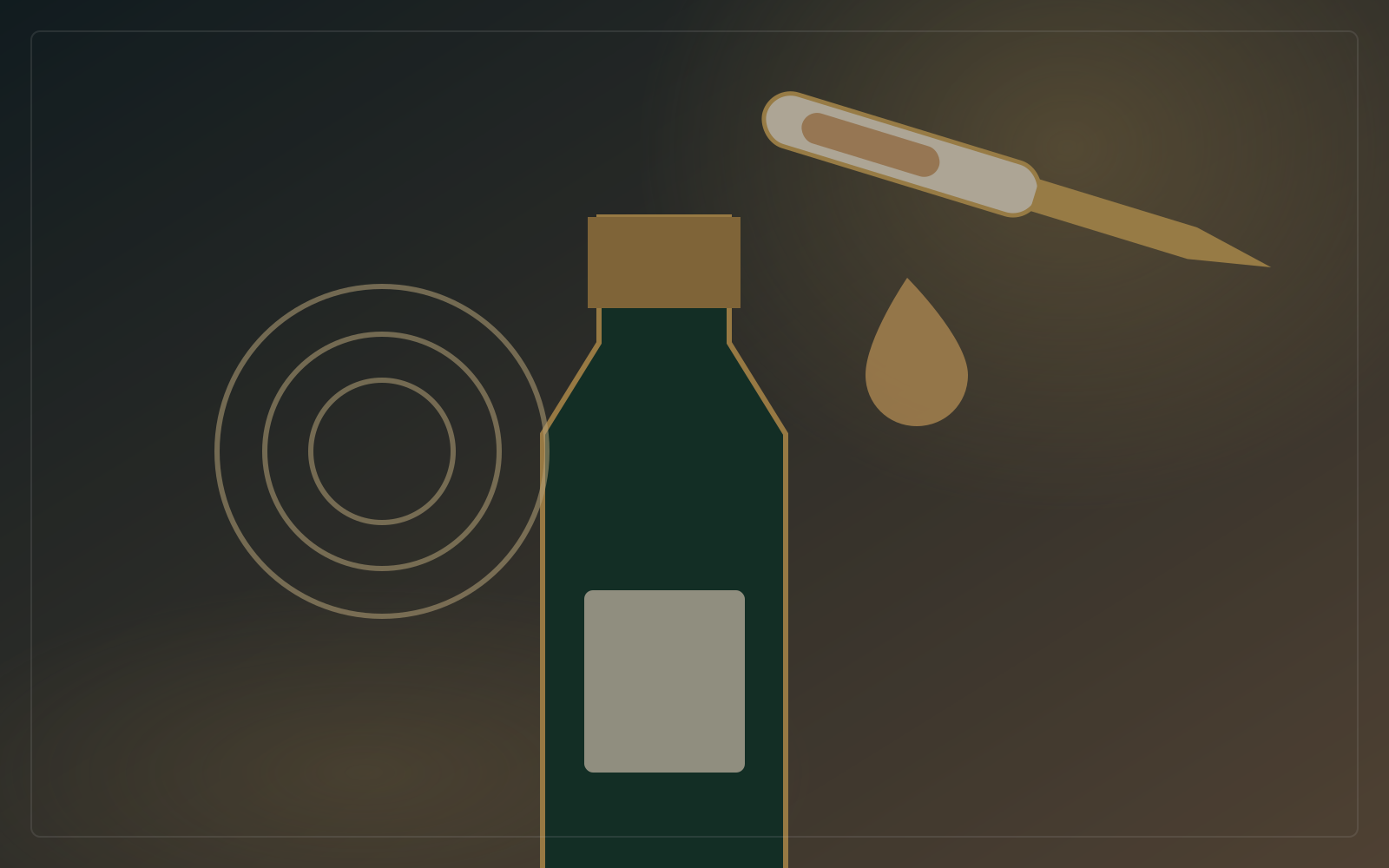
Dosage is the finishing adjustment made after disgorgement, when the bottle has lost a small amount of wine along with the sediment plug.
What is added?
The bottle is topped up with liqueur d’expédition: wine, with or without sugar depending on the intended style.
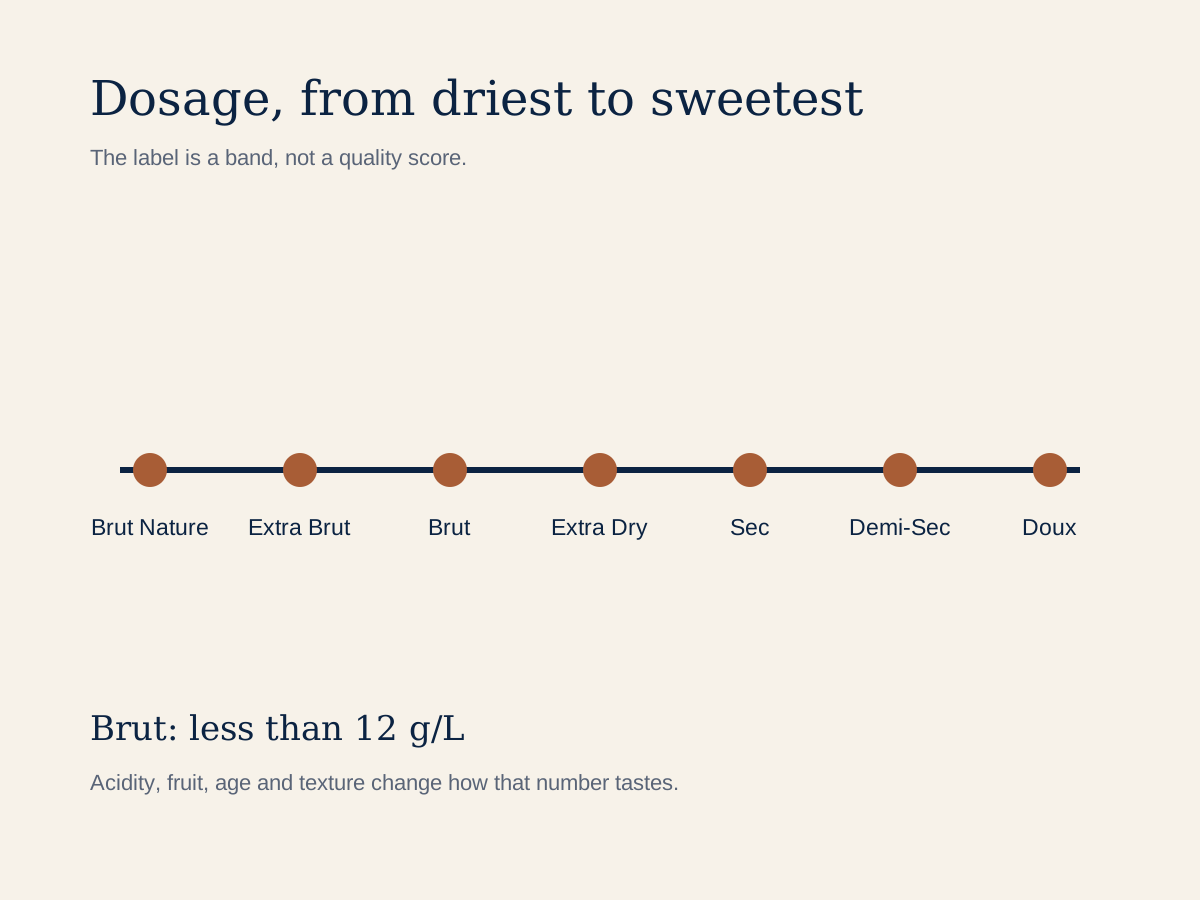
The final sugar level determines which sweetness category can appear on the label.
Why dosage exists
Champagne is naturally high in acidity. Dosage can balance that acidity, shape texture and influence how the wine presents at release.
Historically, many markets preferred much sweeter Champagne than is common today. Modern Brut, Extra Brut and Brut Nature sit at the dry end of a much broader historical spectrum.
Low dosage is not automatically better
There is a temptation to treat zero dosage as purity and higher dosage as compromise. That is too simple.
A wine with exceptional ripe fruit may need little adjustment. Another wine may feel more complete with a carefully judged dosage. The skilled decision is the one that produces balance.
Dosage and ageing
Dosage can influence how a wine feels as it ages, but it interacts with acidity, oxygen exposure, base-wine maturity and post-disgorgement time.
Do not assume two wines at 3 g/L will develop identically.
How to taste dosage
Compare wines from the same producer where the base material is similar but dosage differs. That isolates the variable better than comparing unrelated brands.
Pay attention to more than sweetness: texture, apparent acidity, finish and how fruit is framed.
Where to find the number
Some producers state exact dosage in grams per litre on the label or technical sheet. Others give only the regulatory category.
For Champagne.co, exact dosage belongs to a specific release. We do not project one number onto every vintage or batch of a cuvée unless the producer supports that claim.
The key idea
Dosage is not decoration added to finished Champagne. It is one of the final blending decisions, and at its best it disappears into the wine.
What Does Brut Mean?
Brut is the reference dryness level in Champagne, but it is not the driest. Here is how dosage, acidity and the legal sugar bands fit together.
Disgorgement Date: Why It Matters
Disgorgement ends lees ageing and starts a new phase in the bottle. The date can be one of the most useful technical clues a producer gives you.
How Champagne Is Made
From pressing and base wines to second fermentation, lees ageing, riddling, disgorgement and dosage: the traditional method explained properly.