How Champagne Is Made
From pressing and base wines to second fermentation, lees ageing, riddling, disgorgement and dosage: the traditional method explained properly.
Published 2026-09-28
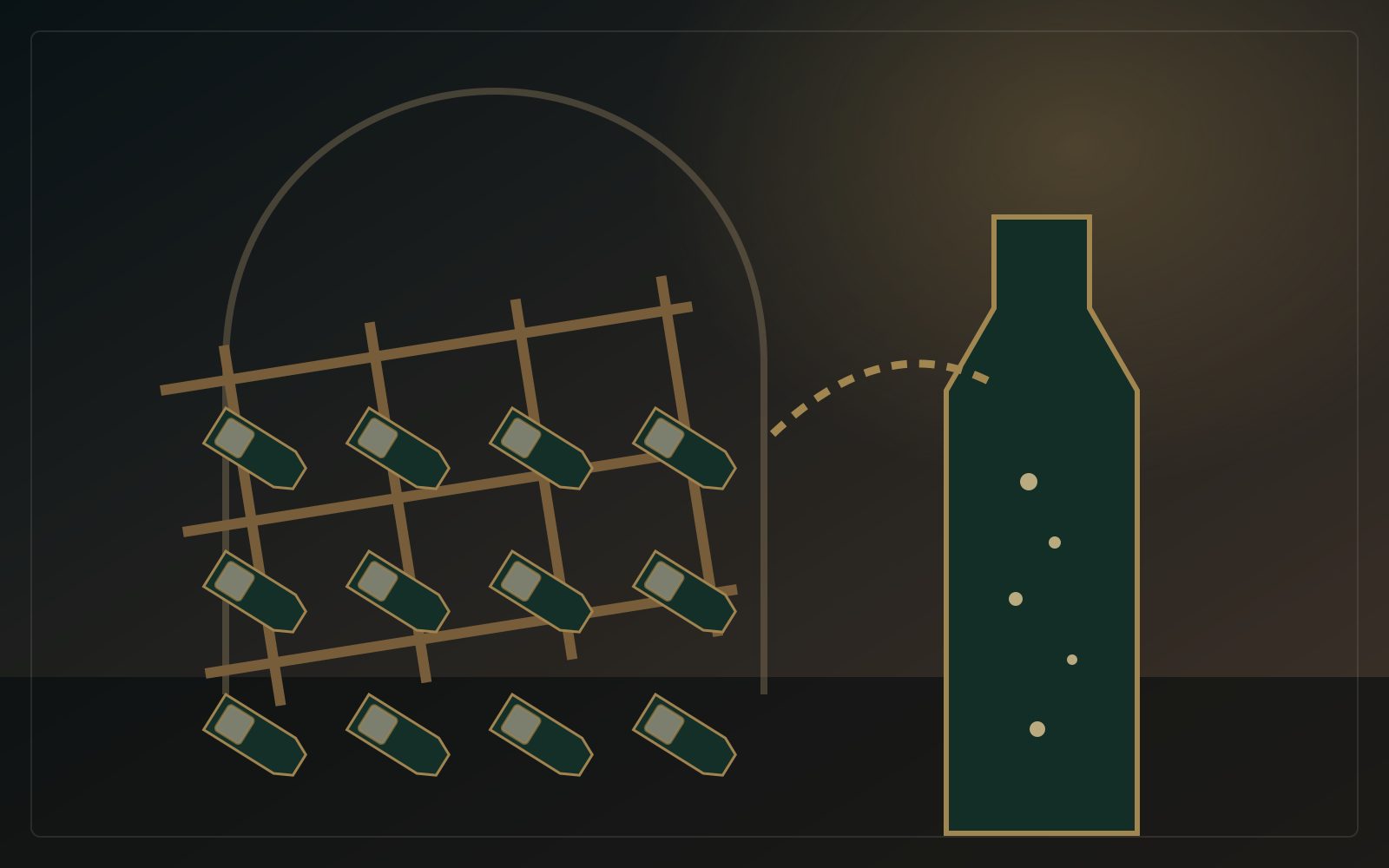
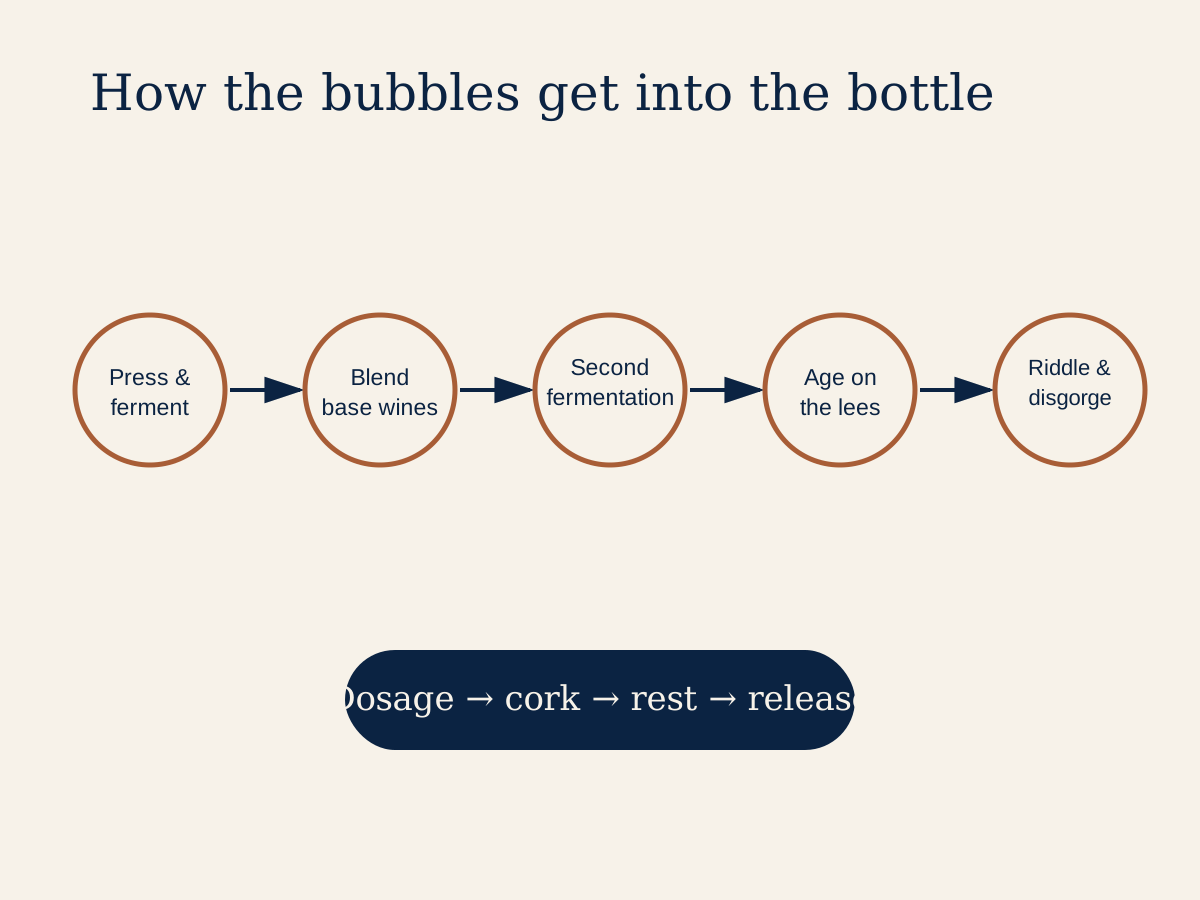
Champagne begins life as a still wine. The bubbles arrive later, inside the same bottle in which the wine will eventually be sold. That bottle-fermented process is the foundation of the traditional method.
Harvest and pressing
The permitted grapes are harvested and pressed to separate juice from skins and solids. Pressing is carefully managed because the aim for most Champagne is pale, clean juice even when black grapes such as Pinot Noir and Meunier are used.
Different press fractions can be kept separate. Producers also separate parcels, grape varieties and villages when they want more control over the later blend.
The base wines
The juice is fermented into dry still wine. At this stage Champagne can taste lean and highly acidic because it has not yet gained bubbles, dosage or long lees-ageing character.
The producer now has a library of base wines. Some may come from the current harvest; others may be reserve wines saved from earlier years. The act of blending them is assemblage.
Assemblage
Blending is one of Champagne’s defining skills. A non-vintage wine can combine grape varieties, villages, parcels and years to maintain a recognisable house or grower style. A vintage Champagne narrows the time dimension to one declared harvest, but blending across parcels or grapes can still be important.
Tirage and the second fermentation
The assembled wine is bottled with a measured addition that includes yeast and sugar. The bottle is sealed. A second fermentation begins inside it.
The yeast consumes the sugar and produces alcohol and carbon dioxide. Because the bottle is closed, the carbon dioxide dissolves into the wine rather than escaping. Those dissolved gases become the pressure and bubbles associated with Champagne.
Ageing on the lees
When fermentation finishes, the spent yeast remains in the bottle as lees. Time on the lees changes the wine. It can build texture and bring aromas often described as bread, pastry, brioche or toast.
Appellation rules impose minimum ageing periods, but many producers go beyond them. Longer ageing is not automatically superior; it is a stylistic choice that needs to suit the wine.
Riddling
Eventually the sediment needs to be removed. Bottles are gradually turned and tilted so the lees collect in the neck. This is riddling, or remuage.
The job may be done by hand on traditional racks or mechanically in gyropalettes. The purpose is the same: move the sediment into one place without losing the wine’s pressure.
Disgorgement
The neck is chilled so the sediment forms a frozen plug. When the temporary closure is removed, pressure ejects that plug. This is disgorgement.
The date can matter because it marks the end of lees ageing and the beginning of a new phase of bottle evolution.
Dosage and final closure
The bottle is topped up after disgorgement. The finishing addition determines, among other things, the final sweetness category. The bottle receives its cork and wire cage and may then rest again before release.
Why the process matters to taste
The finished wine carries decisions from every stage: grape selection, pressing, fermentation vessel, malolactic fermentation, reserve wine, blending, time on lees, disgorgement and dosage.
That is why “Champagne” is not one flavour. The method is shared, but producers use it very differently.
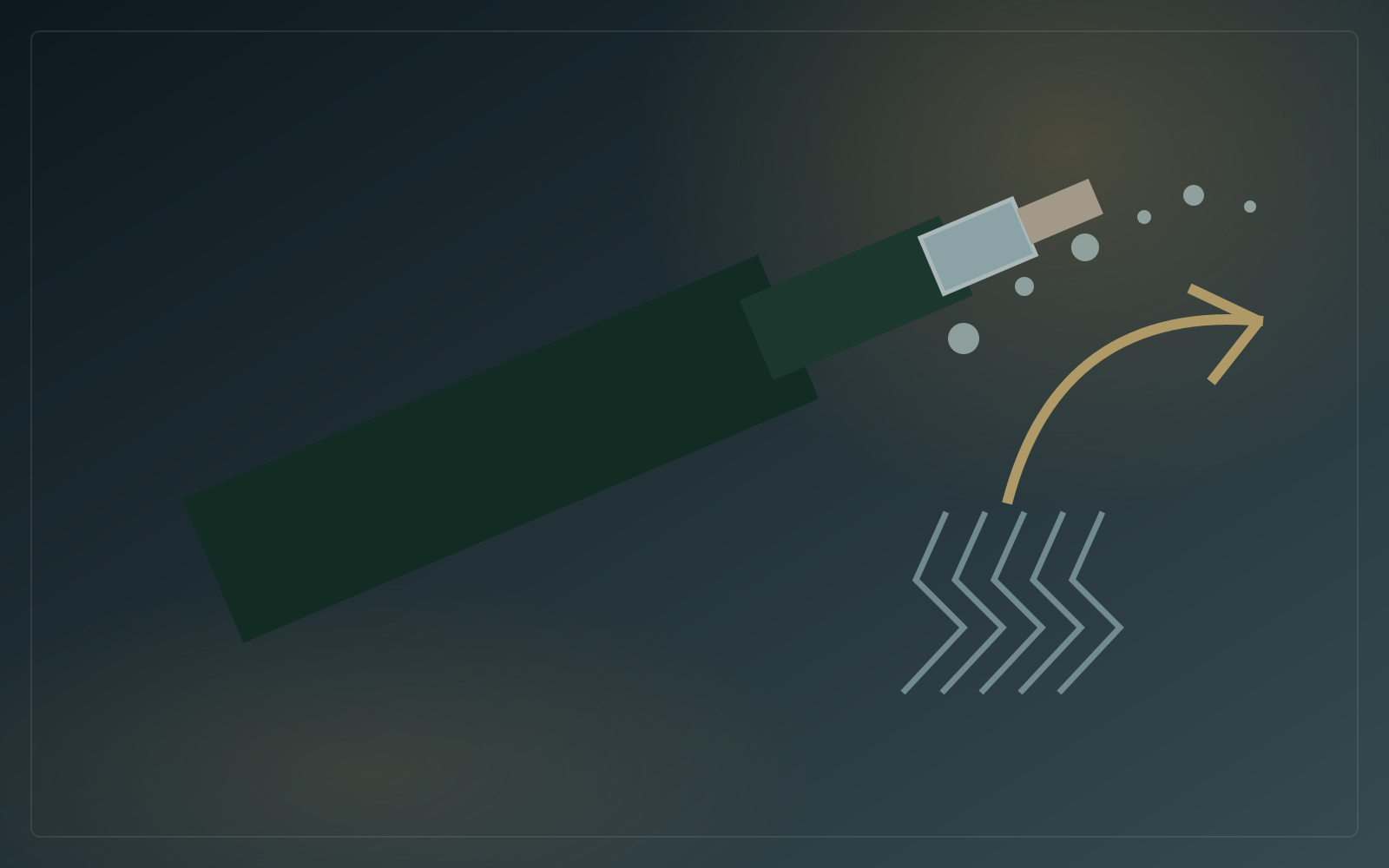
Disgorgement Date: Why It Matters
Disgorgement ends lees ageing and starts a new phase in the bottle. The date can be one of the most useful technical clues a producer gives you.
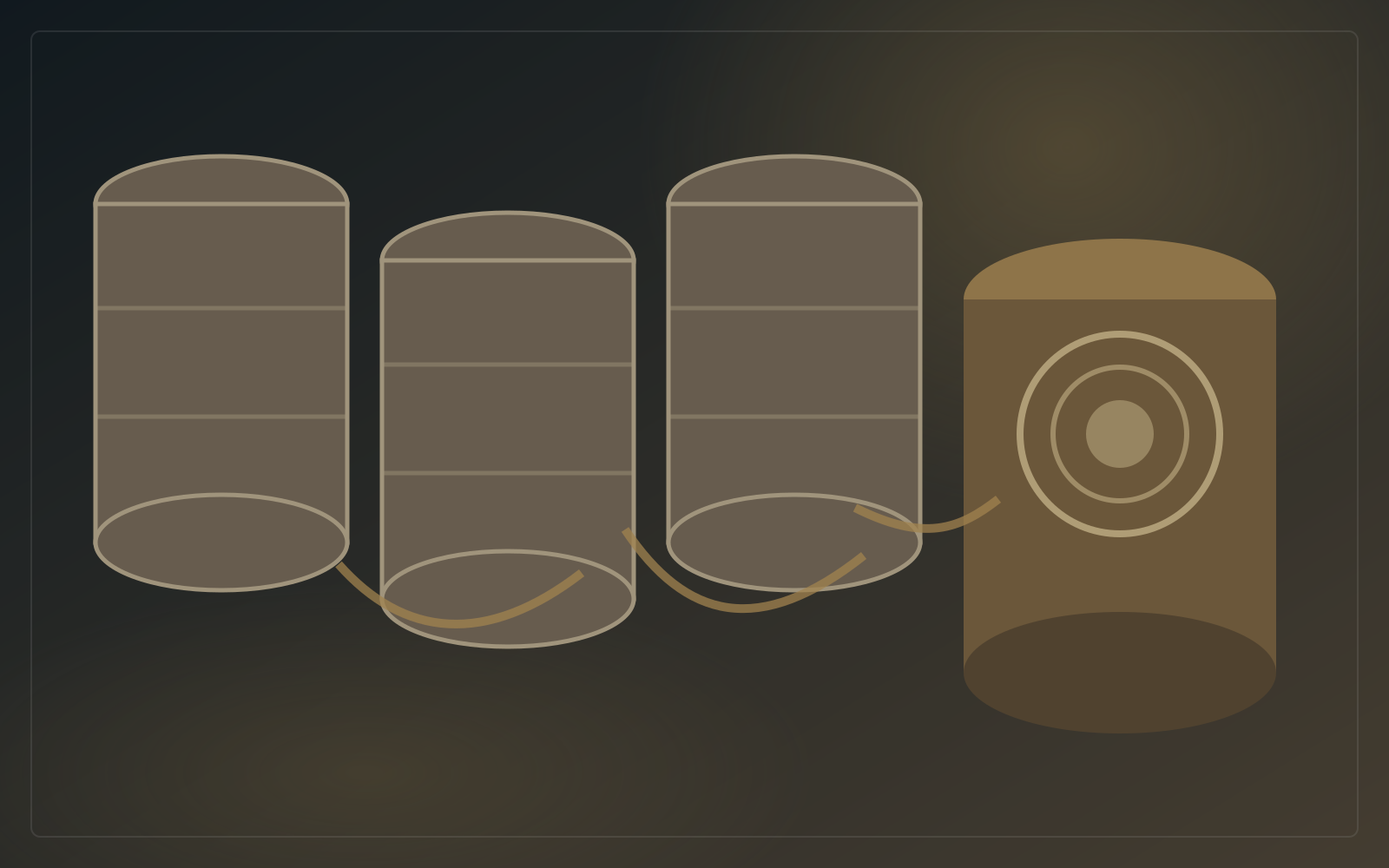
Reserve Wines and Perpetual Reserves
Reserve wine is one of Champagne’s most important blending tools. It can create consistency, complexity and a house signature across harvests.
Dosage Explained: What Happens After Disgorgement
Dosage adjusts the finished Champagne after disgorgement. It influences balance and sweetness, but low dosage is not a quality score.