Serving Temperature and Glassware
Too cold hides Champagne; too warm makes it feel broad. Glass shape matters too. Here is a practical way to serve serious bottles.
Published 2026-09-28
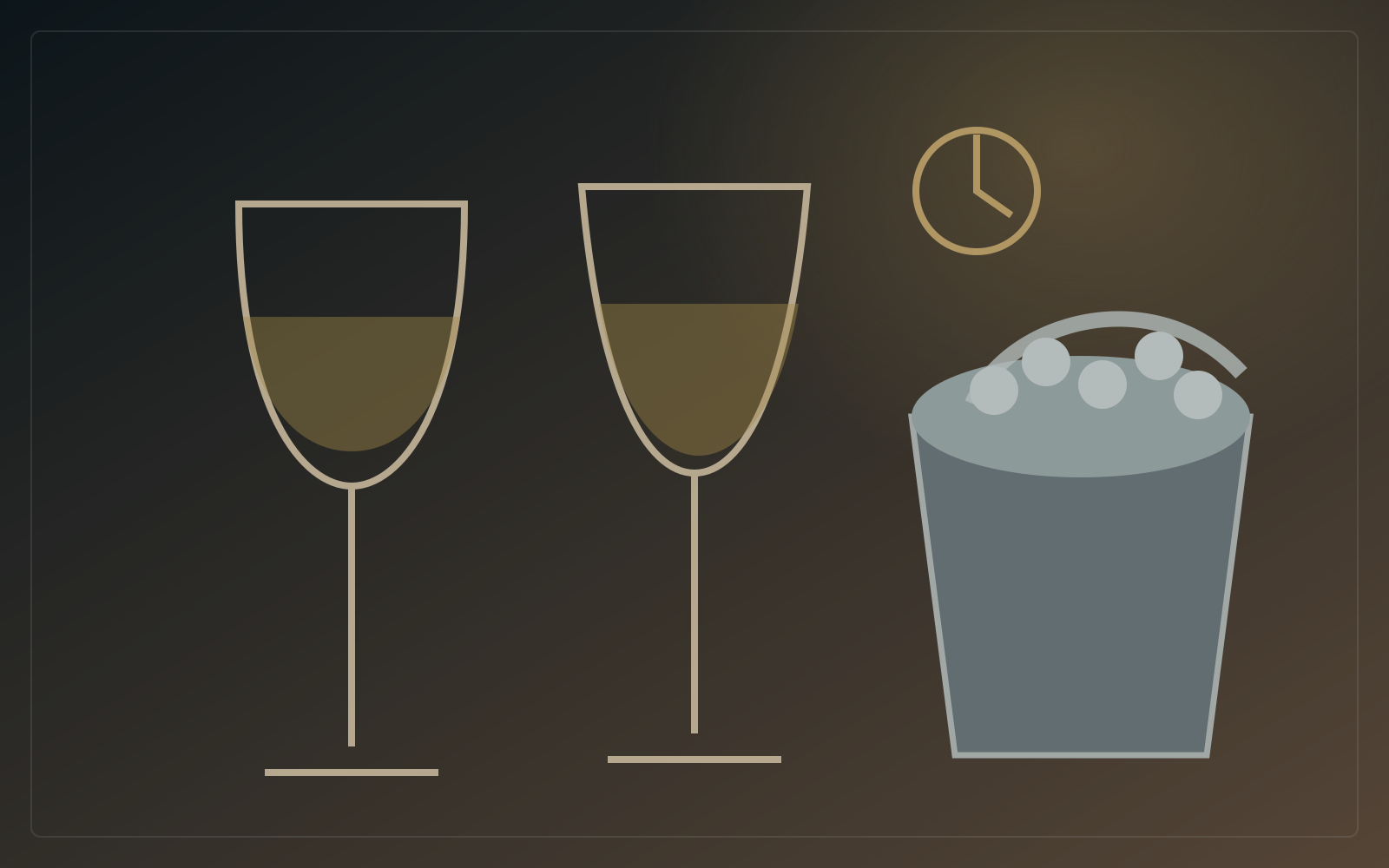
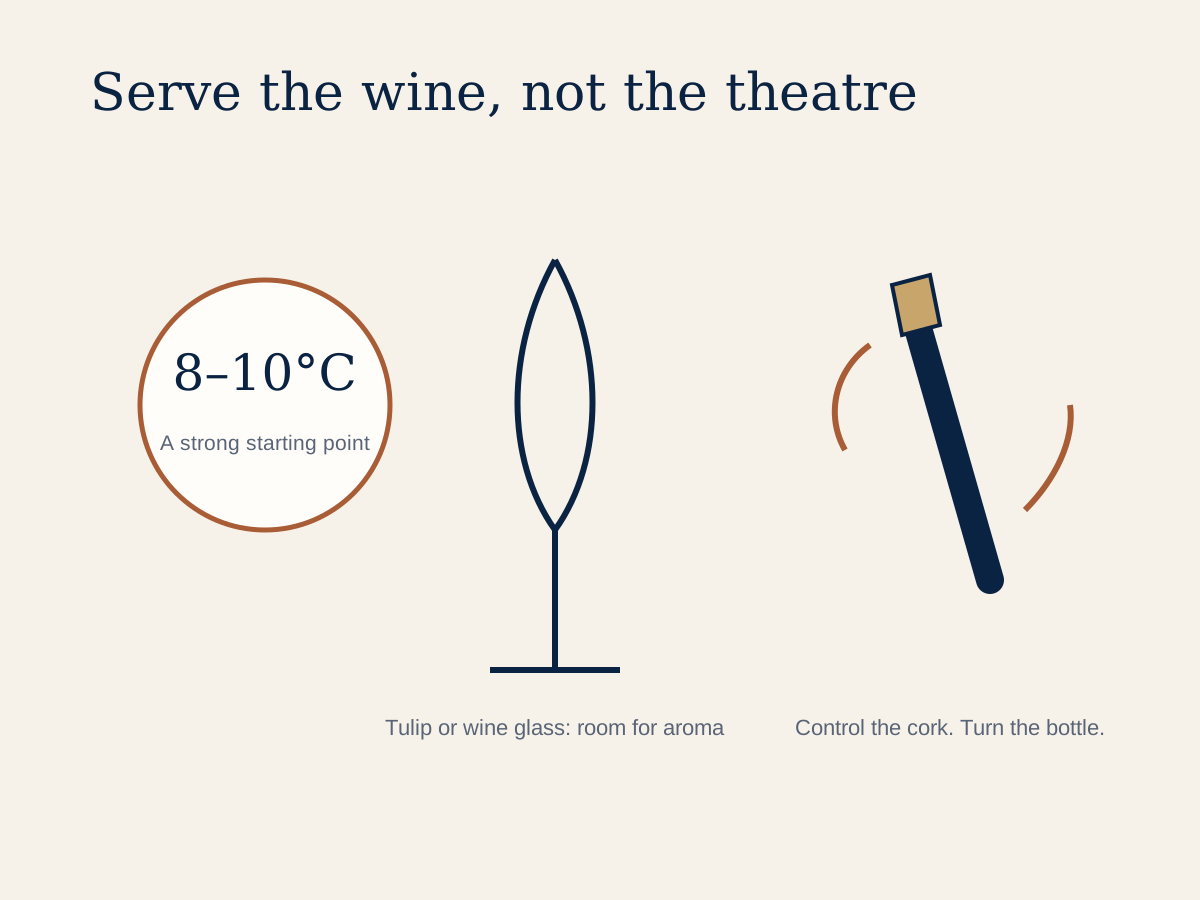
Serving Champagne well is mostly about avoiding extremes. The wine should be cold enough to feel energetic but not so cold that aroma and texture disappear.
Temperature
The Comité Champagne gives a general serving recommendation around 8–10°C. That is a strong starting point.
Young, brisk Champagne is often excellent at the cooler end. Mature vintage and complex prestige bottles may show more at the warmer end of the range, or after a few minutes in the glass.
Why ice-cold is a problem
Very low temperature suppresses aroma and can make acidity dominate. If a bottle tastes strangely mute straight from the fridge, give it time rather than assuming the wine lacks character.
Cooling a bottle
An ice bucket works quickly because water transfers heat more effectively than cold air alone. Ice plus water around the bottle is faster than ice cubes with large air gaps.
A refrigerator is gentler and perfectly adequate when you have time.
Flute, coupe or wine glass?
The narrow flute preserves the visual bead and slows aroma release, but it can restrict the nose.
A broad coupe looks glamorous but loses bubbles quickly and gives aroma little direction.
For serious Champagne, a tulip-shaped glass or a good white-wine glass often gives the best balance: enough bowl for aroma, enough taper to focus it.
Do bubbles need a flute?
No. Effervescence is part of Champagne, but tasting is not a bubble-counting contest. Texture, aroma and flavour matter more.
Pouring
Pour gently in stages rather than filling the glass to the top. Leaving headspace helps aroma collect.
The Champagne.co rule
Use clean, odour-free glassware, avoid detergent residue, and serve at a temperature that allows the wine to open. An expensive bottle in a frozen narrow flute can show less than a modest bottle served thoughtfully.
How Long Can Champagne Be Stored?
Non-vintage, vintage and prestige bottles age differently. Here is what actually matters in the cellar and what ageing changes in the glass.
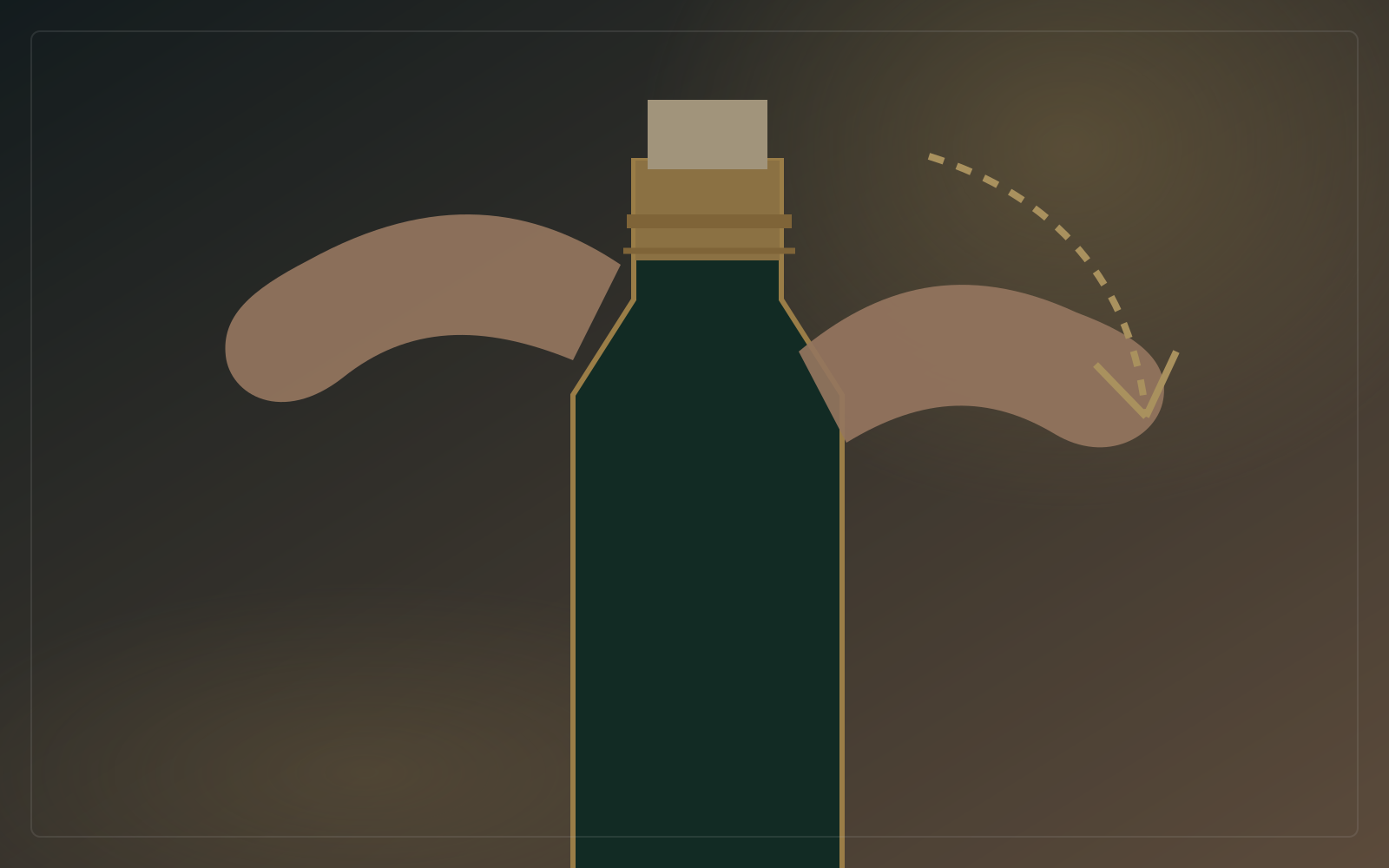
How to Open Champagne Properly
The safest opening is controlled and quiet: chill the bottle, control the cork and turn the bottle rather than the cork.
Champagne and Food: A Practical Pairing Guide
Champagne is one of the most versatile food wines. Acidity, bubbles, dosage and grape structure give you more options than oysters alone.